Representative Raja Krishnamoorthi introduced a bill to phase out Chinese-made LiDAR sensors from U.S. autonomous vehicles and critical infrastructure, citing concerns that such devices could be disabled from space during a conflict. The bill would bar new purchases after three years, allow waivers for scientific and cybersecurity research, and give a five-year transition for legacy systems. Chinese firms now dominate the LiDAR market—Yole Group estimates roughly 93% share in passenger cars and 89% overall—heightening worries about strategic dependence. The measure arrives amid DoD scrutiny of suppliers such as Hesai Group.
U.S. Bill Targets Chinese LiDAR In Self-Driving Cars, Citing Space-Based Hacking Fears

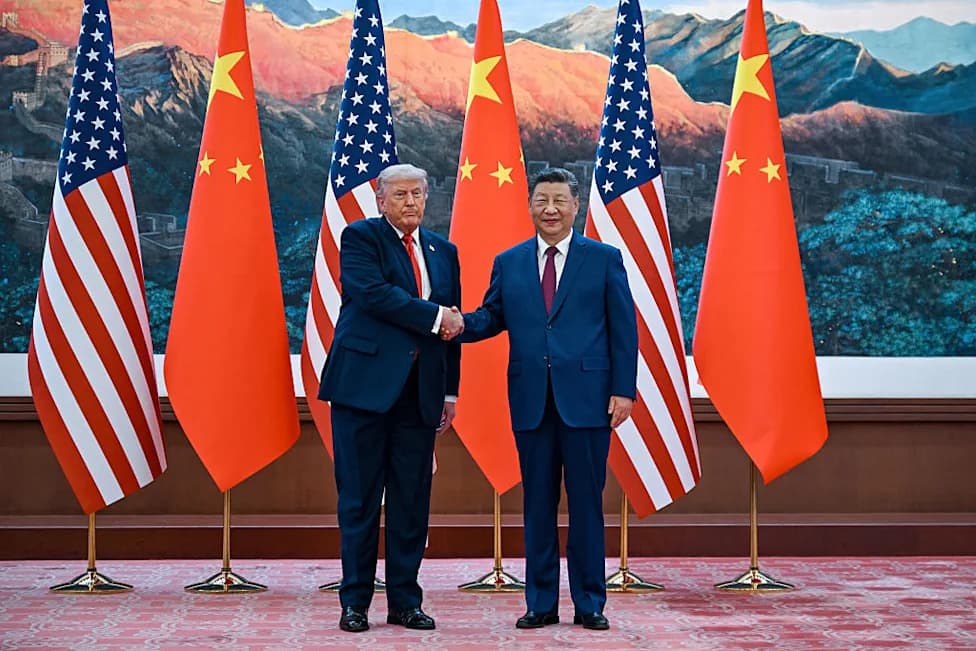
FILE PHOTO: U.S. and Chinese flags are seen in this illustration taken March 20, 2025. REUTERS/Dado Ruvic/Illustration/File Photo
SAN FRANCISCO, Dec 11 (Reuters) — Representative Raja Krishnamoorthi, the ranking Democrat on the House Select Committee on China, introduced legislation this week to phase out Chinese-made LiDAR sensors from U.S. autonomous vehicles and critical infrastructure, citing national security concerns that the devices could be disabled from space in a conflict.
What The Bill Would Do
The proposal would ban new purchases of Chinese LiDAR within three years, while allowing targeted waivers for scientific research and cybersecurity testing. Existing legacy systems used in critical infrastructure would receive a five-year transition period to replace or remediate equipment.
Why LiDAR Matters And The Security Concern
LiDAR (Light Detection And Ranging) uses lasers to build precise 3D maps of environments, enabling robotaxis, automated port cranes, pipeline inspection, and other industrial and transportation applications. National security analysts warn that if foreign-made units were compromised — potentially via space-based assets — large swaths of U.S. systems that rely on LiDAR could be disabled in seconds.
"America and our allies should lead in LiDAR innovation—not cede control of this critical technology to foreign adversaries who will use their control to endanger Americans," Krishnamoorthi said.
Craig Singleton, senior China fellow at the Foundation for Defense of Democracies and a co-author of warnings about the vulnerability, cautioned against a "Huawei-on-wheels" scenario, arguing that dependence on foreign LiDAR suppliers could create strategic vulnerabilities.
Market Context And Government Action
Chinese LiDAR firms have rapidly expanded their market share. Consulting firm Yole Group estimated in June that Chinese manufacturers account for about 93% of the passenger car LiDAR market and 89% of the overall LiDAR market. U.S. companies such as Ouster and Aeva Technologies are competing to supply automakers but face steep competition.
The U.S. Department of Defense has added Hesai Group — the world’s largest maker of automotive LiDAR sensors — to a list of entities it alleges assist the Chinese military. Hesai challenged that designation in U.S. court and lost.
This debate touches both civilian and military systems: LiDAR is expected to be important for autonomous military vehicles as well as commercial uses, raising the stakes for policymakers deciding how quickly and broadly to restrict Chinese-made units.
(Reporting by Stephen Nellis in San Francisco; Editing by Howard Goller)
Help us improve.