
The Greek Cypriot president and the leader of the Turkish Cypriot administration agreed on practical confidence-building measures — restoring Halloumi access to EU markets, easing traffic at major U.N. buffer crossings and completing water pipelines from north to south — to prepare for restarting formal peace talks. The meeting followed the election of moderate Tufan Erhurman and aims to create momentum after years of stalled negotiations. Core issues remain unresolved, notably Turkish troop presence and political safeguards demanded by Turkish Cypriots.
Halloumi, Water and Border Crossings: Steps to Reboot Cyprus Peace Talks

Cyprus President Nikos Christodoulides, left, and Turkish Cypriot leader Tufan Erhurman, right, meet with the UN third member of the tripartite Committee on Missing Persons in Cyprus Pierre Gentile at a U.N compound inside the UN-controlled buffer zone in the island's divided capital Nicosia, on Thursday, Dec. 11. 2025. (AP Photo/Petros Karadjias, Pool)(ASSOCIATED PRESS)
NICOSIA — The rival leaders of divided Cyprus on Thursday agreed to a set of cooperative projects designed to rebuild mutual trust and create momentum for restarting stalled peace negotiations over the island’s 51-year division.
Nikos Christodoulides, the Greek Cypriot president, and Tufan Erhurman, leader of the Turkish Cypriot administration in the north, agreed to pursue practical confidence-building measures that could quickly affect daily life and commerce on the island.
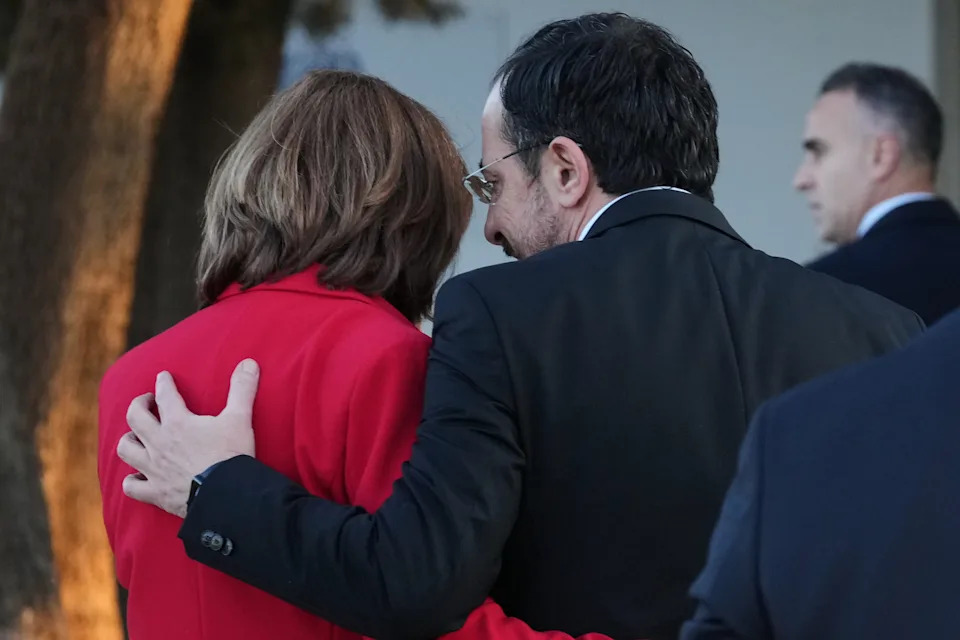
Cyprus' President Nikos Christodoulides, right, talks with the U.N the Personal Envoy of U.N Secretary General Maria Angela Holguin before a meeting, at the U.N compound inside the UN buffer zone in divided capital Nicosia, Cyprus, Thursday, Dec. 11. 2025. (AP Photo/Petros Karadjias)(ASSOCIATED PRESS)
Key Agreements
Halloumi/Hellim access: The leaders committed to negotiating a solution to allow Turkish Cypriot Halloumi (Hellim) producers to regain access to European markets, protecting the island’s signature cheese industry.
Crossing-point improvements: They pledged to ease traffic at the busiest of roughly nine crossing points along the U.N. buffer zone that separates the internationally recognized Greek Cypriot south and the Turkish Cypriot north.
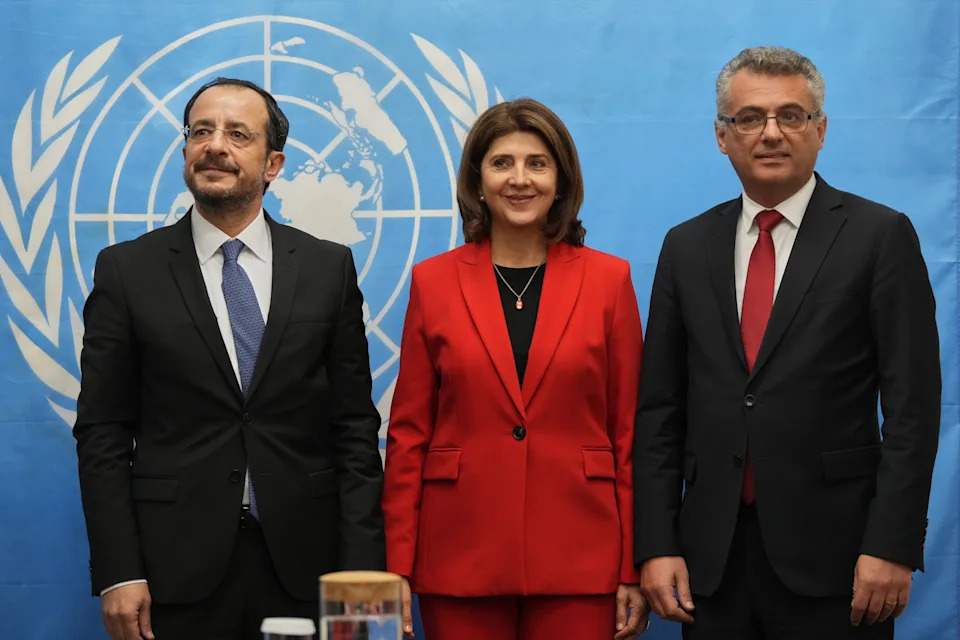 Cyprus' President Nikos Christodoulides, left, and the Turkish Cypriot leader Tufan Erhurman, right, meet with the U.N the Personal Envoy of U.N Secretary General Maria Angela Holguin at the U.N compound inside the UN buffer zone in divided capital Nicosia, Cyprus, Thursday, Dec. 11. 2025. (AP Photo/Petros Karadjias, Pool)(ASSOCIATED PRESS)
Water pipeline completion: Both sides agreed to accelerate work to finish pipelines that would carry treated water from a plant in the north to farmers in the south, implementing a decade-old agreement.
Leaders described these initiatives as practical, early steps to build confidence ahead of more substantive negotiations. The last major attempt to settle the dispute collapsed after talks at a Swiss resort eight years ago.
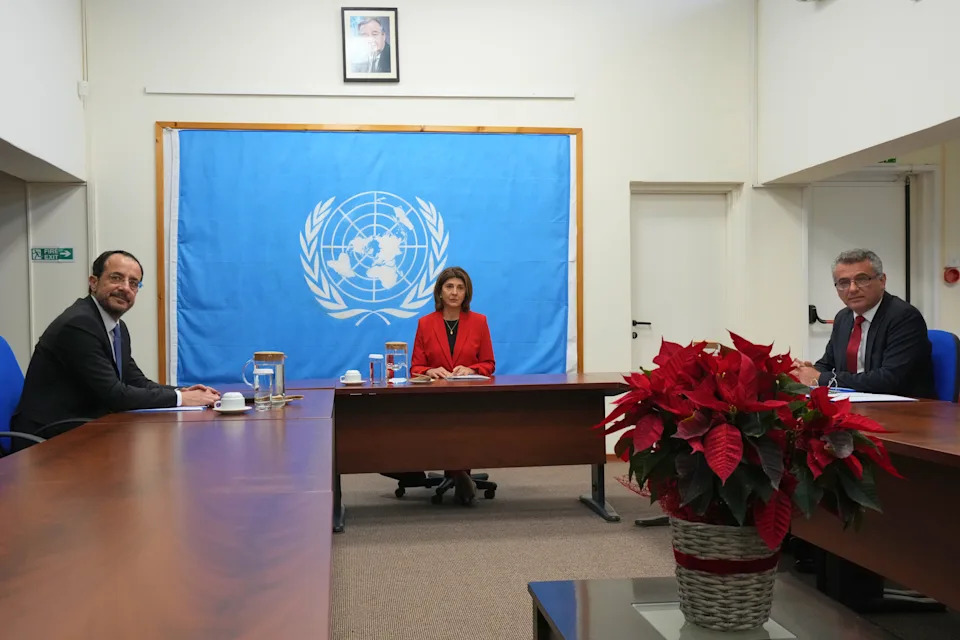
Cyprus' President Nikos Christodoulides, left, and the Turkish Cypriot leader Tufan Erhurman, right, meet with the U.N the Personal Envoy of U.N Secretary General Maria Angela Holguin at the U.N compound inside the UN buffer zone in divided capital Nicosia, Cyprus, Thursday, Dec. 11. 2025. (AP Photo/Petros Karadjias, Pool)(ASSOCIATED PRESS)
Christodoulides said he welcomed that the meeting also touched on core issues of the long-running dispute “after a long time.” Erhurman called the measures “first steps” and stressed that Greek Cypriot recognition of Turkish Cypriot political equality must be part of any path back to full talks.
A U.N. peacekeeping spokesperson, Aleem Siddique, said the leaders concurred that confidence-building measures are important to create a conducive environment but are no substitute for a comprehensive settlement.
Context And Remaining Obstacles
Cyprus has been divided since 1974, when Turkish forces intervened after a junta-backed coup in Athens sought union with Greece. Turkish Cypriots declared independence in 1983; that status is recognized only by Turkey. More than 35,000 Turkish troops remain stationed in the north. Cyprus joined the European Union in 2004, but only the southern Greek Cypriot administration enjoys full membership benefits.
Officials say resolving the Cyprus dispute could unlock the eastern Mediterranean’s energy potential, including expanded exploration for sizable offshore natural gas reserves. Momentum for renewed dialogue grew after Turkish Cypriot voters elected moderate Tufan Erhurman in October, replacing the hard-line incumbent whose push for formal partition was rejected by Greek Cypriots.
Major sticking points remain: demands by Turkish Cypriots for a continued Turkish troop presence, rights for Turkish intervention, and veto powers over some government decisions are positions Greek Cypriots reject. Both leaders affirmed they will meet U.N. Secretary-General António Guterres in a step that officials hope may signal the resumption of full-fledged talks.
Next steps: The leaders will work to formalize the Halloumi agreement, fast-track crossing improvements and complete the water pipeline project while preparing the groundwork for more comprehensive negotiations under U.N. auspices.


