Major labels are shifting from lawsuits to licensing deals with AI music services. Warner and Universal recently settled suits with AI companies and are moving toward opt-in, paid models that aim to license artist voices and compositions. Platforms report a surge of AI uploads—Deezer says about 20,000 fully AI tracks are added daily—raising concerns that AI derivatives could divert listeners and streaming revenue from human artists. The deals could generate new income but intensify competition for limited attention.
Music Industry Shifts Tune: From Lawsuits To Partnerships With AI

Getty Images; Tyler Le/BI
Last month, the song "Walk My Walk" reached No. 1 on Billboard's Country Digital Song Sales chart and has been streamed more than 8 million times on Spotify. The recording, credited to an AI project called Breaking Rust, sparked controversy when country-rap artist Blanco Brown accused the project of using AI to emulate his style. The operator behind Breaking Rust did not respond to requests for comment.
Why This Matters
AI-generated music can produce convincing imitations of established artists with just a few prompts, creating hits while raising questions about authorship, attribution, and royalties. Early examples of AI-generated tracks that went viral provoked aggressive legal responses from major labels, which argued that AI tools trained on copyrighted recordings and vocal styles were infringing artists' rights.
From Courtroom Confrontation To Commercial Deals
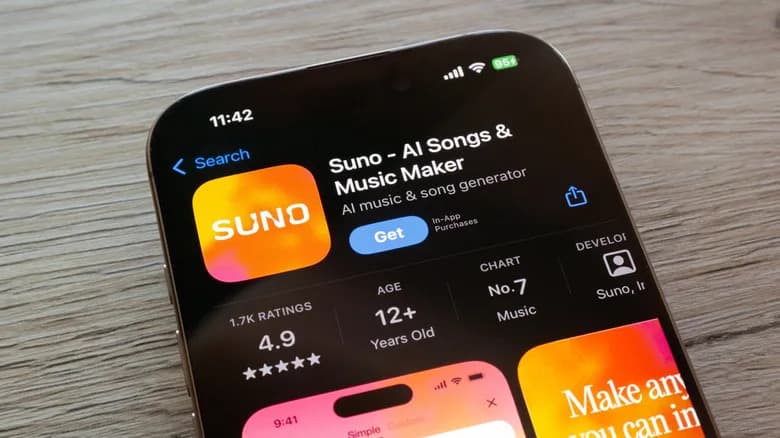
In recent months the industry’s stance has softened. Warner Music Group settled a lawsuit with the AI generator Suno and announced a partnership that includes licensing and usage controls. Universal Music Group reached a settlement with Udio and said the companies would build a subscription product combining generative AI and licensed recordings, slated to launch next year.
"Every minute that is spent listening to a generative AI track is a minute less spent listening to an artist track," warns Mark Mulligan, founder and senior music analyst at MIDiA.
Platforms And Uploads
The volume of AI-produced content is rising fast. Streaming services collectively host more than 100 million tracks, many of which receive few plays. Deezer reported that users were uploading roughly 20,000 fully AI-generated tracks per day—nearly 20% of daily new content. Spotify updated its impersonation policy to remove tracks that use someone’s voice without authorization.
What The Deals Typically Do
Deals between labels and AI firms emphasize opt-in controls and monetization limits. Under the Warner-Suno terms, for example, generated audio downloads will be available only to paid users, and artists must opt in to allow their names, voices, compositions, or likenesses to be recreated. Labels pitch these arrangements as new revenue streams for artists, but they also mean an artist’s catalog will directly compete with AI derivatives for listeners’ attention and streaming dollars.
Artists’ Responses
Reactions among artists vary. Some, like Grimes, have embraced voice cloning and invited fans to experiment. Others—Blanco Brown among them—push back. Brown released his own "trailertrap" remix of "Walk My Walk" as a rebuttal; it has amassed around 2,000 streams so far. Many mainstream stars remain wary of allowing their voices to sing words they did not authorize.
Looking Ahead
The industry appears to be choosing negotiation and licensing over protracted litigation while legal norms remain unsettled. That approach could create controlled ways for fans and creators to use AI tools legally and profitably—but it also heightens competition for finite listener attention. As labels, platforms, and AI companies negotiate new business models, listeners may need to listen more closely to know whether the voices they hear are human or machine.
Reporting by Amanda Hoover at Business Insider contributed to this story.
Help us improve.