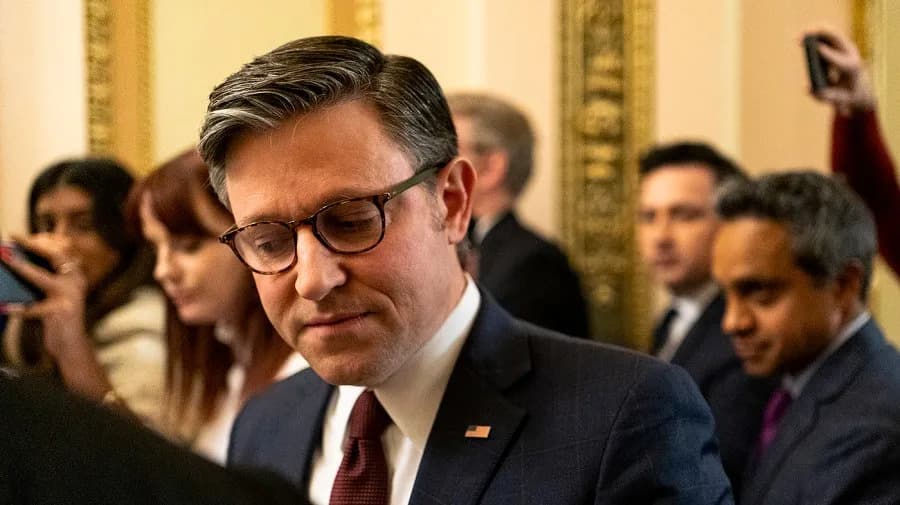
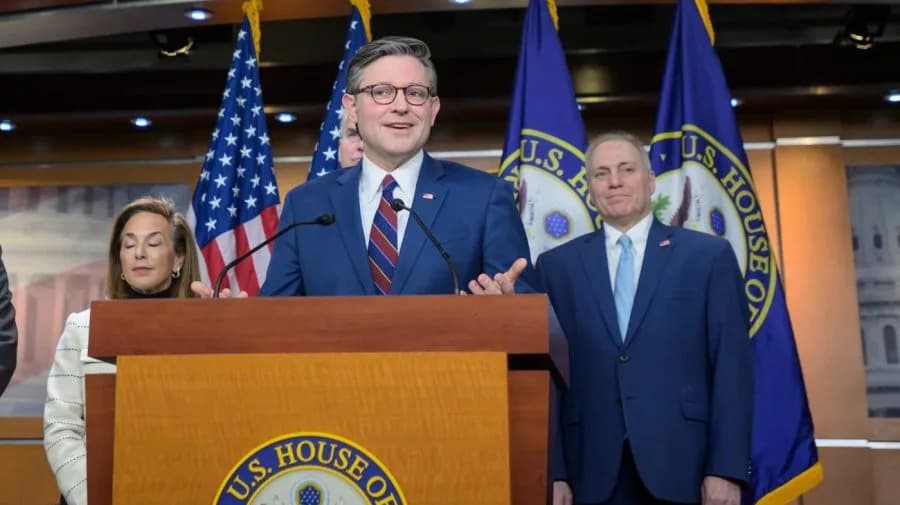
House Speaker Mike Johnson already faced one of Washington’s toughest tasks: holding together a fractious Republican conference while protecting a razor-thin majority ahead of next November. Returning from Thanksgiving, Johnson confronts a House marked by rising intra-party tensions, procedural maneuvering and an increase in personal and partisan attacks on the floor.
In recent weeks, members of both parties have grown more willing to bypass leadership to force votes on pet priorities. Rank-and-file lawmakers pressed an unsanctioned effort to release the Jeffrey Epstein files, and multiple members have filed measures aimed at censuring colleagues. Those moves, once rare, have become a regular feature of floor strategy — undermining party discipline and stretching the chamber’s capacity to legislate.
Compounding the strain, Rep. Marjorie Taylor Greene announced she will resign in January. Her departure removes an outspoken critic from the GOP conference but also narrows Johnson’s majority at a delicate moment. Other high-profile exchanges — including an on-floor spat between Reps. Maxine Waters (D-CA) and Maria Salazar (R-FL) — have underscored how quickly routine business can devolve into bitter confrontation.
Lawmakers describe morale as unusually low. "As I told my family last night, the House has just had a nervous breakdown," Rep. Emanuel Cleaver (D-MO) said, capturing the bleak mood after the chamber’s first full week back in session. Rep. Tim Burchett (R-TN) added bluntly: "We just need to start electing better people." Such comments reflect widespread frustration with petulance and theatrical attacks that drain energy from substantive work.
Washington’s partisan temperature is also contributing to safety concerns. High-profile rhetoric — including calls from outside the chamber that targeted lawmakers — preceded a spike in threats against some members. Several lawmakers privately urged colleagues to lower the rhetoric and rebuild working relationships to reduce risk and restore decorum.
Procedural friction is intensifying. More members are turning to the discharge petition — a tool to force floor votes when leadership resists — and some are proposing rule changes to rein in frequent censure motions. Rep. Nick LaLota (R-NY) argued the censure process has been cheapened by partisan use, and Rep. Steny Hoyer (D-MD) said there is "merit" in restoring the weight of institutional sanctions.
On the policy calendar, GOP leaders face tough votes on issues such as health-care legislation and government funding that will test cohesion. Republicans are wary about their electoral prospects: redistricting battles and competitive special elections have heightened anxiety about protecting the majority next year.
Speaker Johnson has discussed options to discourage rogue actions — including raising the threshold for discharge petitions — but lacks broad support within his conference for major procedural overhauls. With members increasingly willing to force their own priorities onto the floor, the speaker may find it harder to shield the chamber from disruptive, high-stakes votes.
As the House moves forward, the central question for many lawmakers is whether leadership can restore a baseline of civility and productivity before mounting policy fights and the 2026 midterm calendar take center stage.