After a fragile ceasefire, children in Gaza are returning to makeshift schools in damaged buildings and tents, often without books, supplies or basic services. Around 900 pupils attend Al-Louloua al-Qatami in two shifts, while UNRWA and local initiatives have opened temporary learning spaces to reach tens of thousands more. Teachers are using play-based methods to address trauma, but a UN assessment found 97% of schools damaged and the number of children needing education far exceeds current capacity. International programmes aim to help, yet educators warn Gaza's education system faces a critical moment.
Back to Class Amid Ruins — Gaza's Children Study in Makeshift Schools Without Books

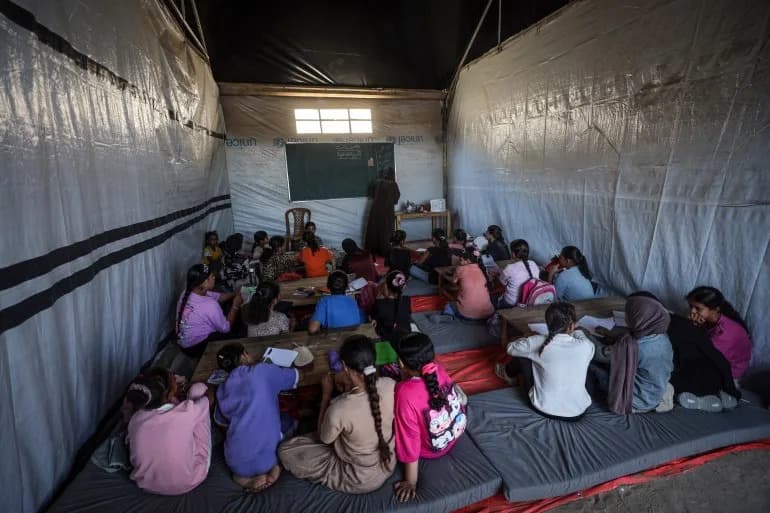
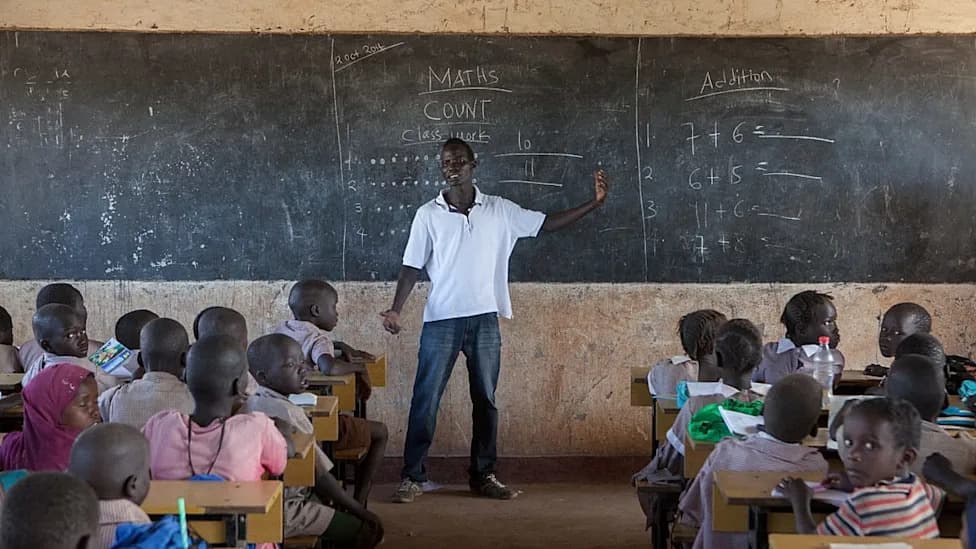
Eleven-year-old Layan Haji walks through shattered streets in Gaza City to reach a makeshift classroom, carrying no backpack, textbooks or uniform after two years of conflict interrupted her schooling. The murals and students' artwork that once brightened corridors are gone; tents inside a damaged building now serve as classrooms for children whose schools were destroyed or turned into shelters.
'I walk for half an hour at least. The streets are devastated, full of ruins... It is difficult and sad,' Layan said, wearing a torn shirt and patched trousers. 'I am happy to return to my studies,' she added, and still hopes to become a doctor.
Daily Struggles Before Lessons Begin
About 900 pupils attend Al-Louloua al-Qatami school in two shifts, one of several institutions that have reopened since a fragile ceasefire allowed displaced families to return to areas not under military control. Many children arrive without books, notebooks or basic supplies because libraries and school buildings were bombed or repurposed as shelters.
'We don't have books or notebooks. The libraries are bombed and destroyed,' Layan said of life in the Tal al-Hawa displacement camp. Sixteen-year-old Said Sheldan welcomed the chance to study again but described the dire conditions: 'I don't have books, notebooks, pens or a bag. There are no chairs, electricity or water — not even streets.'
Before class, many children must meet urgent survival needs. 'Every morning, I have to collect water and wait in line for bread,' said Said, whose family has been displaced multiple times and no longer has a permanent home.
Schools Responding to Trauma and Need
Headteacher Iman al-Hinawi, 50, said the school hopes to distribute free books and supplies soon, but warned that children have been forced to take on heavy labour to support families after the loss of breadwinners. 'They collect firewood, fetch water and stand in line for food,' she said.
Teachers have adopted play-based learning to address psychological distress. Pupils dance to solve math problems, perform short comedic scenes to recite poems, and use extracurricular activities to support mental health and re-engage students who remain distracted by queues for essentials.
Scale of the Education Crisis
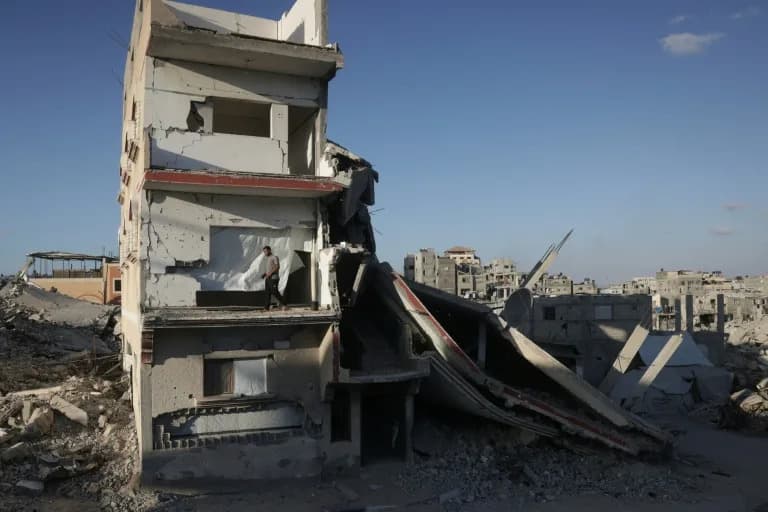
A United Nations assessment found that 97 percent of Gaza's schools sustained some level of damage, with most requiring major rehabilitation or full reconstruction. Many schools also served as displacement shelters, and strikes have tragically killed Palestinians sheltering in education facilities — while authorities have said fighters have sometimes been present near these sites.
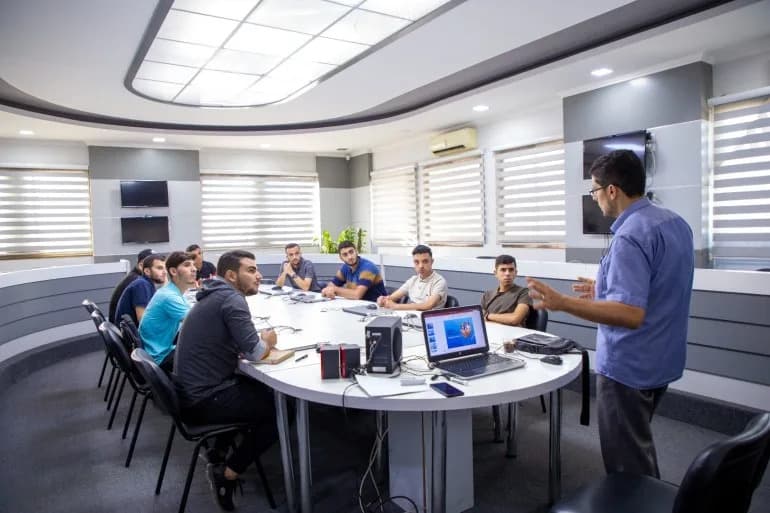
UNRWA (the UN agency for Palestinian refugees) and the education ministry have opened 'temporary learning spaces' to expand access. More than 25,000 children have joined these new spaces, and an additional cohort of students has been targeted for online classes, but these efforts still fall far short of the education ministry's estimate of more than 758,000 students in the territory.
Local and International Support
Local initiatives, supported in part by international partners, aim to restore learning at scale. The Education Above All Foundation launched 'Rebuilding Hope for Gaza' to support over 100,000 students by distributing supplies, improving access to electricity and internet, and providing psychological support. Even so, some schools in areas such as Al-Mawasi can currently offer only four subjects: Arabic, English, maths and science.
Hazem Abu Habib, involved with a foundation-backed initiative, said: 'We aim to help as many students as possible resume their education, even if it's just with basic courses.' Educators warn that while Gaza had made strong gains against illiteracy before the war, the education system now faces its most critical period.
'This is a moment of urgent action: rebuilding classrooms, restoring learning materials and supporting children's mental health must be priorities,' said a school official coordinating relief efforts.
Despite the extreme hardship, many children like Layan show resilience and determination to continue learning — a sign that renewed, coordinated support could help salvage an education system on the brink.
Help us improve.