The plastic 3D‑printed revolvers gifted by FBI Director Kash Patel to five senior New Zealand officials were identified as Maverick PG22 models — working designs inspired by brightly coloured toy guns. Police concluded the replicas met New Zealand’s legal definition of firearms, so the recipients surrendered them and the pistols were destroyed on Sept. 25. Experts warned the guns could be made operable with basic tools and lack modern safeties, raising safety and diplomatic questions about the gifts.
3D‑Printed Maverick PG22 Revolvers Gifted by FBI Director to New Zealand Officials Were Toy‑Inspired — Declared Illegal and Destroyed

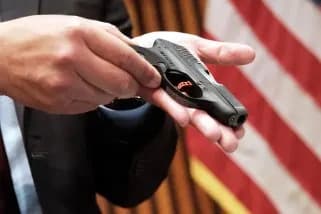
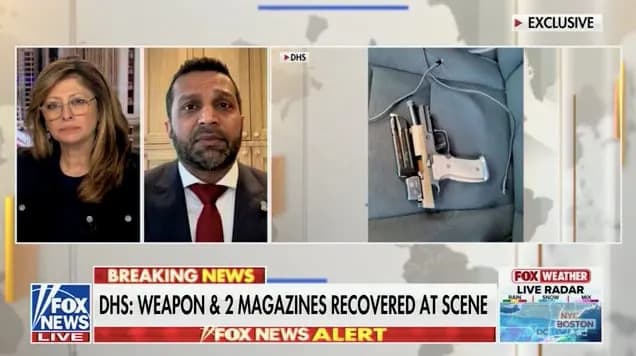
Five senior New Zealand officials who accepted plastic 3D‑printed pistols from FBI Director Kash Patel during his July visit were later required to surrender them after police concluded the replicas met the legal definition of firearms. Documents and internal emails identify the model as the Maverick PG22 — a working revolver inspired by brightly coloured Nerf‑style toy guns and popular among 3D‑printing hobbyists.
Patel presented the commemorative pieces while opening the FBI’s first standalone office in Wellington. Police legal advice determined that, under New Zealand law, pistols generally require a specific permit in addition to an ordinary firearms licence. Because the recipients did not hold the necessary pistol permits, the items could not legally remain in their possession and were destroyed on Sept. 25.
Experts and police warned the replicas could be modified to fire. In August, police armory team leader Daniel Millar emailed colleagues, describing how straightforward it would be to make the guns operable using modest skills and common tools: "a battery drill and a drill bit for the holes and a small screw for the firing pin," he wrote. Online assembly instructions for the Maverick PG22 also note the design "does not feature proper modern safeties and should be used in a controlled environment."
“The first risk is that it can be made viable and it gets into the hands of the wrong person and it’s used for a crime. The second risk is it just explodes because it’s not actually safe,”
said Professor Alexander Gillespie, who lectures on firearms regulation at the University of Waikato.
Police records show the Maverick PG22 is among the most commonly seized 3D‑printed firearms in New Zealand. Millar requested that a revolver be retained for testing, but the police commissioner declined and the gifted pistols were destroyed.
Who received the gifts
- One recipient identified only as Chambers (a senior law enforcement official)
- Andrew Hampton, director‑general of the human intelligence service NZSIS
- Andrew Clark, director‑general of the Government Communications Security Bureau (GCSB)
- Police Minister Mark Mitchell
- Judith Collins, minister responsible for defence and intelligence portfolios
All five officials voluntarily handed the pistols to police after being advised the items could not legally remain in their possession without the relevant permits.
New Zealand Police refused to release photos of the seized items in response to a public records request, saying the images could "prejudice New Zealand’s relations with the United States of America." Police did not explain why images already widely available online of the Maverick PG22 design would have a different diplomatic effect.
Legal and public context
New Zealand tightened firearm laws after the March 2019 Christchurch mosque attacks, when a gunman used legally acquired semiautomatic weapons to kill 51 people. While the Maverick PG22 replicas were not semiautomatic weapons of the type banned after Christchurch, New Zealand maintains multiple legal thresholds that restrict private ownership of particular firearms — including the specific pistol permits required here.
Firearms ownership in New Zealand is commonly treated as a regulated privilege rather than a right. Guns are widely used in rural areas for pest control, but violent gun crime is rare and front‑line police officers are not routinely armed on patrol.
Outcome
Following legal advice and internal consideration, the five gifted Maverick PG22 replicas were surrendered and destroyed on Sept. 25. The incident prompted questions about the suitability of such gifts between officials, the risks posed by easily manufactured 3D‑printed weapons, and how police balance testing requests with public safety and diplomatic considerations.
Help us improve.