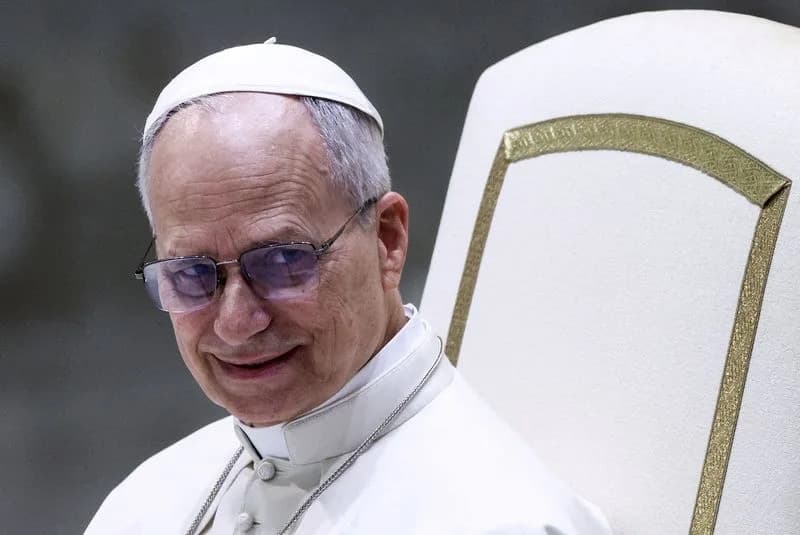
Pope Leo XIV’s visit to Turkey has renewed hopes that the Halki Theological School — closed since 1971 — may soon reopen. Renovation work is underway on Heybeliada Island, and talks between the Istanbul-based Patriarchate and Turkish officials have begun. Archbishop Elpidophoros expressed cautious optimism that students could return by the next academic year. Observers say the seminary’s reopening would be an important test of Turkey’s treatment of religious minorities.
Papal Visit Boosts Hopes for Reopening of Istanbul’s Historic Halki Seminary

Pope Leo XIV’s visit to Turkey has renewed hopes that the Halki Theological School — a Greek Orthodox seminary closed since 1971 — may finally reopen. Perched on Heybeliada Island near Istanbul, the seminary has long symbolized Orthodox heritage and has been central to calls for expanded religious freedoms in Turkey.
Renovations and renewed diplomacy
Founded in 1844, the Halki Theological School once trained generations of Greek Orthodox clergy, including Ecumenical Patriarch Bartholomew I. The school was shut in 1971 under laws restricting private higher education, and despite appeals by international religious leaders and human rights advocates — and subsequent legal changes that allowed private universities to operate — Halki has remained closed.
Recent momentum for reopening gained attention after President Recep Tayyip Erdogan raised the issue with U.S. President Donald Trump at a White House meeting in September, saying Turkey would “do our part.” Erdogan has at times linked any progress to reciprocal steps by Greece to improve the rights of Muslims there. Meanwhile, scaffolding surrounds the school as renovation work continues; one floor intended for clergy quarters and two classrooms have already been refurbished and stand ready to receive students.
Talks underway and cautious optimism
A committee of representatives from the Istanbul-based Greek Orthodox Patriarchate and the Turkish government has begun discussions on reopening the seminary. Archbishop Elpidophoros, head of the Greek Orthodox Archdiocese of America, said in a video interview that Turkey is now “ready to make the big step forward for the benefit of Turkey, for the benefit of the minorities and for the benefit of religious and minority rights in this country.” He expressed hope the school could welcome students by the start of the next academic year.
“Keeping this school closed after more than 50 years is a political and diplomatic anachronism that doesn’t help our country,” said Elpidophoros, who was born in Istanbul and served as abbot of the Halki monastery for eight years before his appointment as archbishop of America. “We have so many private universities and private schools in Turkey, so keeping only Halki closed doesn’t help Turkey, doesn’t help anyone.”
A wider test of religious freedom
The fate of Halki has long been seen as a test of how predominantly Muslim Turkey treats its religious minorities. Christians in Turkey are estimated at between 200,000 and 370,000 people in a country of nearly 86 million. Since 2002, the Erdogan government has enacted reforms that reopened some places of worship and returned confiscated property, but significant challenges remain.
Although the constitution guarantees freedom of religion, only Armenians, Greeks and Jews — the non-Muslim minorities recognized under the 1923 treaty that defined modern Turkey’s borders — are permitted to operate places of worship and schools. Other Christian groups often lack formal recognition and face obstacles in registering churches or religious associations.
There have been isolated incidents of violence targeting Christian communities, including a 2024 attack on a Catholic church in Istanbul in which a worshipper was killed during Mass. Authorities said the Islamic State group claimed responsibility. Ankara also denied recent reports that it had deported foreign nationals from Protestant groups as national security threats, calling such claims a “deliberate disinformation campaign.”
Historic context and significance
In July 2020 Turkey converted Istanbul’s Hagia Sophia — once one of Christianity’s principal cathedrals and a UNESCO world heritage site — back into a mosque, a decision that drew international criticism. Although popes have visited Hagia Sophia before, the landmark was not included on Pope Leo XIV’s itinerary for this trip.
The Greek Orthodox Patriarchate in Istanbul is widely recognized internationally as “first among equals” in the Orthodox world, though Turkey does not formally accept that ecumenical status. Ankara maintains that under the 1923 treaty the patriarch is the head only of the country’s shrinking Greek Orthodox minority. The patriarchate traces its roots to the Byzantine era, before Constantinople fell to the Ottoman Turks in 1453.
Local voices and hopes for reconciliation
Visitors and church leaders say reopening Halki could help mend strained ties between Greece and Turkey and offer a platform for dialogue. Agnes Kaltsogianni, a 48-year-old English teacher visiting from Greece, said the seminary could be “a starting point for major cultural development and affinity” between the two countries.
Archbishop Elpidophoros described Halki as embodying a spirit open to new ideas, dialogue and coexistence, and he urged the world to value such institutions that reject nationalist and religious prejudice.
Reported by Fraser from Ankara.
Help us improve.