Local artists on Gaza’s beach are carving sand sculptures to offer residents brief relief from more than two years of conflict. Using improvised tools—tape measures, broken tiles and sticks—they create ephemeral artworks that draw displaced families and children to the shore. The pieces are erased by the tides each night, but the artists return daily, saying creativity sustains them and helps communities reconnect to their home.
Sculpting Hope: Gaza Artists Carve Brief Respite into Beach Sand

Sculpting Hope on Gaza’s Shoreline
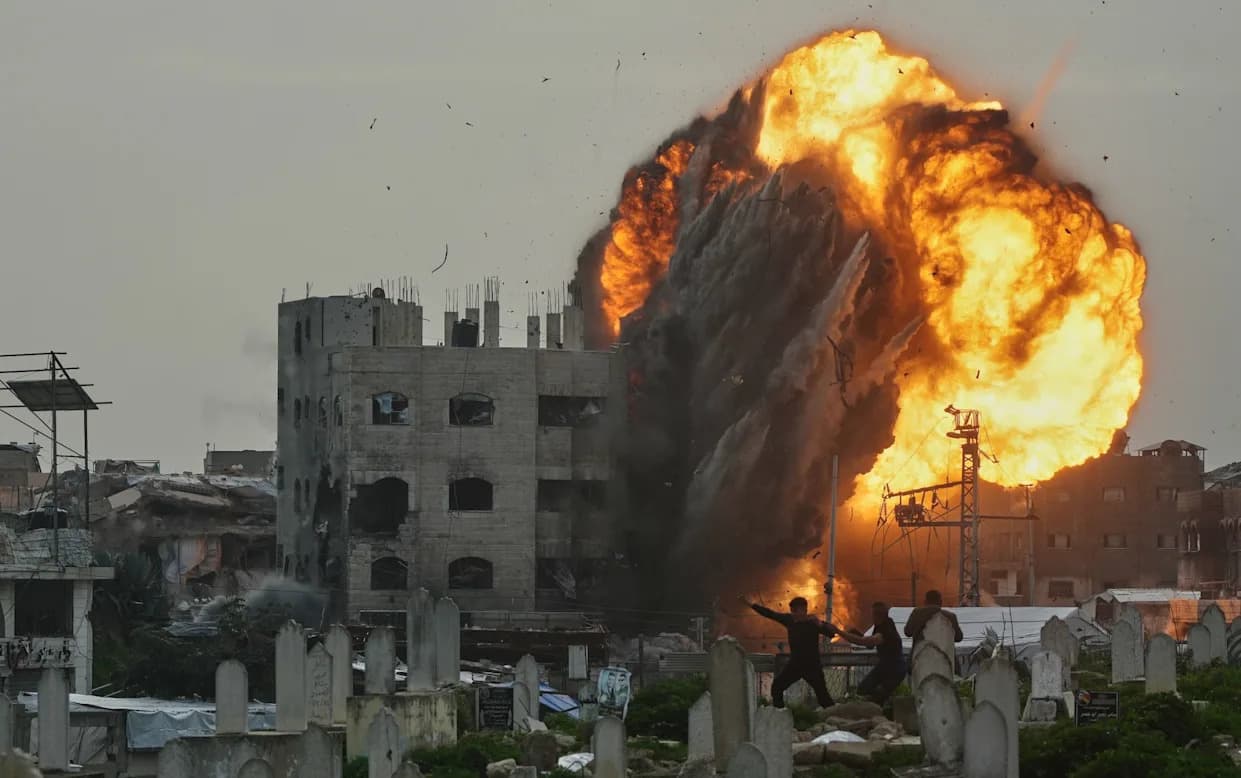
Gaza’s coastline has been battered by more than two years of military operations, yet the beach still provides fleeting moments of relief for residents of the besieged enclave. Local artists have turned this damaged stretch of sand into a public canvas, creating temporary sculptures and drawings that draw displaced families, children and elders to the water’s edge.
Artist Yazid Abu Jarad and his team mark letters and shapes in the sand with tape measures and simple tools, gathering onlookers who are often carrying the visible and invisible scars of conflict. Their work—small, detailed and made from whatever materials survive the devastation—offers a rare chance for people to shift their focus, even if only for a short time.
“When we create art on Gaza’s beach, people gather around us. It brings joy—you can see it on the faces of children and even the elderly. For a moment, they drift into a different world,” Yazid said.
With most studio supplies destroyed or unavailable, the artists improvise: a small brush, a shard of tile, a stick found on the shore, a tape measure used to outline letters and shapes. The shoreline art is intentionally ephemeral—each evening the tide often washes their work away, and the artists return the next morning to begin again.
“We come back the next day and start again. Art is our talent—we love sculpting and drawing on Gaza’s soil,” said fellow artist Majd Ayada. “Even after two years of war, we never give up.”
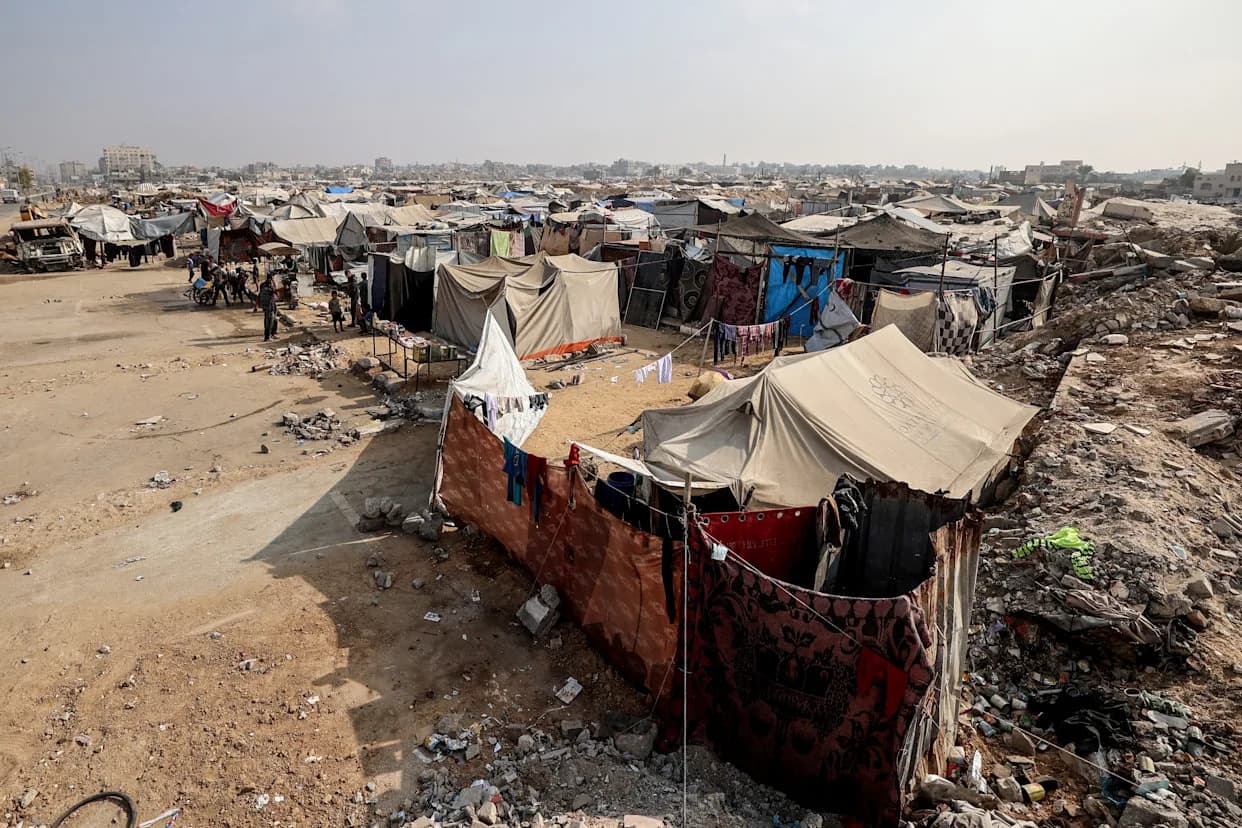
Nearby, displaced families watch from tents and thin plastic sheets that offer only minimal protection from winter cold. For them, the sculptures are more than decoration: they are a reminder of home and a way to strengthen ties to a place many have been forced to flee repeatedly.
“We were born here, our children were born here… This is our home. We’re rooted in Gaza,” said Fathi Abu Maoud, a displaced father.
Though temporary, the sand art provides psychological relief, community connection and a small measure of dignity amid ongoing hardship. In the plain act of shaping sand, these artists and their audiences create moments of normalcy and hope against a backdrop of destruction.
Help us improve.