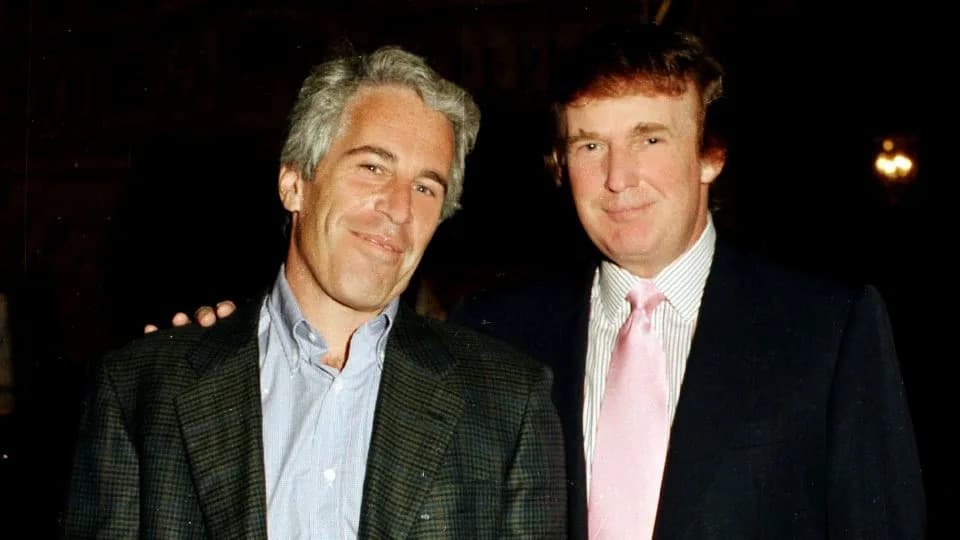
The author contends that President Trump initially sought to block public release of Jeffrey Epstein’s records but reversed course only after Congress forced a vote. Even after signing disclosure legislation, Trump’s call for a Justice Department probe into prominent figures could be used to delay or block the files’ release by invoking an active investigation. The piece stresses that survivors deserve transparency and that anyone implicated — regardless of politics — should be investigated and prosecuted if evidence warrants.
Trump Tried to Block the Epstein Files — Now a New Probe Could Keep Them Hidden

If President Trump truly wanted the Jeffrey Epstein records released, he could have ordered their disclosure at any point since taking office. Instead, he spent months resisting public release even as Congress moved to make the files public. On Nov. 18 both chambers approved legislation to compel disclosure after a rare House discharge petition — supported by four Republicans and many Democrats — forced the bill onto the floor.
When it became clear the bill would pass, the president reversed course. On Nov. 16 he publicly urged House Republicans to support the measure requiring the Justice Department to turn over Epstein-related records, allowing him to avoid a direct political defeat.
Yet signing the bill into law may not end the secrecy. On Nov. 14 the president called on the Justice Department and FBI via social media to investigate “Jeffrey Epstein’s involvement with Bill Clinton, Larry Summers, Reid Hoffman, J.P. Morgan, Chase, and many other people and institutions.” Among those named were former President Bill Clinton, former Treasury Secretary Larry Summers and Silicon Valley donor Reid Hoffman — all of whom have acknowledged ties to Epstein but denied involvement in his crimes. Epstein was a client of J.P. Morgan Chase from 1998 to 2013; the bank says it did not help him commit any crimes.
Attorney General Pam Bondi quickly agreed to open the inquiry the president requested. That new probe could provide the Justice Department with a legal rationale to keep the files under seal: the department could argue that releasing documents would interfere with an active investigation. In that scenario, the administration could say it supports transparency while pointing to an ongoing probe as the reason disclosure remains delayed.
The apparent design of the inquiry raises two concerns. First, it could be used to postpone or block disclosure indefinitely — investigators can stretch inquiries for months or years. Second, a politically charged investigation into prominent Democrats would force them to spend time and money defending themselves, even if the inquiry is ultimately unfounded.
Jeffrey Epstein, a wealthy financier and convicted sex offender, died by suicide in 2019 while awaiting federal sex-trafficking charges. Records from his estate and thousands of related documents contain material that survivors and advocates say show abuse of more than 1,000 teenage girls and young women. Those survivors and the public have long demanded transparency.
President Trump has not been charged with any crime connected to Epstein. Still, his name appears repeatedly in documents recently released by House members after they obtained records from Epstein’s estate. In a 2002 interview with New York magazine, Trump said,
“I’ve known Jeff for 15 years. Terrific guy. He’s a lot of fun to be with. It is even said that he likes beautiful women as much as I do, and many of them are on the younger side.”
Epstein later told journalist Michael Wolff on a recorded interview that he had been Trump’s “closest friend for 10 years,” a claim Trump denies. The two reportedly had a falling-out before Epstein was charged.
Any legitimate investigation into people who may have been involved in or aware of Epstein’s crimes would reasonably include those who associated with him — including Trump. That inclusion is not proof of guilt, but it does explain why investigators and the public would want to examine relevant contacts and documents. Notably, Trump did not ask Bondi to investigate him.
Bondi had previously indicated support for releasing the Epstein materials but reversed course in July after the Justice Department issued a memo stating, “We did not uncover evidence that could predicate an investigation against uncharged third parties.” Her decision to open a fresh inquiry only after the president’s public demand raises legitimate questions about independence and motive.
I do not know what undisclosed information the files might reveal about any individual. What is clear is this: survivors deserve transparency, and anyone who may have contributed to their suffering — regardless of political affiliation — should be investigated and, if warranted by evidence, prosecuted. The public has a right to see these records and to know the truth.
A. Scott Bolden is an attorney, a contributor to NewsNation, a former chair of the Washington, D.C. Democratic Party, and a former New York state prosecutor.
Help us improve.