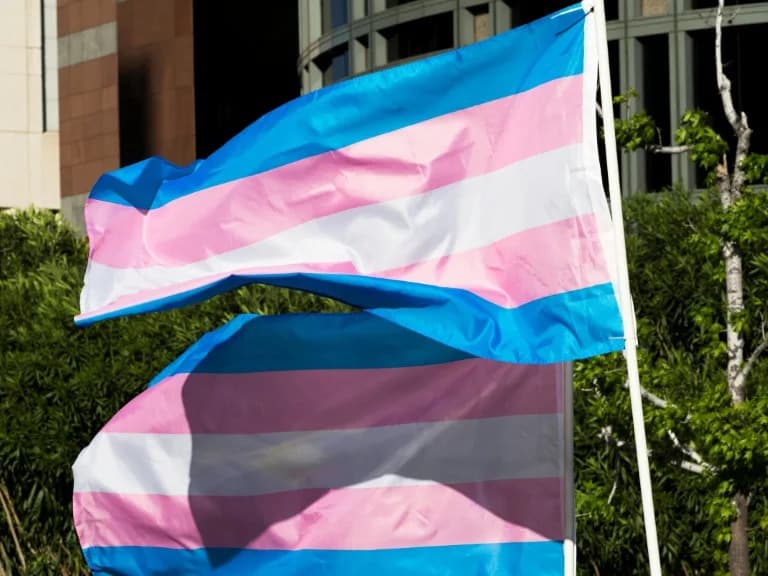
The article argues that Republicans are using transgender athletes as a late-stage campaign diversion from pressing issues like inflation, health care, and national security. Key facts: the NCAA testified there are "less than 10" openly transgender collegiate athletes among ~510,000, and sports governing bodies have issued sport-specific policies. Democrats should respond by deferring to experts, putting the numbers in perspective, and highlighting the broader persecution of transgender Americans.
Republicans’ Closing Argument: Trans Athletes as a Political Distraction
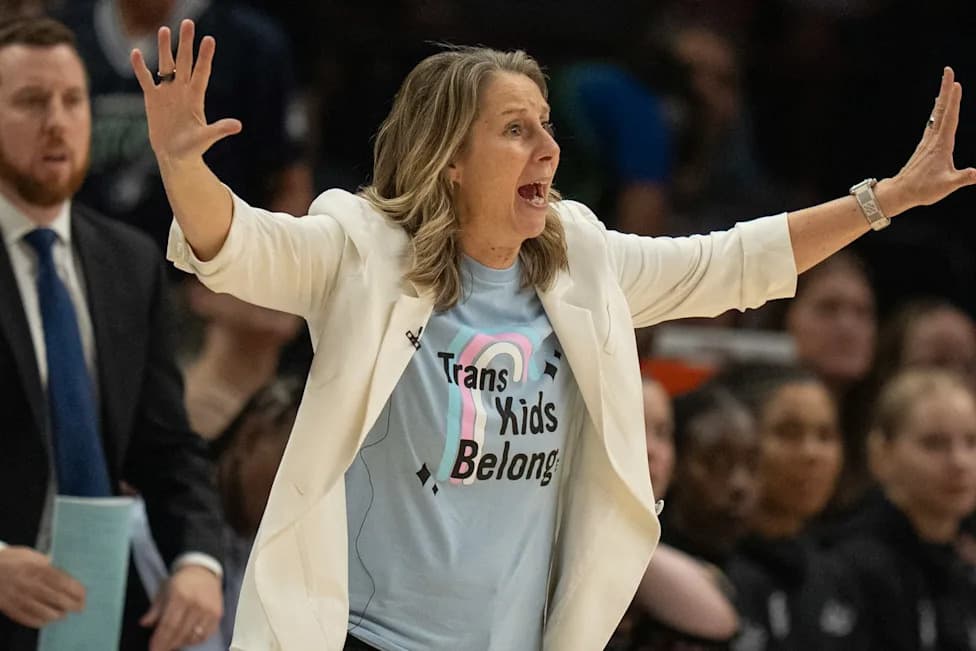
Pathetic Republicans “Trans”-ition to Their Vile Closing Argument
We are now in a familiar late-stage phase of the campaign in which Republican strategists are pivoting to a single culture-war issue they hope will mobilize voters: transgender athletes. This tactic diverts attention from pressing concerns—rising prices, health‑care costs, the war in the Middle East, and shuttered rural hospitals—and focuses it on a phenomenon that is, by multiple measures, vanishingly rare.
The Distraction
Attack ads in places like Florida, Ohio and Texas portray Democrats as preoccupied with allowing "boys" into girls' sports. That framing is politically opportunistic and misleading. Republicans whose records show failures on economic and national-security issues are using fear of trans athletes as a closing argument—precisely because it inflames attention while avoiding accountability for policy outcomes voters care about.
How Rare Are Trans Athletes?
"Less than 10." In December 2024, NCAA President Charlie Baker testified to the Senate Judiciary Committee that there are about 510,000 collegiate athletes and "less than 10" who are openly transgender.
Olympic participation is similarly rare: in this century only two athletes who identified as transgender have competed in the Olympics, alongside roughly six athletes who identified as nonbinary, out of roughly 13,000 Olympians every four years. The International Olympic Committee's 2028 ruling will further restrict trans‑women participation in Olympic women’s categories.
Sport Governing Bodies Have Studied This
One underused argument for Democrats is to point out that sport-specific governing bodies have already studied the issue and set tailored policies. Different sports raise different physiological and competitive considerations, so a one-size-fits-all political approach is unnecessary and counterproductive. A sampling of existing approaches (from transathlete.com and public policy statements) shows a wide range:
- USA Badminton: Admits trans women "on a case-by-case basis."
- USA Biathlon: States athletes may participate in the gender category that best aligns with their gender identity without medical proof.
- USA Cycling: Adopted rules making the female category open only to those assigned female at birth on their original birth certificate.
- US Figure Skating: Has a policy similar to USA Cycling.
- US Golf Association: Issued a 2024 policy allowing trans athletes to participate if they meet specified requirements.
- USA Roller Sports: Follows the 2015 IOC consensus and requires testosterone levels below 10 nmol/L for trans women.
- USA Swimming: Adopted a 2025 policy limiting the female category to those assigned female at birth.
Many other sports—canoe/kayak, equestrian, luge, pentathlon, skateboarding, softball, table tennis—have not formalized new policies, suggesting the issue is not uniformly urgent across disciplines.
Political Context And Public Opinion
A New Republic poll of about 2,400 rank-and-file Democrats showed 80% support protections from discrimination for trans people, 62% support for youth access to gender-affirming care, but only 39% support for allowing trans youth to compete according to their gender identity. Broader national polls also show substantial public concern about trans women in women’s sports. These numbers help explain why some Democrats in competitive states have adopted cautious stances.
At the same time, transgender Americans face a wave of hostile legislation and social pushback: hotlines have seen increased calls, and dozens of bills across many states restrict trans people’s rights. That broader persecution is central to any ethical and political response.
A Practical, Three-Part Democratic Response
- Defer To Experts: Emphasize that sport governing bodies have studied and adopted sport-specific rules—leave technical decisions to those experts, not to generalist politicians.
- Provide Perspective: Point out the scale: fewer than 10 openly transgender college athletes among ~510,000 NCAA athletes. Ask why opponents obsess about this instead of focusing on the economy, health care and national security.
- Broaden The Conversation: Confront the broader, ongoing assault on transgender people—laws and policies that restrict rights, endanger access to care, and force many to consider leaving unsafe states.
Tone Matters
Some Democrats have mishandled the issue by seeking to placate conservative audiences at the expense of a vulnerable constituency—Gavin Newsom’s March 2025 appearance with Charlie Kirk is a high-profile example that drew criticism for appearing to pander to a hostile audience. Modern political media ecosystems mean such moves can alienate core supporters and provoke backlash.
In short, Democrats can deny Republicans the advantage of fearmongering by using a calm, fact-based frame: experts should set technical rules, the numbers show this issue is tiny in scope, and the larger story is that transgender Americans are under coordinated attack. That combination is both principled and politically defensible.
Help us improve.