Teachers in Libya began sit-ins on 13 September and have escalated them into an open-ended nationwide strike, closing public schools. Unions demand a unified pay system, higher wages, improved benefits and better school facilities; other sectoral unions have threatened to join. The GNU government is considering a unified pay proposal, but political divisions and budgetary and legislative steps mean any pay rise will take time.
Libyan Teachers Mount Open-Ended Strike as Unions Demand Unified Pay and Education Reforms

Young people play football during a teachers strike and school closures in Benghazi, Libya, on September 27, 2026 [Esam Omran Al-Fetori/Reuters]
Teachers across Libya have escalated salary protests into an open-ended nationwide strike that has shut public schools and kept pupils out of classrooms since the academic year was due to start on 13 September. Sit-ins began in Tripoli and spread nationwide, with unions stepping up their demands for higher, unified wages, better benefits and improved school conditions.
Background
Initial demonstrations on 13 September began with sit-ins outside schools and government buildings in the capital, Tripoli. About two weeks later the teachers' union called a nationwide walkout. On Sunday, several other sectoral unions warned they would join the strike unless the government agreed to talks to address a mounting cost-of-living crisis.
Key Demands
Teachers say they face shrinking real wages, unpaid arrears, inadequate benefits and deteriorating school infrastructure. Their principal demands include:
- Adoption of a unified pay system to reduce wide disparities across public-sector workers;
- Higher wages indexed to living costs and the volatile dinar–US dollar exchange rate;
- Improved health insurance, pension payments for retirees and protection for staff and families;
- Better school facilities and funding for essential equipment such as computer labs and desks.
Government Response And Political Context
Prime Minister Abdul Hamid Dbeibah of the internationally recognised Government of National Unity (GNU) convened senior ministers, including Finance Minister Rashid Boughofa, to consider a proposal for a unified pay system covering all state institutions. Officials have acknowledged the legitimacy of teachers' concerns but stressed that any pay increases require a government decision, parliamentary approval and banking arrangements — steps that will take time amid Libya's ongoing legislative fragmentation.
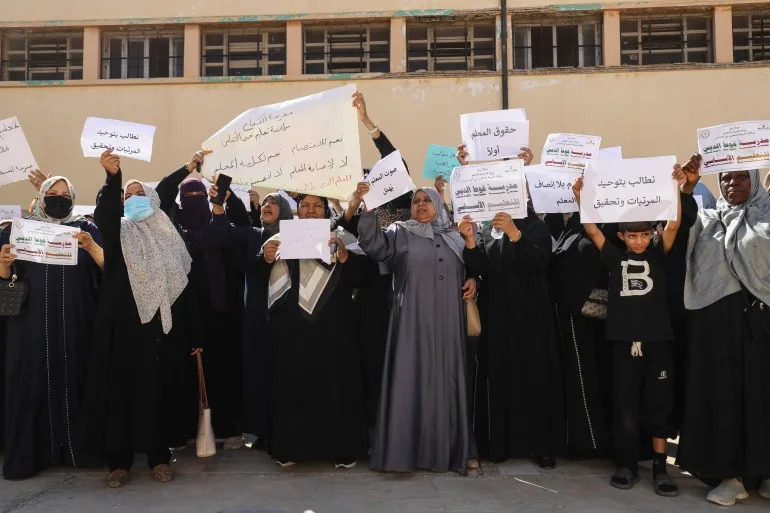
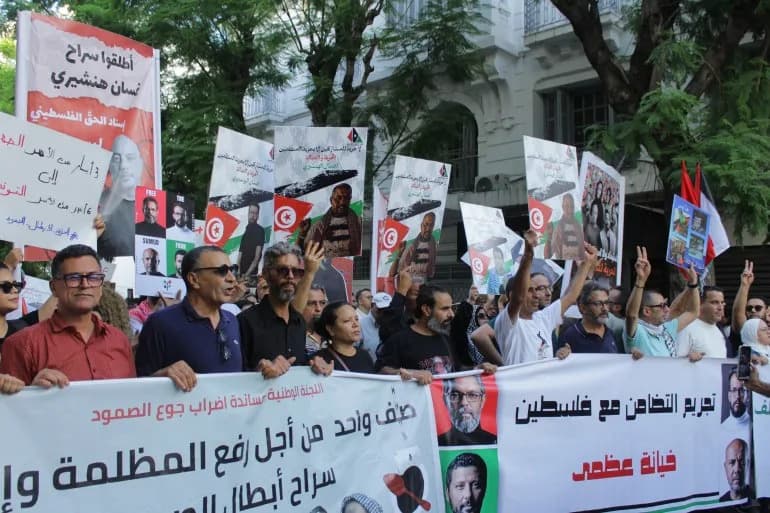
Teachers demonstrate to demand higher salaries and better working conditions at a school in Tripoli on September 29, 2026 [Mahmud Turkia/AFP]
The strike spans the country's political divide, affecting both the west (under the GNU) and the east (controlled by forces aligned with commander Khalifa Haftar). In April, rival legislatures agreed a unified budget for the first time, but political and institutional schisms continue to complicate rapid reform.
Scale And Budgetary Constraints
An education brief prepared by Libya's National Council for Economic and Social Development with UNICEF shows that 91 percent of the education budget is consumed by salaries, leaving limited funding for school operations and equipment. The sector employed roughly 560,000 people in 2024, including about 270,000 teachers in basic and secondary education — a sizable workforce for a country of about 7.5 million people.
Recent Developments And Outlook
Union leaders, including Ashraf Abu Rawi of the Tripoli teachers' union, withdrew from a Ministry of Education meeting after concluding that authorities had not taken their demands seriously. The unions have warned against arbitrary or punitive measures targeting workers, retirees or union representatives and have called on the attorney general to investigate alleged corruption in public spending.
Officials say negotiations are possible, but any comprehensive pay reform is likely to require time-consuming legal, parliamentary and banking processes. Meanwhile, parents and students remain caught in the disruption: some back the teachers' demands but urge a resolution that minimizes long-term harm to pupils' education.
Sources: Reporting by Al Jazeera and Reuters; budget brief by Libya's National Council for Economic and Social Development and UNICEF.
Help us improve.