The article examines escalating tensions between Turkey and Israel, centered on Presidents Recep Tayyip Erdogan and Benjamin Netanyahu. Both leaders face serious domestic problems — Turkey’s economic scandal and market turmoil, and Israel’s political fallout from intelligence failures and an imminent election. Regional alliances, competing interests (including ties with Iran, Saudi Arabia and Greece), and the risks of hybrid warfare complicate the outlook. While a full-scale war appears unlikely soon, limited clashes or incidents remain possible as both sides probe each other.
Erdogan vs. Netanyahu: A Dangerous Standoff Neither Can Afford
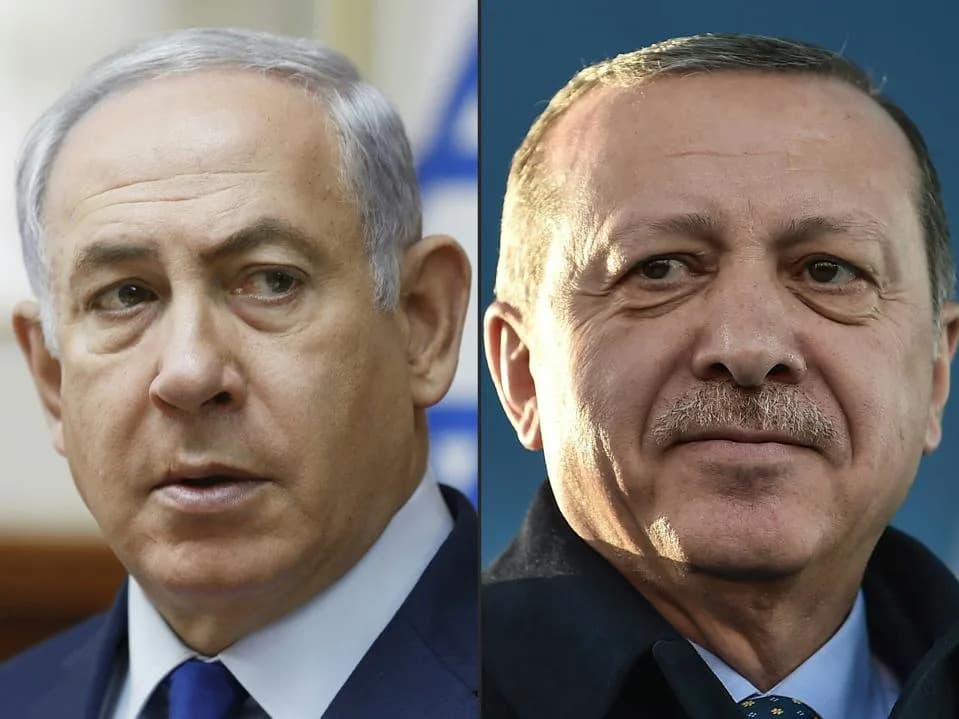
(COMBO) This combination of pictures shows Netanyahu and Erdogan, leaders of Israel and Turkey respectively, who are on a course to confrontation at a difficult time domestically for both. / AFP PHOTO / RONEN ZVULUN AND OZAN KOSE (Photo credit should read RONEN ZVULUN,OZAN KOSE/AFP via Getty Images)AFP via Getty Images
Tensions between Turkey and Israel — embodied in President Recep Tayyip Erdogan and Prime Minister Benjamin Netanyahu — have risen sharply at a moment when both leaders face serious domestic vulnerabilities. Their growing rivalry mixes high-stakes regional diplomacy, military moves in Syria and beyond, and intense domestic political pressure that limits each leader’s maneuvering room.
Background
Erdogan has pursued a more assertive regional posture under a brand of neo-Ottoman aspiration, publicly engaging with groups hostile to Israel, including Hamas and, more recently, Hezbollah figures. Those gestures bolster his standing with Islamist-leaning supporters at home, but they risk widening Turkey’s strategic isolation and increasing pressure on an already fragile economy.
Military And Diplomatic Responses
Israel has responded on multiple fronts. Diplomatic and defense ties with Greece and the Greek Cypriot administration have been strengthened, including arms cooperation. Militarily, Israeli strikes have targeted weapons depots and logistics in Syria linked to the Assad network and its backers. Although Turkish and Israeli forces have not directly clashed in Syria to date, the risk of a dangerous incident is rising.
Domestic Pressures On Both Leaders
Turkey faces acute economic and political problems: a high-profile investment-fund collapse reportedly tied to figures close to the government, a plunging stock market, and the threat of downgrade from Emerging Market to Frontier Market status. Those shocks make costly foreign commitments harder to justify.
Netanyahu, meanwhile, confronts an imminent national election and serious political fallout from intelligence failures tied to the October 7 attacks. Accusations from regional interlocutors that warnings were not acted upon, and ensuing legal and political fights at home, have weakened his domestic standing.
Regional Alignments And Constraints
Ankara has sought alliances such as the so-called Mecca agreement with Saudi Arabia and Pakistan, but those ties offer ambiguous benefits and could demand military commitments — for example, against Iran or the Houthis — that Erdogan has historically avoided. Turkey’s longstanding, pragmatic cooperation with Iran on issues such as Kurdish separatism and cross-border stability complicates any move to open a new front against Tehran.
Israel’s regional strategy emphasizes partnerships with Greece and Cyprus, and maintains complex relations with global powers including the United States and Russia. Israel presently has strong capabilities in information operations and cyber tools — an advantage in the hybrid warfare domain — but its international standing has been strained by recent policies toward Iran and the fallout from domestic security lapses.
Will This Become Open War?
Several constraints make a direct, large-scale war between Turkey and Israel unlikely in the immediate term: both leaders are politically weakened at home, regional partners (Egypt, Azerbaijan, Central Asian states) have been reluctant to take sides, and NATO’s role is uncertain given the alliance’s historical caution in crises involving Turkey. Russia and the United States — and former US President Donald Trump’s influence among certain constituencies — are additional wildcards that both Ankara and Jerusalem must weigh.
That said, limited strikes, proxy clashes, or incidents at sea or in Syria remain possible as both sides test boundaries. The confrontation is likely to remain a mix of diplomatic pressure, targeted military actions, and intense information warfare rather than an all-out conventional conflict.
Conclusion
Neither Erdogan nor Netanyahu appears well positioned to sustain a prolonged foreign escalation. Domestic political and economic pressures constrain them both, leaving the current rivalry dangerous but contained for now. The more immediate question is whether either leader can stabilize their internal position before regional tensions produce a more consequential crisis.
Help us improve.