Three Republican-held Virginia districts that host a large concentration of data centers have tightened ahead of the midterms. Sabato's Crystal Ball and internal party polls show several seats moving toward Democrats, and the DCCC has added a fourth district to its target list. Local opposition to data-center construction — over energy use, land impacts and household costs — has become a key campaign issue shaping competitive races in the 1st, 2nd, 5th and 6th districts.
Virginia's Data-Center Boom Turns Three GOP Seats Into Tight House Races
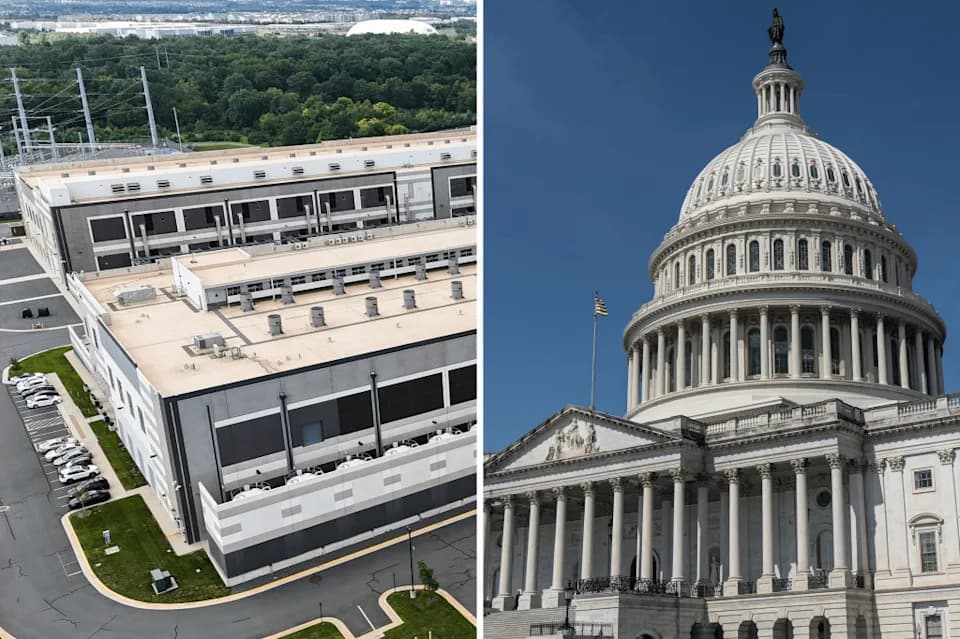
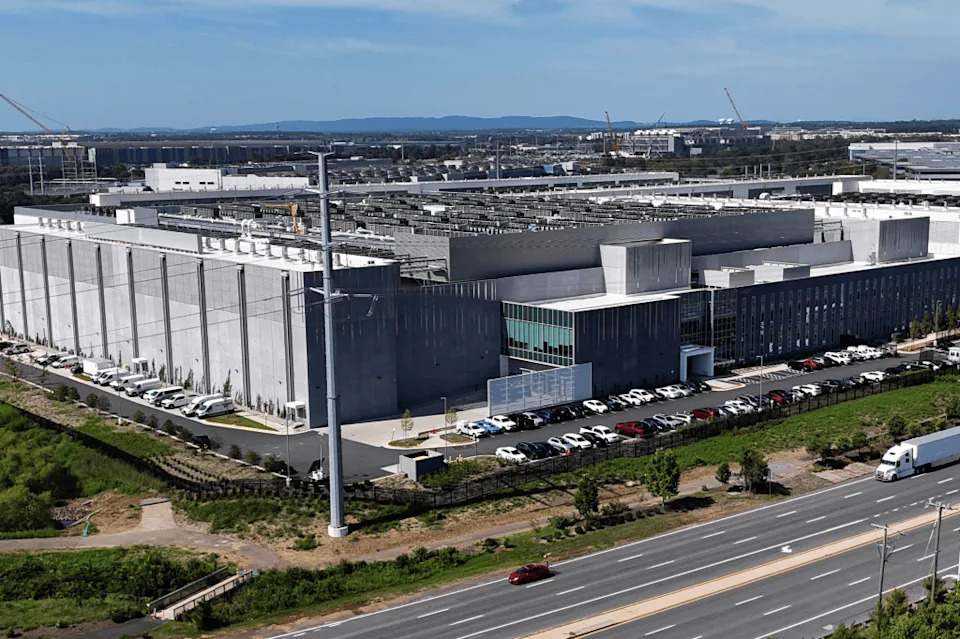
An aerial view of a data center operated by Amazon AWS IAD is seen on August 25 in Sterling, Virginia. The U.S. Capitol in Washington, D.C., is seen on June 22, 2025.
Three Republican-held congressional districts in Virginia — long considered the U.S. capital for data centers — have become unexpectedly competitive as the 2026 midterm fight approaches. Race ratings and internal polls reviewed by Newsweek show close margins, and the Democratic Congressional Campaign Committee has added a fourth Virginia district to its national battlefield.
Race Shifts
Sabato's Crystal Ball recently adjusted several Virginia ratings: Rep. Jen Kiggans' 2nd District moved from Toss-up to Leans Democratic; Rep. Rob Wittman's 1st District shifted from Leans Republican to Toss-up; and Rep. John McGuire's 5th District was downgraded from Likely Republican to Leans Republican. Democratic internal surveys show narrow one-point Republican leads in the 1st and 5th districts, prompting party groups and campaigns to reallocate resources.
Why Data Centers Matter Locally
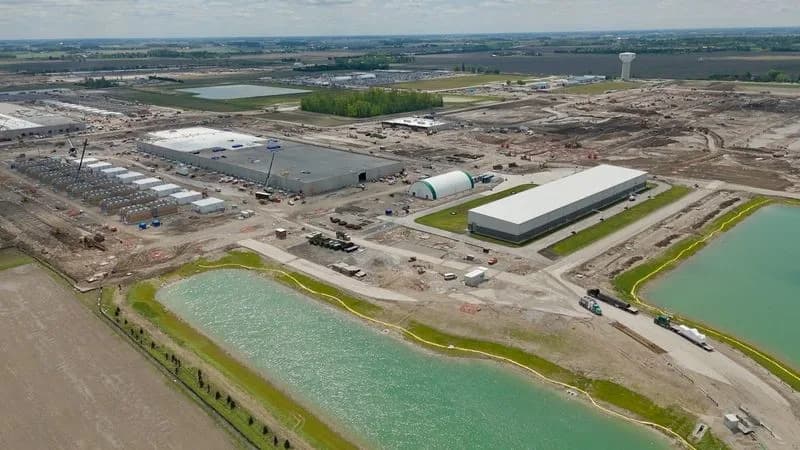
Virginia's rapid expansion of data centers has created a local political fault line. The industry brings investment, jobs and tax revenue, but it also raises concerns about energy demand, land use and household utility costs. Candidates on both sides are making the issue central to their campaigns as voters weigh the trade-offs.
Public Opinion And Polling
Several polls point to significant local resistance to data centers. A Washington Post–Schar School survey (March 26–31, 1,101 registered Virginia voters) found only 35% of respondents would be comfortable with a data center in their community (±3.4 points). A University of Massachusetts Amherst poll (Aug. 21–26, 1,000 adults) reported 65% opposed building an AI data center locally (±3.5 points); opposition cut across party lines (76% Democrats, 67% independents, 52% Republicans). A CBS News/YouGov poll (Sept. 8–11, 2,460 adults) found 54% of likely voters preferred a congressional candidate who opposed local data-center construction (±2.3 points).
District Profiles
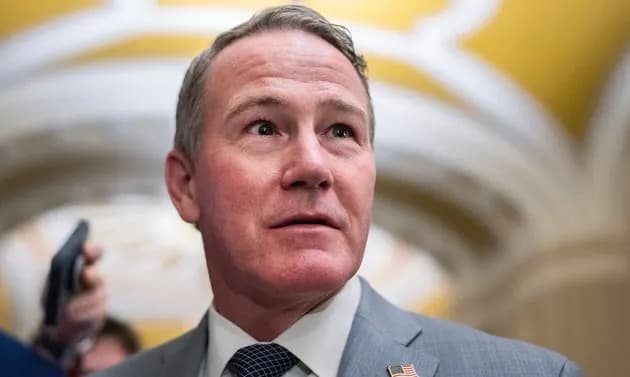
1st District: Republican Rep. Rob Wittman faces Democrat Shannon Taylor, Henrico County's Commonwealth's Attorney. A DCCC internal poll (Sept. 15–17, 519 likely voters) showed Wittman at 47%, Taylor at 46% and 7% undecided (±4.3). The committee argues Taylor's public-safety credentials and local appeal make the race unexpectedly competitive in a district that still leans Republican.
An aerial view of a cloudHQ data center on August 26 in Ashburn, Virginia.
5th District: Democrat Tom Perriello, a former congressman who narrowly won an earlier version of the seat in 2008, emphasizes local impacts from the data-center buildout. An Expedition Strategies memo (Sept. 21–24, 400 likely voters) placed incumbent Rep. John McGuire at 46%, Perriello at 45%, independent Cooke C. Harvey at 6% and 3% undecided (±4.9). Perriello accuses McGuire of supporting broad corporate investment incentives (cited as $362 billion in campaign material) and opposes parts of Dominion Energy's proposed Valley Link transmission project tied to projected power demand.
2nd And 6th Districts: Sabato's shift of the 2nd District toward Democrats and the DCCC's addition of Rep. Ben Cline's 6th District to its offensive list underscore the broader trend: districts once considered safe for Republicans are now drawing national attention and funding.
National Context
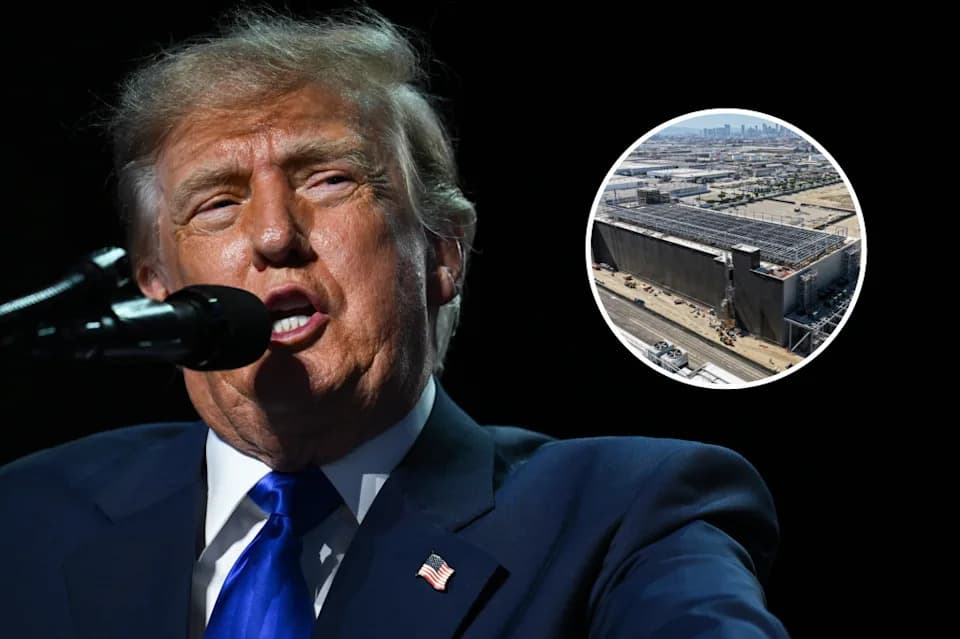
At the national level, former President Donald Trump has publicly backed data-center expansion as part of an economic and technological competition with China. He has met tech leaders to discuss AI and issued policy statements and agreements related to AI development. Campaign rhetoric from both parties links federal tax and infrastructure policy to local consequences of the data-center buildout.
Polling And Method Notes
Poll margins of error and sample details vary across surveys; narrow leads within margins of error do not prove a shift but do indicate rising competitiveness. Newsweek reviewed internal surveys, public polling, and race ratings; it sought comment from the Republican National Committee and the campaigns mentioned.
Closing
As data centers proliferate across Northern Virginia, their local economic benefits and environmental costs are reshaping contests in a state that had seemed settled. What began as a land-use and infrastructure debate is now a potential tipping point in the fight for House control.
Note: Newsweek reporters and editors used Martyn, the publication's AI assistant, to help produce this story.
Help us improve.