Two Washington, D.C., residents, Maliktra Derenorcourt and Philippe Oliver Gadie, face a seven-count superseding indictment unsealed Oct. 2 accusing them of an identity-and-housing fraud scheme that began at least in November 2023. Prosecutors allege the defendants used stolen Social Security numbers, fabricated credit privacy numbers and fake employment letters to obtain leases, avoid payments and resell or occupy units. The filing also alleges that Gadie opened a Cash App account in a victim's name and conducted hundreds of Bitcoin and dollar transactions. Both face federal wire-fraud charges; Gadie also faces aggravated identity-theft counts, and a criminal forfeiture allegation seeks proceeds tied to the scheme.
D.C. Pair Charged in Alleged Identity-and-Housing Fraud Involving Cash App and Bitcoin

Image Credit: US Attorney's Office for DC.
Two Washington, D.C., residents have been federally charged in what prosecutors describe as a multi-month identity-and-housing fraud scheme that allegedly used stolen and fabricated identities to obtain apartment leases, evade rent and move funds through digital platforms.
Case Overview
The U.S. Attorney's Office for the District of Columbia announced on Oct. 2 that a seven-count superseding indictment against Maliktra Derenorcourt, 27, and Philippe Oliver Gadie, 34, was unsealed in federal court. Prosecutors say the operation ran since at least November 2023 across Washington and surrounding areas and caused losses estimated in the hundreds of thousands of dollars.
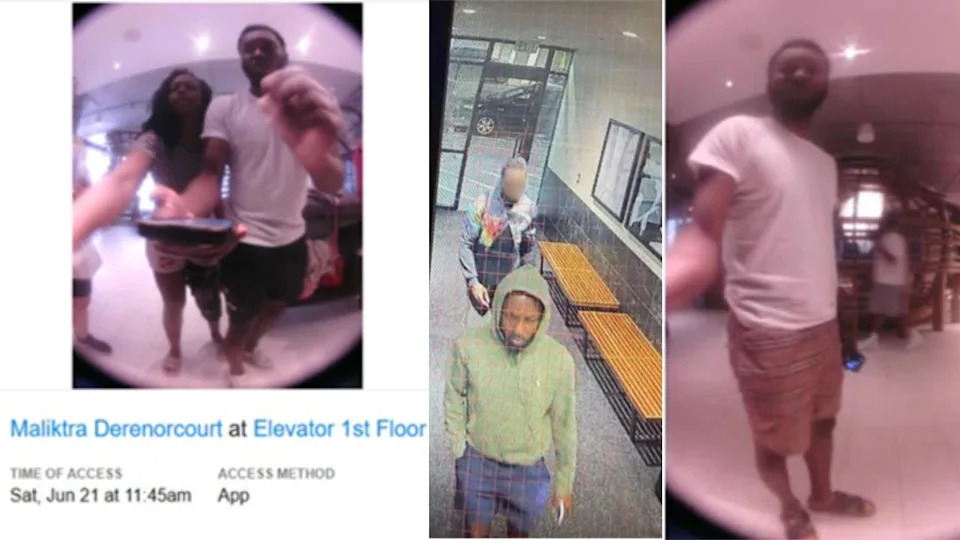
The Justice Department said Philippe Oliver Gadie was apprehended while living at an upscale Southeast Washington apartment obtained through an allegedly fraudulent lease. Source: U.S. Attorney's Office for the District of Columbia.
How the Scheme Allegedly Worked
According to the indictment, members of the group used stolen Social Security numbers, fabricated identifiers known as credit privacy numbers, and falsified employment documents to secure residential leases. After gaining access to units, conspirators allegedly either lived in the apartments themselves or sold access to others for amounts below the lease value.
Prosecutors say the group communicated using encrypted messaging services, including Telegram. In one exchange cited by investigators, Derenorcourt allegedly asked how much a "credit privacy number with good credit" would cost, and Gadie allegedly answered "$600."
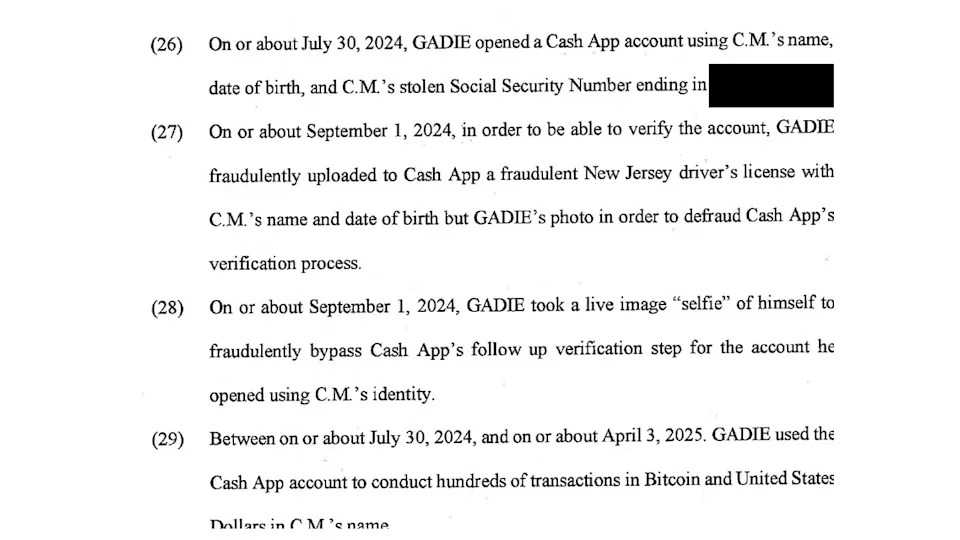
The superseding indictment alleges Philippe Gadie opened a Cash App account using a victim's identity, used a fraudulent driver's license and live selfie during verification, and later conducted hundreds of Bitcoin and U.S. dollar transactions through the account. Source: U.S. District Court for the District of Columbia.
Financial Transactions And Digital Platforms
The superseding indictment alleges Gadie opened a Cash App account using a victim's personal information and a stolen Social Security number. Prosecutors allege he uploaded a fraudulent New Jersey driver's license bearing the victim's name and date of birth but his own photograph, and that he supplied a live selfie to satisfy a follow-up identity-verification step. Between July 2024 and April 2025, the filing alleges he conducted hundreds of transactions in Bitcoin and U.S. dollars through the account in the victim's name.
The filing also describes an instance in which Gadie allegedly used a PayPal account to pay an apartment application fee for another person. Prosecutors further allege Derenorcourt assisted the scheme by posing as female identity-theft victims to help secure leases.
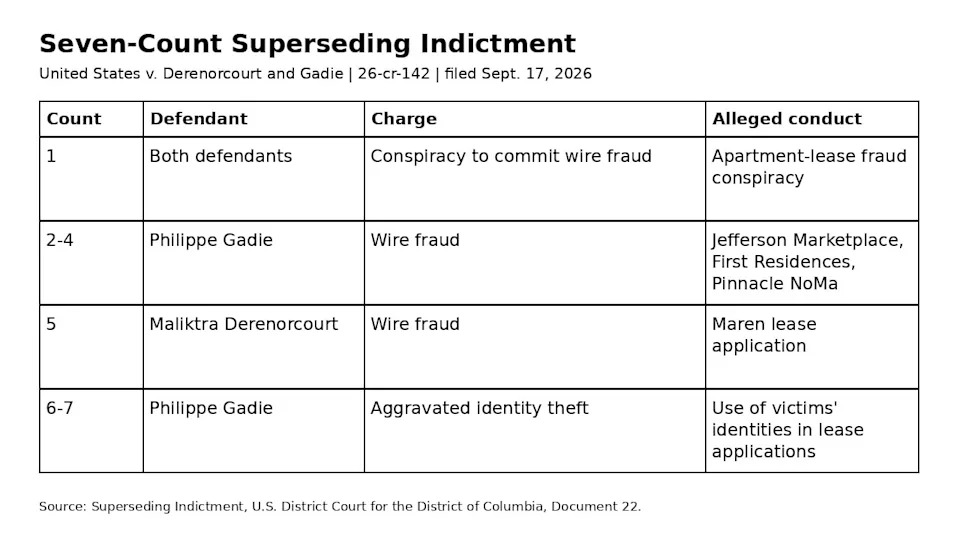
The seven-count superseding indictment charges both defendants with conspiracy to commit wire fraud. Gadie also faces three wire-fraud and two aggravated identity-theft counts, while Derenorcourt faces one additional wire-fraud count. Source: U.S. District Court for the District of Columbia.
Properties, Charges And Court Proceedings
The indictment ties substantive wire-fraud counts to alleged applications at Jefferson Marketplace, First Residences, Pinnacle NoMa and the Maren, and it references other properties in broader allegations. Both defendants are charged with conspiracy to commit wire fraud; Gadie faces three additional wire-fraud counts and two aggravated identity-theft counts, while Derenorcourt faces an additional wire-fraud count. The indictment also includes a criminal forfeiture allegation seeking property or money traceable to the offenses.
Derenorcourt was arraigned on Sept. 28 and pleaded not guilty; her release on personal recognizance remained in place. An executed arrest warrant shows Gadie was arrested in Washington on Oct. 1 and was temporarily detained pending further proceedings. An arraignment and detention hearing for Gadie was scheduled for Oct. 7. The charges are allegations, and neither defendant has been convicted.
Resources For Potential Victims
The Justice Department pointed potential victims to the Federal Trade Commission's IdentityTheft.gov, which provides step-by-step guidance for people whose identities were used to rent housing. The FTC recommends asking landlords and tenant-screening companies for reports, filing an FTC Identity Theft Report and requesting removal of fraudulent rental information. The Social Security Administration advises anyone who suspects misuse of their Social Security number to review their earnings record, obtain credit reports from the three nationwide credit bureaus and report identity theft through the FTC.
Help us improve.