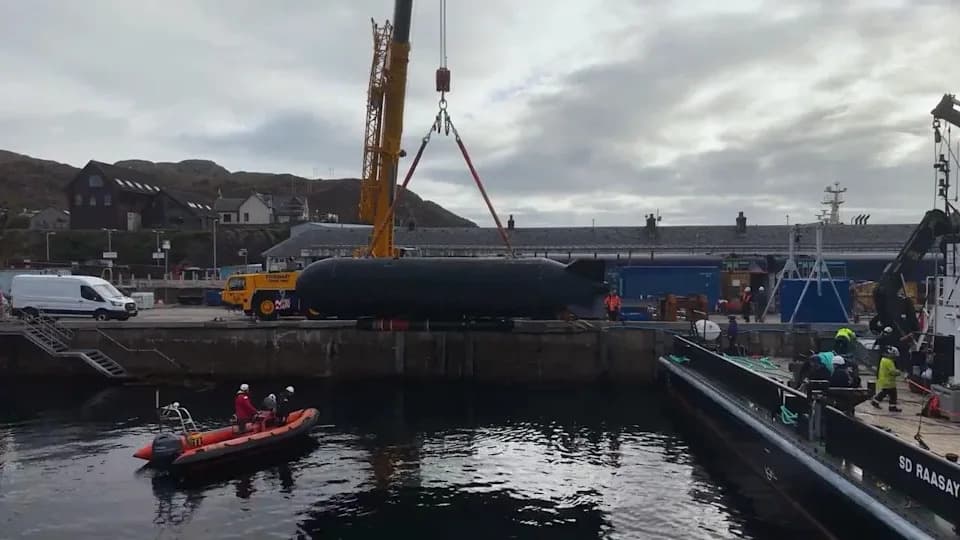
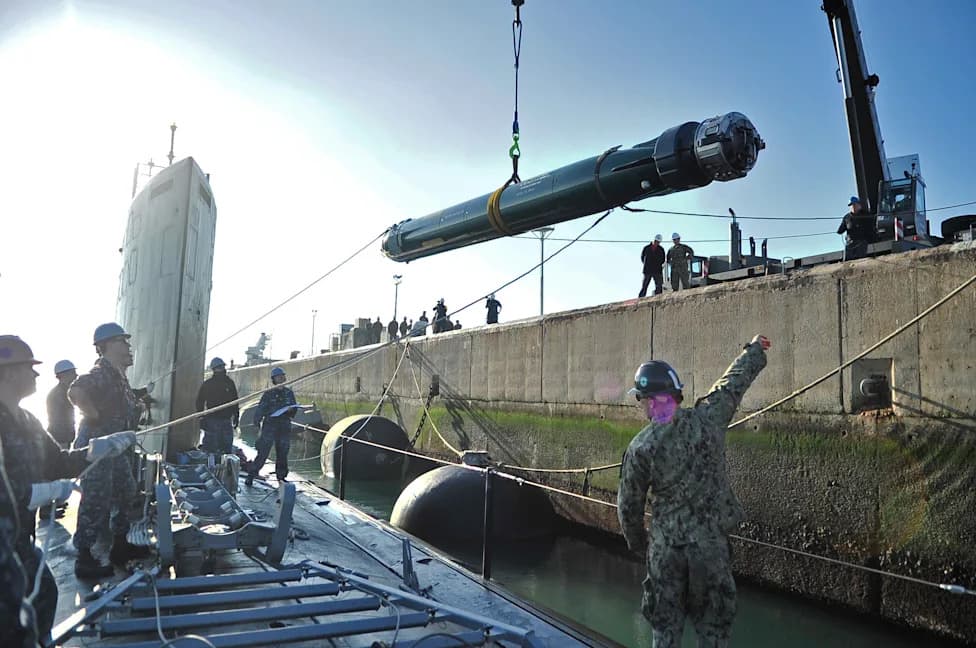
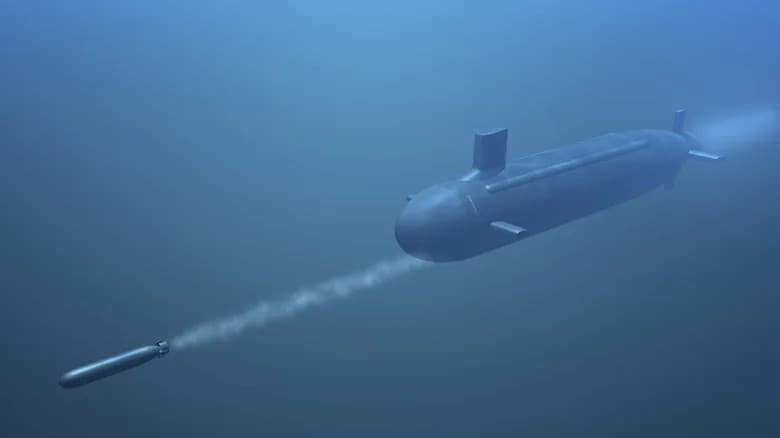
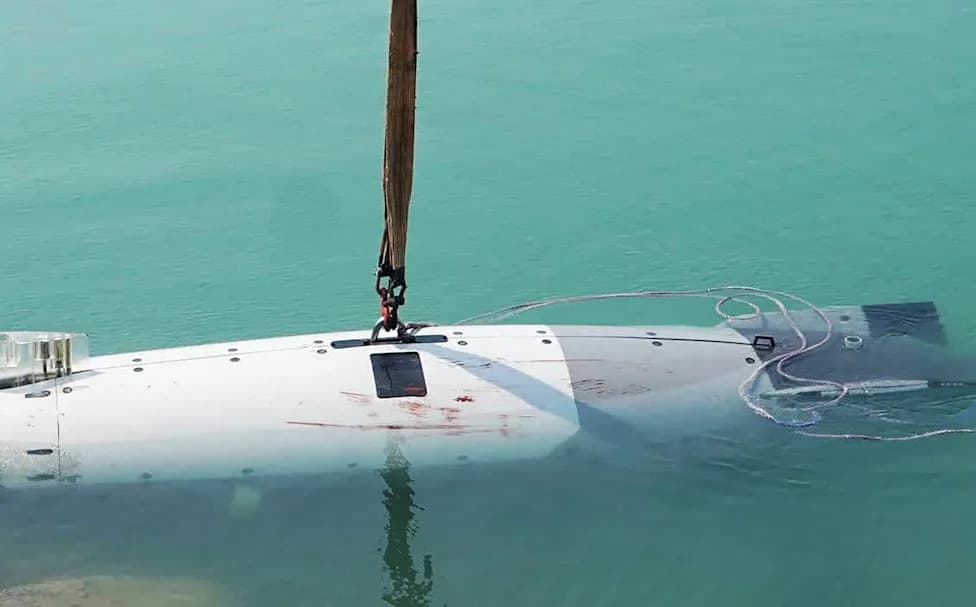
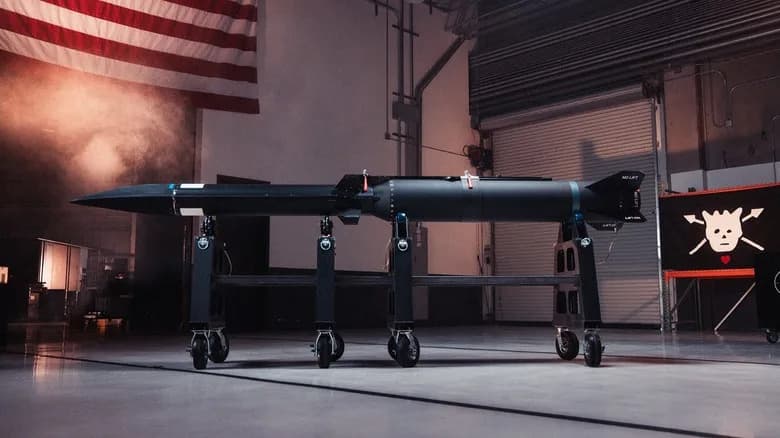
The US and Royal Navies successfully fired an American Mk 48 heavyweight torpedo from the British uncrewed submarine XV Excalibur during trials in Scotland on 13 September 2026. Project Broadsword, approved in February 2026, validated the mechanical, electrical and software interfaces needed to carry and release a US weapon from a UK autonomous platform. Excalibur carried the roughly 3,700-pound torpedo externally because it lacks internal tubes. Follow-on work will continue under Project CUTLASS, using Anduril's Dive-XL to expand payload and command-and-control testing.
US Mk 48 Torpedo Fired From British XV Excalibur Uncrewed Submarine in Historic Allied Test
Credit: U.S. Navy
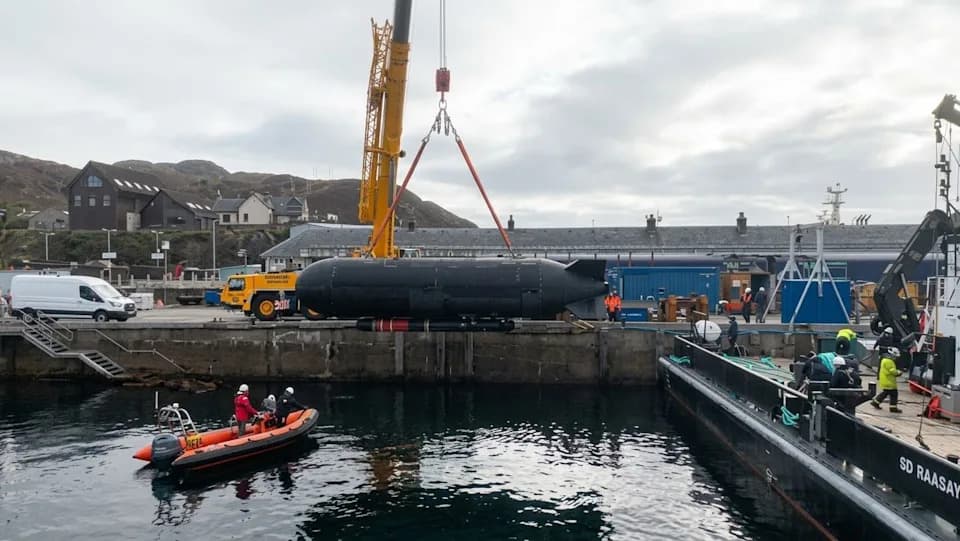
The US Navy and Royal Navy have for the first time launched an American Mk 48 heavyweight torpedo from the British extra-large uncrewed submarine XV Excalibur during trials off Scotland on 13 September 2026. The live-fire event was conducted at the British Underwater Test & Evaluation Centre as part of Project Broadsword.
What Happened
Project Broadsword — approved in February 2026 — tested whether a US weapon could be integrated with a UK autonomous underwater vehicle by linking mechanical mounts, electrical interfaces and software systems. Engineers mounted the roughly 3,700-pound Mk 48 externally beneath Excalibur’s hull because the vessel does not have conventional internal torpedo tubes. That external fit enabled the teams to validate the platform-to-weapon interfaces and complete a live launch.
Why It Matters
Broadsword sits within the wider AUKUS security partnership between Australia, the United Kingdom and the United States. It aligns with AUKUS Pillar II’s emphasis on advanced technologies such as artificial intelligence, autonomy, quantum systems and advanced undersea platforms. The trial demonstrates that allied weapons and uncrewed platforms can be made interoperable without forcing each system to be redesigned around a single nation's standards.

Google logo on a black background next to text reading 'Click to follow TechRadar'
Who Took Part
The project assembled teams from the Department of the Navy Rapid Capabilities Office (DONRCO), OPNAV N97, the Royal Navy, the Defense Innovation Unit, the Naval Undersea Warfare Center Keyport and industry partners.
"This successful test marks a historic first for allied undersea warfare…validates our shared vision for true interchangeability," said Adm. Daryl Caudle, Chief of Naval Operations. "By integrating weapons, payloads, and mission architectures across allied platforms, we are increasing the flexibility, scale, and combat power of our combined forces."
Context and Next Steps
XV Excalibur has already served as a mobile underwater laboratory, carrying sensors and experimental payloads. In 2025 the vessel was remotely operated in UK waters from a command centre in Australia at a distance of about 10,000 miles, giving the Royal Navy practical experience in running uncrewed missions without placing personnel aboard.
The US Navy said the Broadsword test completed a proof-of-concept and that follow-on work will continue under Project CUTLASS. CUTLASS will use Anduril’s Dive-XL platform for the next phase, exploring additional payload fits, command-and-control arrangements and realistic operational scenarios for uncrewed underwater vessels. Future trials will assess whether the Broadsword integration approach can be applied to other weapons, platforms and mission configurations.
Implications
The milestone underscores a shift toward modular, cross-national integration of weapons and autonomous systems in undersea warfare. If expanded, this approach could increase allied flexibility and reduce the need for bespoke, single-nation solutions when fielding new uncrewed platforms and payloads.
Help us improve.