Chris Scott, a 47-year-old former oil worker, has held more than 115 town halls across Alberta to promote independence ahead of a non-binding October 19 referendum. Supporters cite grievances including environmental regulations, immigration, pandemic lockdowns and perceived federal overreach. Premier Danielle Smith called the vote after a judge blocked a citizen-led referendum, drawing comparisons to pre-Brexit political maneuvering and criticism from Prime Minister Mark Carney. A proposed west coast pipeline is being presented by leaders as a national effort to address western concerns.
Alberta Separatists Campaign for Independence Ahead of October 19 Referendum
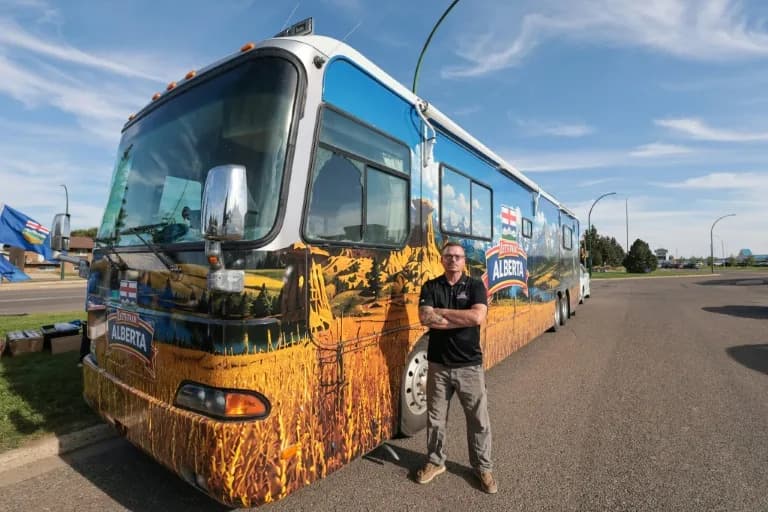
Chris Scott has toured Alberta in a motorhome to meet with communities about indepedence for the western Canadian province (ABED ZAQ)
Travelling western Canada in a motorhome painted with Rocky Mountain murals, Chris Scott has spent the year campaigning for a cause that was once marginal: Alberta independence. The 47-year-old former oil worker, who drew attention after his 2021 arrest for protesting COVID lockdowns, says he has held more than 115 town halls across the province ahead of a non-binding October 19 referendum on separation.
Roots of the Movement
Scott tells AFP that his family long felt western Canada is mistreated by a federal system dominated by interests in Ontario and Quebec. He said his own views hardened while jailed for staging a protest during pandemic restrictions, prompting him to examine "what Canada actually is, what our rights actually are, and who can take them away from us."
Alberta, Canada’s fourth-largest province and roughly the size of France, has about five million residents. Polling suggests only about a quarter currently support leaving Canada, but activists say frustration over Ottawa’s policies fuels the movement.
Who’s Involved and Why
The separatist coalition includes people angered by environmental regulations targeting Alberta’s oil industry, those worried about immigration, critics who say Ottawa restricts free speech, and opponents of Prime Minister Mark Carney’s outreach to Europe. For many, contentious pandemic measures were a decisive turning point.
"It's called self-determination. That's where freedom starts,"
Scott made that appeal to a largely older crowd in the town of Redcliff, arguing Albertans should control the policies shaping their lives.
Politics, Legal Hurdles and Outside Interest
Alberta’s right-wing premier, Danielle Smith, leads a governing coalition that includes a sizable separatist faction. That group gathered signatures to trigger a citizen-led referendum, but a judge blocked that plan on constitutional grounds. In response, Smith announced her own non-binding referendum, saying Albertans deserve a chance to express their views.
The October 19 ballot asks whether voters want the provincial government to organize a binding referendum on independence. Political scientists note Smith’s move echoes tactics used before the 2016 Brexit vote: appease a restive party wing while hoping a loss will settle the dispute.
Analysts say the campaign has attracted international attention, including interest from allies of former U.S. President Donald Trump. Some U.S. figures suggested an independent Alberta could become a close partner, and separatist leaders reportedly met U.S. State Department officials to discuss potential support.
Former Bank of England governor and current prime minister Mark Carney has called Smith’s referendum question "a dangerous bluff," arguing the process risks political instability.
Voices On The Ground
Supporters such as 65-year-old Christine Nichols, who greeted Scott in Medicine Hat wearing a shirt that read "Faith, Family, Freedom," warned that eastern Canada opposes Alberta oil development and criticized what she sees as an anti-American political climate. "They're all in for the climate stuff. They don't want the oil coming out of the ground," she said, adding that Canada is "like the Titanic. It's going down."
Federal Response And A Pipeline Pitch
Carney and Smith traveled to Fort McMurray to announce progress on a controversial west coast pipeline project — a move Ottawa and Alberta say could help ease western resentment by improving market access for oil. Carney framed the project as evidence that national cooperation can unlock opportunities for the region: "We came together. This opportunity is unlocked by Canada as a whole."
The October referendum is non-binding, but it will test the strength of separatist sentiment in Alberta and shape political calculations leading up to any future, legally binding moves.
Help us improve.