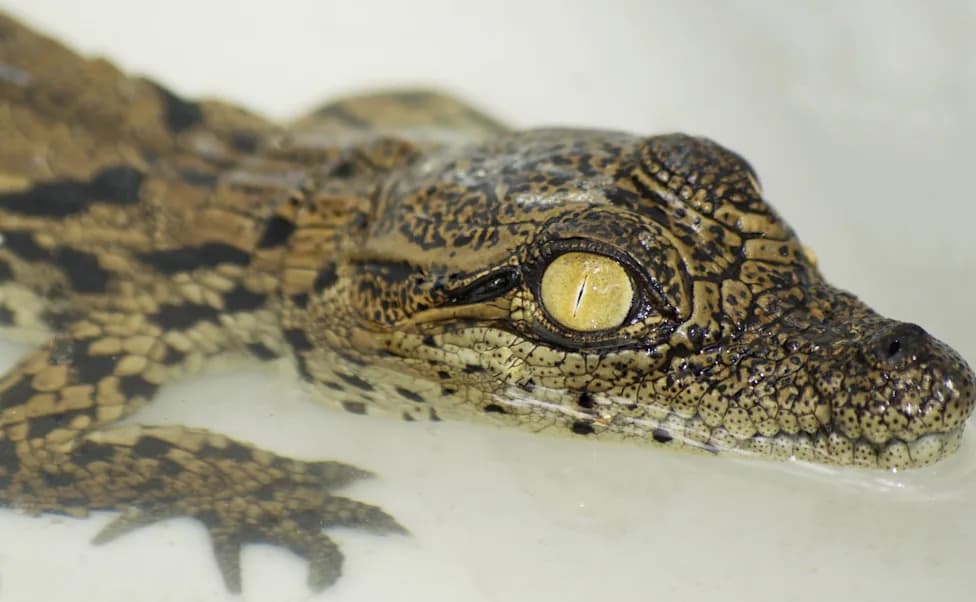
Remote cameras have recorded dwarf crocodiles in Gabon ambushing bats inside the guano-filled Abanda Caves for the first time. The cave population, discovered in 2008 and documented in 2010, shows physical and genetic differences from surface groups—including an orange tint caused by acidic bat guano. Researchers say the isolated group may be evolving unique adaptations, and the crocs appear well-fed thanks to abundant prey but remain vulnerable because the caves currently lack formal protection.
Hidden Hunters: How Gabon's Tiny Cave Crocodiles Ambush Bats
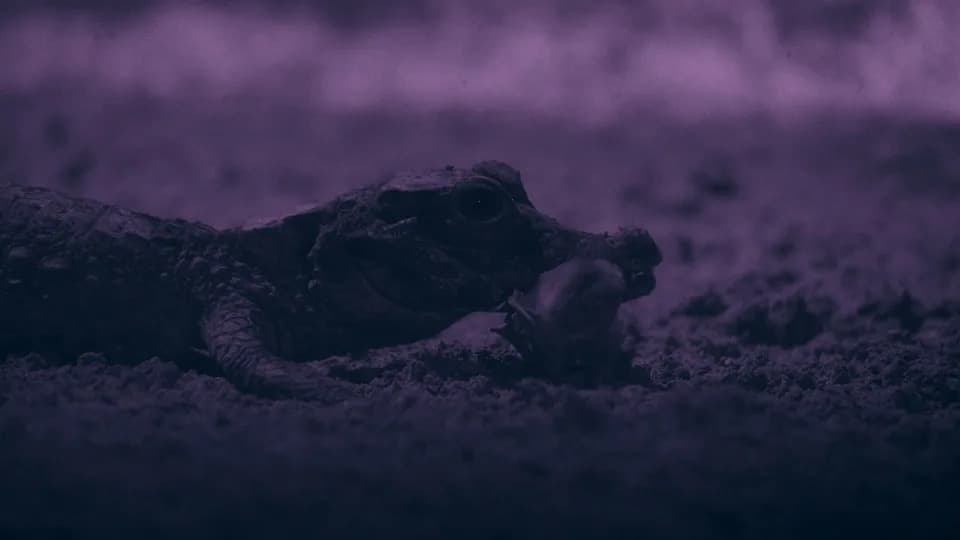
Gabon's dwarf crocodiles normally live aboveground in the forest, but one population is adapting to life underground. . | Credit: National Geographic
New remote-camera footage captured for National Geographic’s series Africa: Earth’s Wild Home reveals how a unique population of dwarf crocodiles hunts bats inside the guano-choked Abanda Caves of Gabon.
Dwarf crocodiles (Osteolaemus tetraspis) typically grow to about 5 feet (1.5 m) and live in forests, rivers and swamps across West and Central Africa. But a population discovered in 2008 has adapted to life in complete darkness, remaining largely out of sight in a remote subterranean system where thick deposits of bat droppings (guano) shape both their appearance and behavior.
Stealthy Hunting Captured
Researchers knew the cave crocs fed on bats and insects, but direct observation was elusive: the animals change their behavior whenever people enter the tunnels. Using remotely deployed camera rigs, filmmakers and scientists finally recorded the crocodiles ambushing bats at the edge of roosting sites—behavior never before documented on film.
"I've been working with this population for almost 15 or 16 years now, and that's something we've never been able to see," said Matt Shirley, a conservation ecologist and Rolex National Geographic Perpetual Planet Explorer, in remarks reported to Live Science.
Adaptations And Appearance
Constant exposure to acidic bat guano gradually erodes and stains the crocs' skin, producing an orange tint that distinguishes many cave individuals from their gray forest counterparts. Paradoxically, the cave crocodiles often appear better nourished than nearby surface populations—likely a result of abundant prey and a scarcity of predators within the caverns.
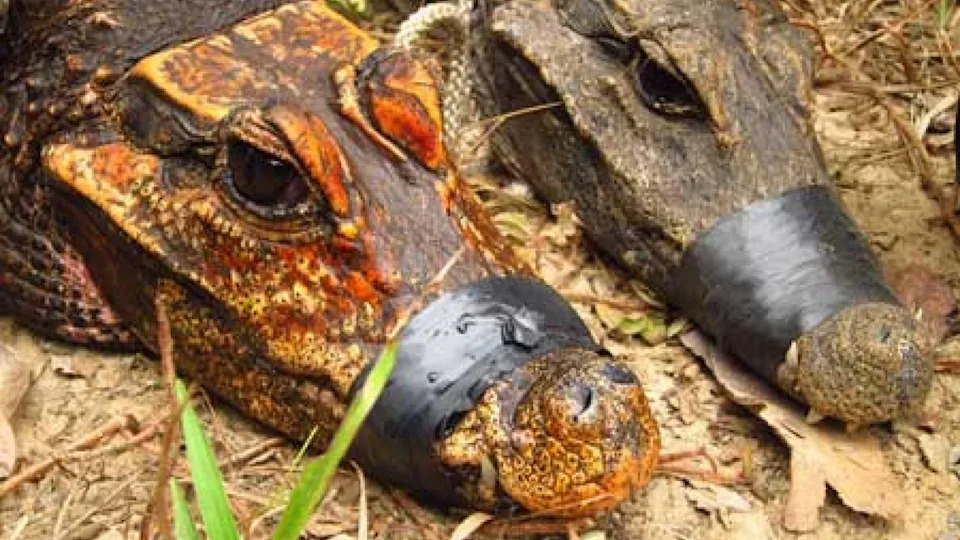
An orange cave-dwelling dwarf crocodile (left) next to a regular dwarf crocodile (right). | Credit: Olivier Testa, CC BY-SA 3.0 , via Wikimedia Commons
Evolutionary And Conservation Notes
Genetic studies indicate the Abanda population is isolated and reproducing largely within the cave group. By restricting mating to one another, these crocodiles are accumulating genetic differences that may help them adapt to the extreme subterranean environment—an example of evolution in action, according to researchers.
On the International Union for Conservation of Nature (IUCN) Red List, dwarf crocodiles are classified as Vulnerable, though that assessment has not been updated in many years and may not reflect current conditions. The Abanda Caves are outside Gabon's formal protected-area network, leaving the cave population vulnerable to local human activities. Researchers say the Gabonese government is considering special protection for the caves.
Where to See the Footage: Scenes of the cave-dwelling crocodiles appear in the "Jungle" episode of Africa: Earth’s Wild Home. The episode premiered on National Geographic and is available to stream on Disney+ and Hulu.
Sources: Field reports by Matt Shirley, a 2016 study in the African Journal of Ecology comparing cave and forest groups, and footage produced by National Geographic; reporting referenced from Live Science.
Help us improve.