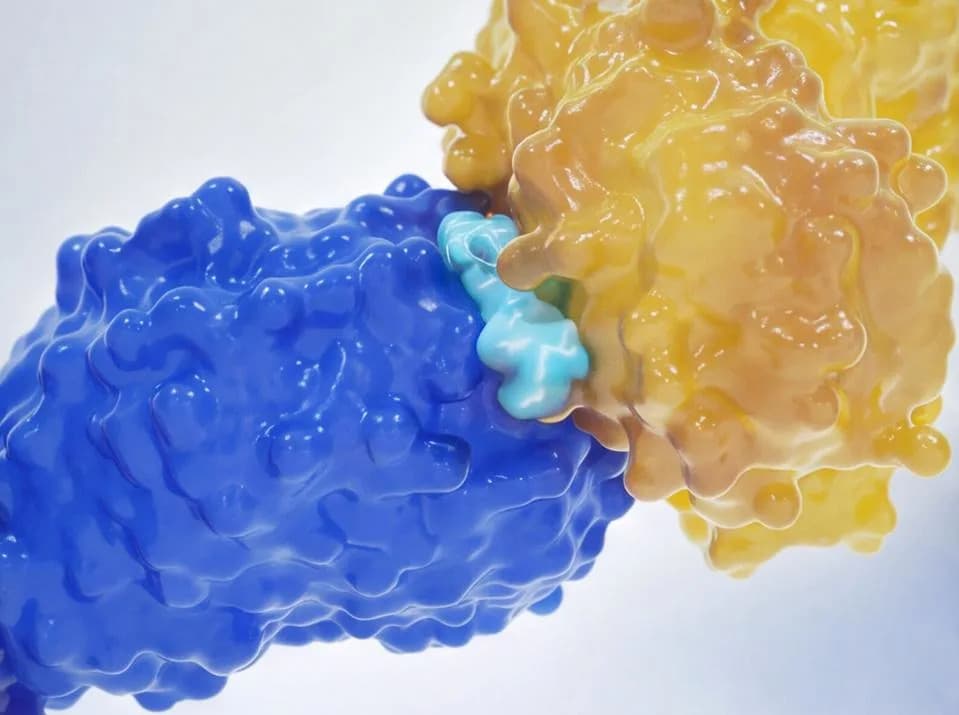
Emicizumab is a bispecific antibody that bridges activated factor IX (FIXa) and factor X (FX) to restore the cofactor role of factor VIII in hemophilia A. Developed by Chugai Pharmaceutical and recognized with the 2026 Lasker–DeBakey Award, it substantially reduces bleeding and works even in patients with inhibitors to replacement factor VIII. Given by subcutaneous injection weekly, biweekly, or monthly, emicizumab requires careful monitoring because some combinations with other clotting agents can raise thrombotic risk.
How Emicizumab Reengineered Clotting: A Bispecific Antibody That Mimics Factor VIII
Emicizumab, a bispecific antibody that bridges clotting factors IX and X, restores factor VIII function and prevents bleeding in hemophilia A with infrequent injections.ACCESS Health International
Emicizumab is a pioneering bispecific antibody that restores a crucial step in blood clotting by bridging activated factor IX (FIXa) and factor X (FX), effectively substituting for the cofactor activity of missing or dysfunctional factor VIII in people with hemophilia A. Honored with the 2026 Lasker–DeBakey Clinical Medical Research Award, this therapy has transformed preventive care for many patients.
From Immune Defense to Mechanical Matchmaker
Antibodies are usually thought of as molecular sentries that recognize and neutralize pathogens or disease targets. Emicizumab repurposes that specificity into a mechanical role: it binds two different clotting proteins at once, positioning them so they can interact and advance the clotting cascade.
How It Works
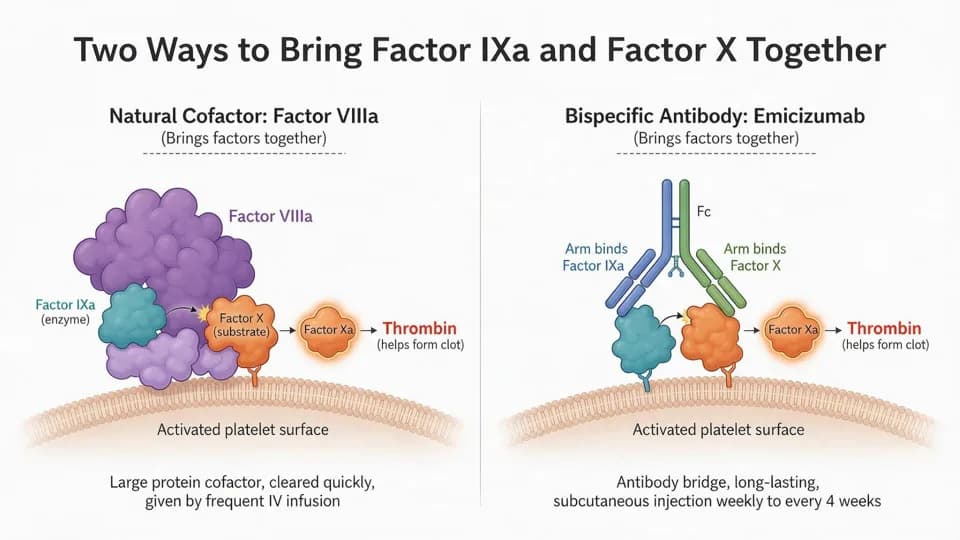
In normal coagulation, factor VIII acts as a cofactor that brings FIXa close to FX so FIXa can activate FX and accelerate thrombin generation. In hemophilia A, a deficiency or dysfunction of factor VIII prevents adequate thrombin production, causing prolonged bleeding and recurrent internal bleeding, especially in joints.
Emicizumab is engineered to bind simultaneously to FIXa and FX, forming a temporary molecular bridge that restores the essential cofactor function of factor VIII. Because it mimics the spatial organizing role rather than replacing the entire factor VIII protein, it can work even in patients whose immune systems have formed inhibitory antibodies against replacement factor VIII.
From Concept to Clinic
Developed by researchers at Chugai Pharmaceutical (led by Kunihiro Hattori, Tomoyuki Igawa and Takehisa Kitazawa), the team screened and optimized roughly 40,000 bispecific antibody variants to find a molecule with the right balance of activity, stability and pharmacologic properties. A key insight was that excessively tight binding would be counterproductive; the antibody must hold clotting factors together transiently so they can interact naturally.
Clinical Impact and Administration
Clinical trials demonstrated large reductions in bleeding episodes in people with hemophilia A, including those with neutralizing inhibitors to replacement factor VIII. Emicizumab’s engineered antibody backbone gives it a long plasma half-life and allows subcutaneous administration on flexible schedules — weekly, every two weeks, or every four weeks — instead of frequent intravenous factor infusions.
Safety, Monitoring, And Limitations
Emicizumab is not risk-free. It requires careful clinical monitoring, and interactions with certain other hemostatic agents can raise the risk of thrombosis. Notably, coadministration with high doses of some bypassing agents (for example, activated prothrombin complex concentrate, aPCC) has been linked to thrombotic complications in rare cases. Clinicians manage these risks by adjusting therapies, monitoring coagulation markers, and following established treatment guidance.
Broader Implications
Beyond hemophilia A, emicizumab demonstrates a broader drug-design principle: engineered antibodies can do more than recognize targets — they can be built to organize protein interactions and recreate biological functions normally performed by complex molecules. That strategy could be applied to other pathways where precise protein-protein interactions are critical.
Originally published on Forbes.com.
Help us improve.