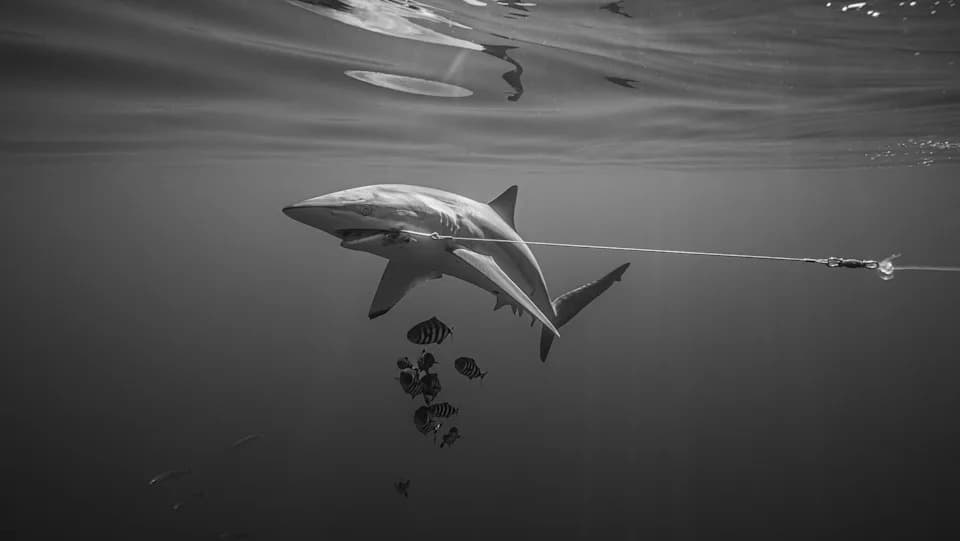
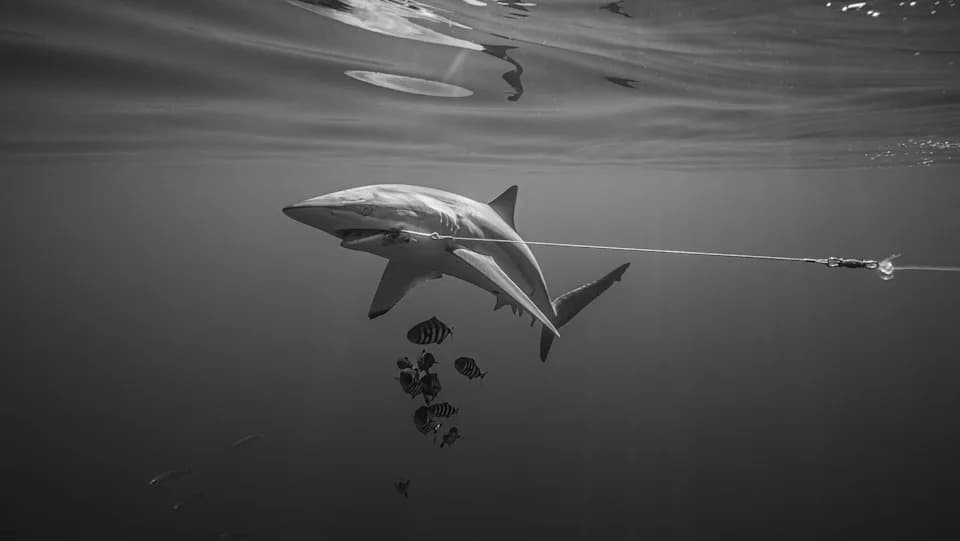
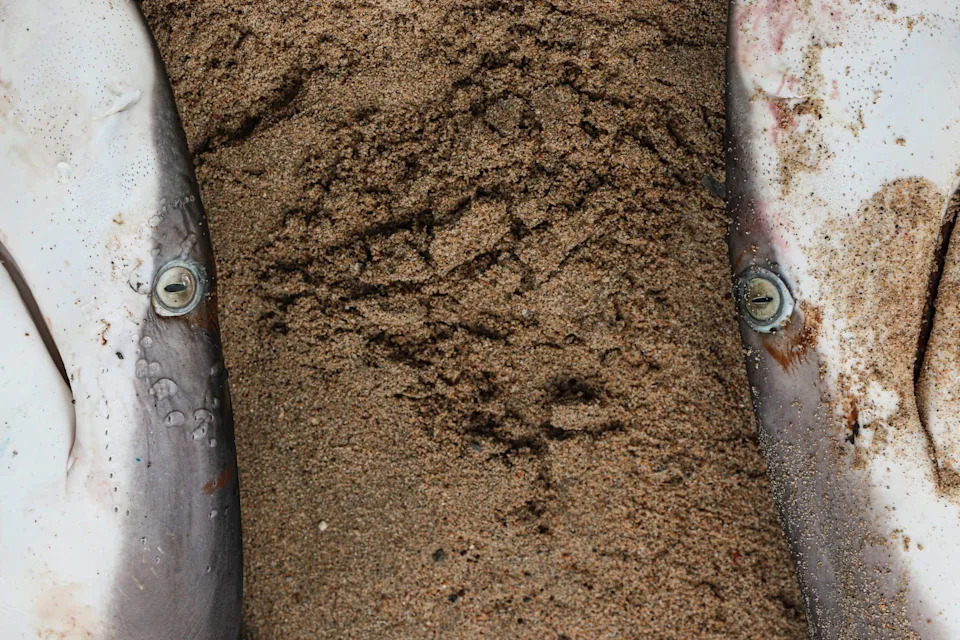
Mexican diver and photographer Daniel Taylor had two black-and-white images commended in the Ocean Photographer of the Year awards for their stark depiction of shark conservation challenges. One image shows a silky shark circling "helplessly" after becoming entangled on an illegal longline; another shows two dead silky sharks on a beach. The UN Convention on Migratory Species reports declines of up to 90% in some silky shark populations, prompting Mexico to tighten protections in several regions. Taylor says his photos aim to highlight the complex intersection of wildlife protection and the need for sustainable livelihoods for local fishermen.
Black-and-White Images of Shark Snared on Illegal Longline Spotlight Conservation Crisis in Baja California
Credit: Daniel Taylor (courtesy of Ocean Photographer of the year)
Credit: Daniel Taylor (courtesy of Ocean Photographer of the Year)
The Ocean Photographer of the Year competition has commended two stark black-and-white images by Mexican diver, tour operator and underwater photographer Daniel Taylor that illuminate both the beauty of the sea and the difficult conservation challenges facing coastal communities.
Credit: Daniel Taylor (courtesy of Ocean Photographer of the year)
Two Powerful Frames
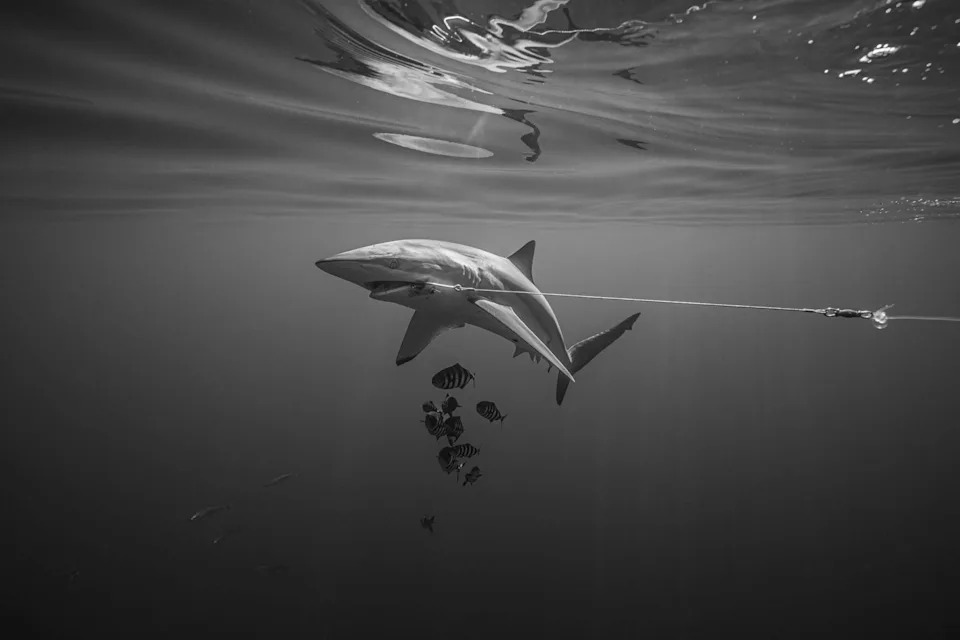
In one monochrome photograph, Taylor captured a silky shark he described as circling "helplessly" while entangled on an illegal longline. The second image shows the grim aftermath: two silky sharks lying side by side on a beach, their bodies marked by the wounds of a final struggle.
Context And Conservation Concerns
Global conservation bodies have raised alarms about dramatic declines in silky shark populations. According to the UN Convention on Migratory Species, populations in some regions have fallen by as much as 90% due to overfishing. In response, Mexico recently prohibited commercial longline vessels from capturing, retaining, storing or landing silky sharks in the Gulf of Mexico, the Caribbean Sea and Atlantic waters managed under international treaties.
Credit: Daniel Taylor (courtesy of Ocean Photographer of the year)
On Mexico’s Pacific coast — including Baja California, where Taylor works — authorities maintain a seasonal shark fishing closure from May 1 to July 31 (introduced in 2012) intended to allow fishing outside the closed season to be more sustainable. Taylor said both photographs were taken in the hours after that seasonal ban lifted. He emphasized that longlines — very long main lines carrying hundreds or thousands of baited hooks — remain problematic because they drive severe overfishing and cause extensive accidental bycatch.
Photographer's Intent
Taylor told judges he did not create the images to "condemn" local fishermen. Instead, he aimed to confront the "complex relationship" where threatened wildlife and human livelihoods intersect and to draw attention to the urgent need for practical, sustainable income alternatives for coastal communities.
Technical Details
Image 1 (Underwater):
Camera: Canon EOS R
Lens: Canon RF 15-35mm f/2.8
Housing: NA-R Nauticam underwater housing
Settings: ISO 800 | f/10 | 1/500 sec
Image 2 (Beach):
Camera: Canon EOS 70D
Settings: ISO 100 | f/10 | 1/320 sec
About The Competition
The Ocean Photographer of the Year is an annual contest organized by London-based Oceanographic Magazine and co-presented with Blancpain to celebrate the sea and raise awareness of marine conservation. The 2026 competition drew more than 15,000 entries; Taylor’s images were commended in the Conservation (Impact) category.
Credit: Daniel Taylor (courtesy of Ocean Photographer of the Year)
Help us improve.