German Foreign Minister Johann Wadephul said Montenegro could join the EU quickly if it continues to implement reforms at pace. Speaking in Budva with Montenegro’s Ervin Ibrahimović and EU Enlargement Commissioner Marta Kos, he urged accelerating accession talks. The European Commission rates Montenegro as the most advanced Western Balkan candidate and says negotiations could conclude by end-2026 if reforms continue. Officials stressed enlargement’s importance for European security and countering external influence.
Germany Backs Fast-Track EU Accession for Montenegro if Reforms Continue
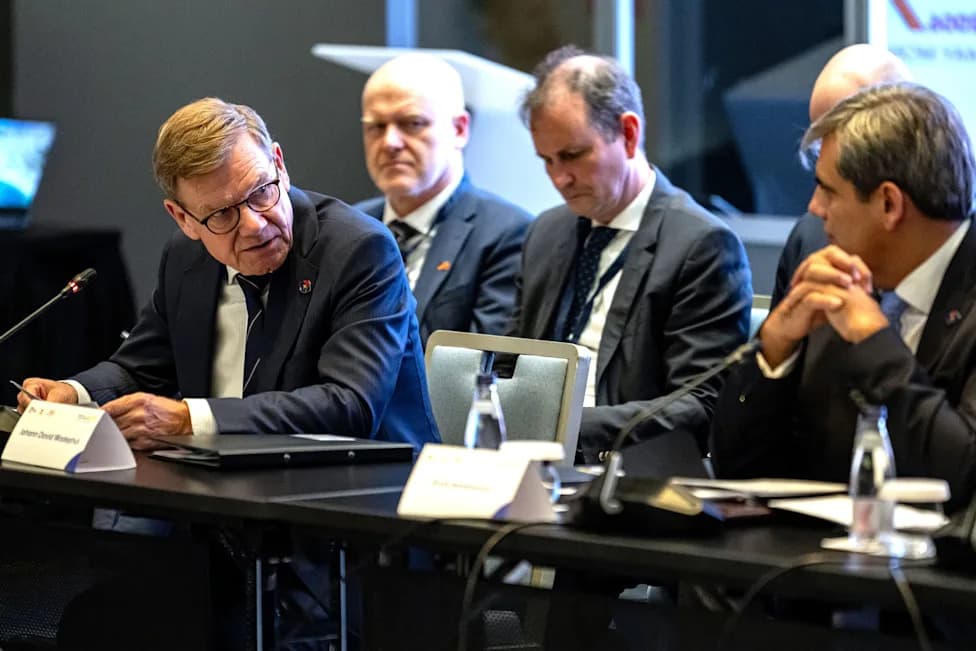
German Foreign MinisterJohann Wadephul (L) and Ervin Ibrahimovic (R), Montenegro's foreign minister, attend a plenary session of foreign ministers in Montenegro. Wadephul is taking part in the "Berlin Process" on the Western Balkans. (is associated with: «Germany optimistic regarding swift EU accession for Montenegro») Fabian Sommer/dpa
German Foreign Minister Johann Wadephul on Thursday expressed optimism that Montenegro could join the European Union swiftly if the Western Balkan country maintains a rapid pace of reforms. He made the remarks during consultations on planned EU enlargement in the Western Balkans held in the coastal city of Budva.
Momentum in Budva
Wadephul told reporters that Montenegro's aspiration to join the EU was “being heard in Brussels and in all European capitals.” He met with Montenegrin Foreign Minister Ervin Ibrahimović and EU Enlargement Commissioner Marta Kos to discuss the next steps in the accession process.
“Those who are willing and able to join the European Union and meet the criteria can succeed in the coming years,” Wadephul said.
Where Montenegro Stands
According to the European Commission’s latest assessment, Montenegro is the most advanced Western Balkan candidate in the accession process and could conclude EU negotiations by the end of 2026 if it sustains current reform momentum. The EU has held accession talks with Montenegro since 2012 and with Serbia since 2014; negotiations with Albania and North Macedonia began in 2022. Bosnia-Herzegovina holds candidate status but has not yet opened formal negotiations, and Kosovo remains a potential candidate.
Security and Geopolitics
Wadephul urged that Montenegro’s accession talks be accelerated, arguing that enlargement across the Western Balkans is vital for Europe’s security and long-term stability. He said offering the region a credible path to EU membership and deepening ties would expand the bloc’s geopolitical room for manoeuvre. He also warned that Russia and China have long sought greater influence in the region.
In Budva, Commissioner Marta Kos described Montenegro as being in the final stages of accession talks and said recent developments had generated renewed momentum for enlargement across the Western Balkans, noting Albania’s notable reform progress. Montenegrin Foreign Minister Ervin Ibrahimović emphasized that the Western Balkans are already contributing to European security by aligning foreign and security policies with the EU and participating in European and Euro-Atlantic mechanisms.
Diplomatic Engagements
Following his visit to Montenegro, Wadephul planned to travel to Rome to meet Italian Foreign Minister Antonio Tajani. The ministers intended to plant a tree to mark the 75th anniversary of German-Italian diplomatic relations and to attend German Unity Day celebrations in Rome.
What This Means: If Montenegro keeps up reforms and the EU maintains political momentum, accession within the next few years is plausible — a development that would reshape regional dynamics and strengthen the EU’s strategic position in the Western Balkans.
Help us improve.