Troy Jackson, the Maine Democratic nominee for U.S. Senate, apologized after saying some Jewish Mainers avoid calling the Israel-Hamas conflict a genocide because of their religion. He reiterated his view that events in Gaza constitute genocide but said he "misspoke" by generalizing about Jewish residents and expressed regret for the pain caused. The remarks drew criticism from commentators across the political spectrum. Jackson pledged to fight antisemitism and pursue peace and security for both Palestinians and Israelis.
Maine Senate Candidate Troy Jackson Apologizes After Comments About Jewish Mainers and ‘Genocide’ Label

Robert F. Bukaty/AP Photo
Maine Democratic Senate nominee Troy Jackson issued an apology after saying in a televised interview that it was "unfortunate" some Jewish residents of Maine avoid calling the Israel-Hamas conflict in Gaza a genocide because of their religion. The remarks prompted widespread criticism and prompted Jackson to clarify his wording and express regret for causing pain.
What He Said
Speaking to Portland's NBC affiliate, Jackson argued that the killings in Gaza "fit that description" and called the loss of innocent life "an unbelievable thing" and "a genocide." He also acknowledged wrongdoing on both sides, saying, "You could argue the same thing for Hamas too... senseless murders, horrific murders are happening to both sides, and that has to stop."
Apology And Clarification
"I believe what's happening in Gaza is genocide, and I also understand that word carries particular weight for many Jewish families given the Holocaust — the genocide of six million Jews. In trying to acknowledge that, I misspoke and made a generalization about Jewish Mainers' views that doesn't reflect what I meant to say. I apologize for the pain that caused."
Jackson said he regretted making a generalization about "Jewish Mainers" and pledged to approach sensitive conversations with greater care. He added that, if elected to the U.S. Senate, he would fight antisemitism and work toward lasting peace and security for both Palestinians and Israelis.
Reaction
The comments drew criticism across the political spectrum. Media commentators including Michael Cohen (MS NOW) and Joel Pollack (California Post) condemned Jackson's remarks—Cohen criticized the perceived moral equivalency between Israel and Hamas, while Pollack called the phrasing antisemitic and questioned the reasoning attributed to Mainers who reject the "genocide" label.
Political Context
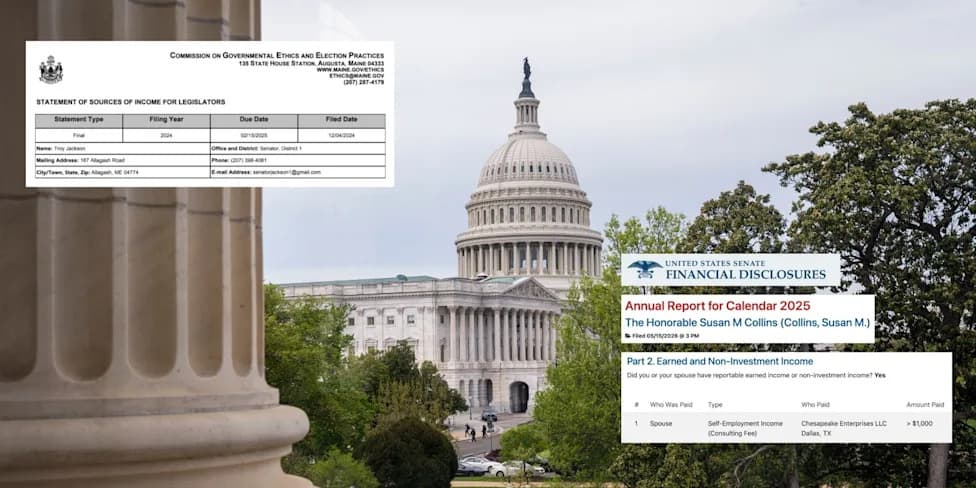
Jackson, who replaced the scandal-plagued Graham Platner as the Democratic nominee, is challenging longtime Republican Sen. Susan Collins in a competitive race. A recent New York Times/Siena College poll put Collins ahead by three points, 49% to 46%.
Why it matters: The episode underscores the sensitivities surrounding language used to describe the conflict in Gaza and highlights the political scrutiny candidates face when discussing issues that touch on identity and historical trauma.
Help us improve.