Key takeaway: The United States retains effective control over Iraq’s oil revenues through an account at the Federal Reserve Bank of New York, a legacy of the post-2003 Development Fund for Iraq. Oil makes up about 90% of Iraq’s budget, giving Washington significant leverage that has affected political decisions, including a 2020 troop-withdrawal dispute. The arrangement has supported financial stability and dollar access but also helped spawn a parallel informal dollar market; Iraq ended its dollar auction system in early 2025 under US pressure.
How the US Controls Iraq’s Oil Revenues — The New York Fed Link Explained

A US military transport aircraft stands at Camp Victory near Baghdad International Airport in Baghdad, Iraq, September 29, 2026. US forces are set to withdraw from their last bases in Iraq by September 30, ending more than two decades of military presence in the country. Picture taken with a mobile phone. REUTERS/Stringer
By Ahmed Rasheed — DUBAI, Sept 30 (Reuters)
US forces are due to leave their last bases in Iraq, an exit hailed by Iran and its regional allies. Decades of conflict cost roughly 4,500 American lives, but one legacy of the 2003 occupation endures: Washington’s strong influence over Iraq’s oil revenue dollars through an account at the Federal Reserve Bank of New York.
How The System Began
After the 2003 invasion, the US-led Coalition Provisional Authority (CPA) established the Development Fund for Iraq (DFI) and placed it at the New York Federal Reserve to collect oil receipts for reconstruction and development. The arrangement was also designed to shield Iraqi oil revenues from legal claims linked to the Saddam Hussein era.
An executive order by President George W. Bush created the framework; subsequent US presidents have maintained the arrangement. Over time the DFI evolved into an account of the Central Bank of Iraq (CBI) at the New York Fed, where Iraq’s oil dollars remain held.
What Leverage Does This Give The US?
Oil provides roughly 90% of Iraq’s state budget, so control of dollar flows gives Washington substantial economic leverage. US access to the New York Fed account has been cited as a bargaining tool: for example, during a 2020 dispute over US troop withdrawals, US officials reportedly warned they could restrict Baghdad’s access to funds held in New York, a threat that influenced Iraqi decision-making.
Although Iraq has gradually recovered more control over its financial affairs, the New York link remains a powerful lever affecting Baghdad’s economic and political choices.
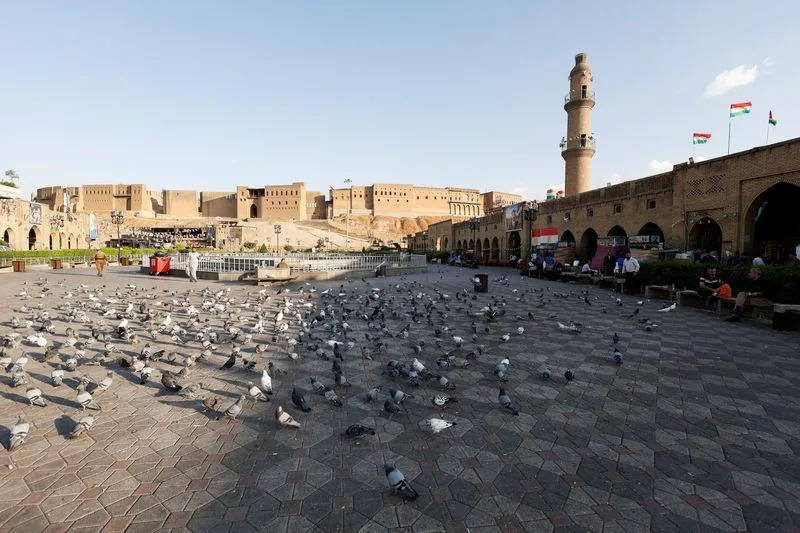
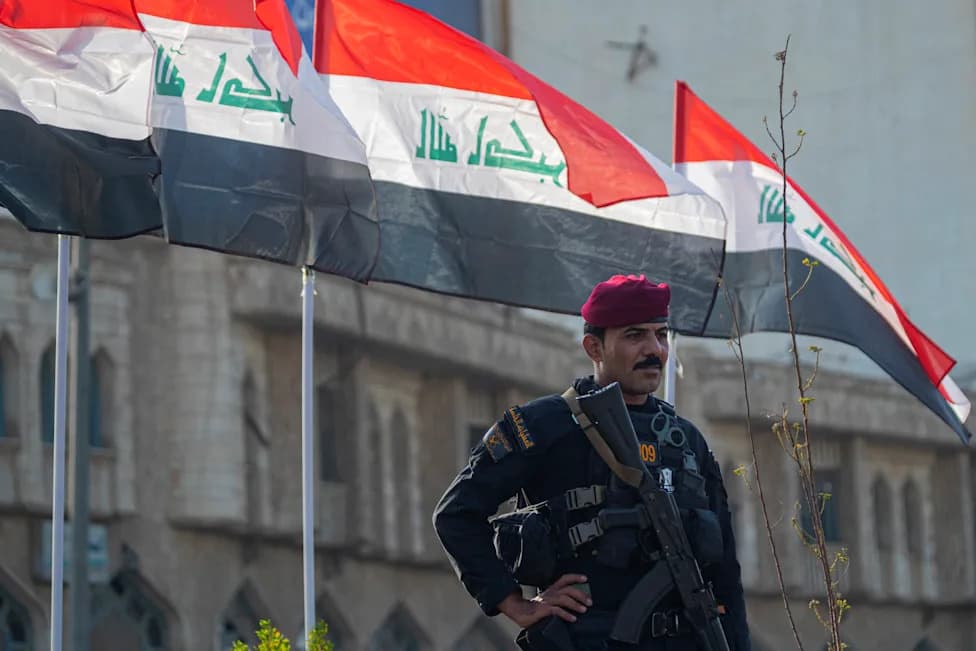
A square in Erbil, Iraq, where U.S. forces are preparing to complete their withdrawal from the country by September 30, thereby ending more than two decades of military presence, Iraq, September 29, 2026. Reuters/Khalid Al-Mousily
Why Has The Arrangement Persisted?
Iraqi officials say the system has helped stabilise public finances, reassure international creditors, and secure access to US dollars needed for imports and trade. Holding reserves at a major central bank provides protection from creditor claims, lawsuits and certain financial shocks, and underpins confidence in the Iraqi economy while Iraqi authorities work to strengthen domestic financial institutions.
US oversight of dollar flows has also been used to counter actors who favour fewer controls on dollar access — notably Iran-aligned groups. In the last few years the US imposed sanctions on some Iraqi banks and individuals accused of facilitating dollar transfers to sanctioned entities.
Domestic Effects In Iraq
Tight controls on the supply of US dollars contributed to the rise of a parallel informal market. That produced a persistent gap between the Central Bank’s official exchange rate and rates on the informal market — effectively a risk premium for operating outside the formal financial system.
Regional tensions and periodic escalations between Israel and Iran-backed groups have further complicated Iraq’s economic and political balance, placing additional strain on Baghdad as it navigates competing external pressures.
Current Status
Iraqi oil revenues continue to be held at the Federal Reserve Bank of New York. The CBI historically allocated dollars through a daily auction mechanism known as the foreign currency window, where private banks and exchange houses bid for dollars using Iraqi dinars.
Under significant US pressure, Iraq formally ended that auction system at the start of 2025 as part of a broader effort to curb alleged diversion of dollars to sanctioned actors, particularly those tied to Iran.
Editing by Frank Jack Daniel; Editing by Clarence Fernandez
Help us improve.