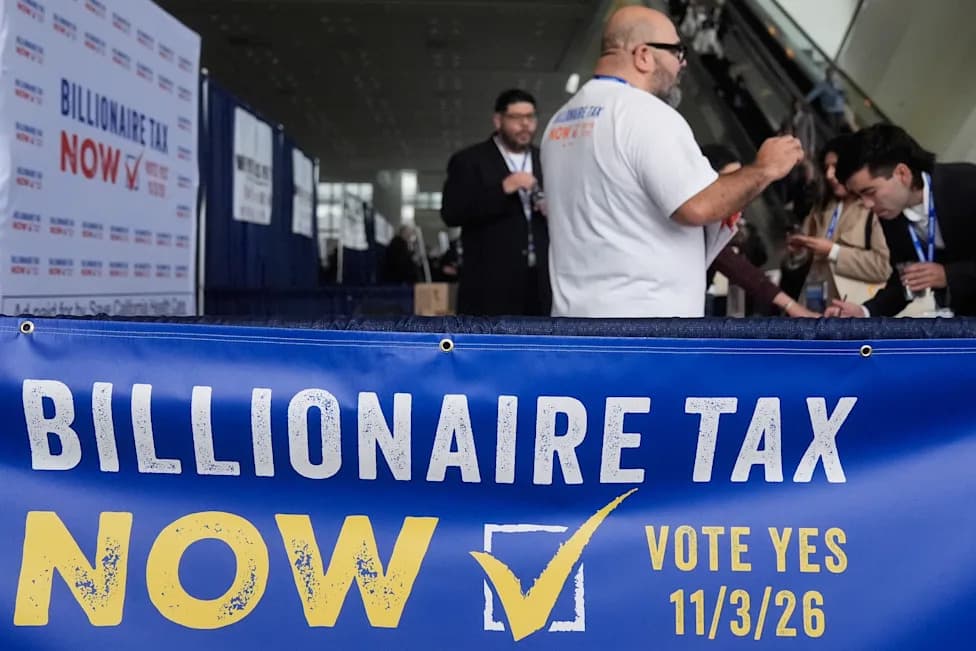
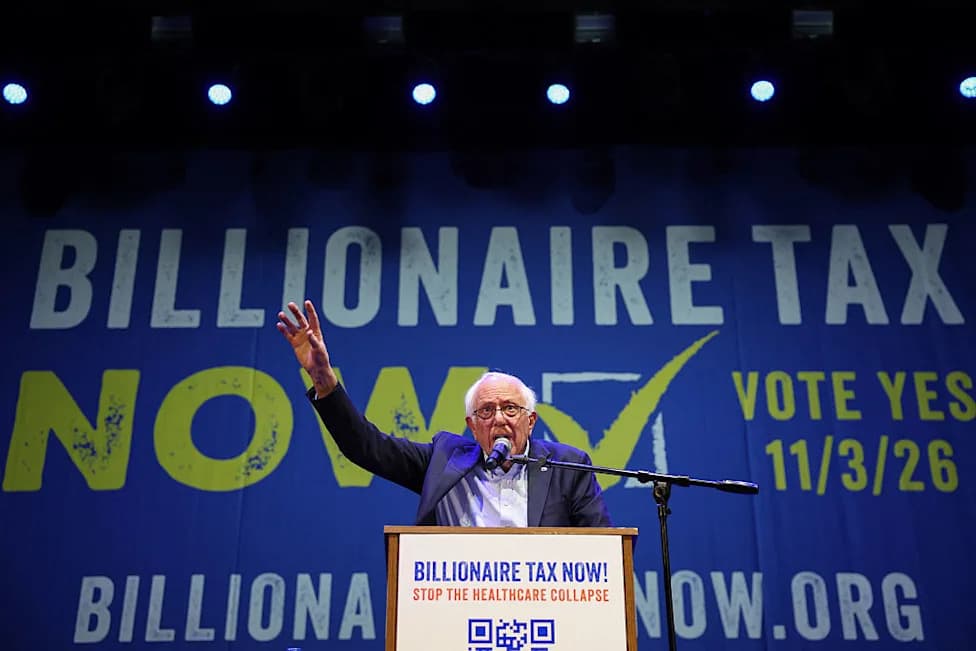
Sen. Bernie Sanders says California's Proposition 40, a proposed 5% wealth tax on billionaires, could preserve health coverage for about 3 million working‑class residents. Sanders accused wealthy opponents, led by Sergey Brin, of spending approximately $229 million to defeat the measure and noted billionaires grew about $500 billion richer last year. The nonpartisan Legislative Analyst's Office says the tax could temporarily raise tens of billions but warns that lost revenue could be under $1 billion annually if some billionaires leave. The debate highlights tensions over inequality, tax policy, and political influence.
Sanders: California’s 5% Billionaire Wealth Tax Could Safeguard Healthcare for 3 Million as Tech Billionaires Spend Millions to Stop It
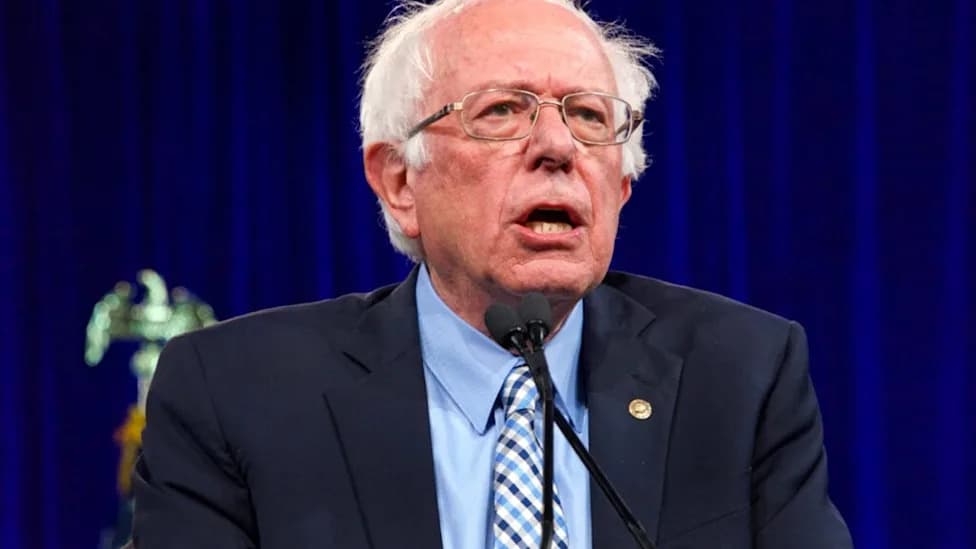
Bernie Sanders speaks at a podium with two microphones against a blue backdrop, making a point. (Credit: Image via Shutterstock)
Senator Bernie Sanders (I‑Vt.) says California's proposed 5% wealth tax on billionaires could preserve health coverage for roughly 3 million working‑class residents and accused wealthy opponents of pouring millions into a campaign to defeat the measure.
In a post on X on September 24, 2026, Sanders described Proposition 40, which California voters will decide on November 3, as a plan to levy a 5% annual tax on more than 200 billionaires in the state whose combined net worth he put at about $2.2 trillion.
California's Billionaire Wealth Tax: Healthcare vs. Greed On November 3rd, at a time of unprecedented income and wealth inequality, the people of California will decide whether to pass a 5% wealth tax on more than 200 billionaires in California who are worth $2.2 trillion.… — Bernie Sanders (@BernieSanders) September 24, 2026
Sanders said billionaires collectively gained roughly $500 billion last year and — in his view — often pay a lower effective tax rate than many working Americans such as plumbers and nurses. He said opponents of Proposition 40 have mobilized about $229 million, roughly 0.01% of their combined wealth, to fight the measure.
Who Is Funding the Opposition?
Sanders singled out Alphabet co‑founder Sergey Brin as the largest known donor opposing the initiative, saying Brin is contributing more than $100 million to defeat the measure. Sanders estimated that, if Proposition 40 passes, Brin would owe an additional $13.5 billion in taxes but would still retain an estimated net worth of about $256.5 billion; Sanders also noted Brin owns four California residences with a combined value of roughly $103.5 million.
Other wealthy individuals named by Sanders as opponents include Meta CEO Mark Zuckerberg, Google co‑founder Larry Page, Oracle founder Larry Ellison, former Google executive Eric Schmidt and investor Peter Thiel. Sanders said those five tech billionaires have a combined net worth near $646 billion.
Responses, Risks, and Official Estimates
Reporting cited actions reportedly taken by some billionaires, including Brin's relocation to Nevada, a $57 million donation to a group opposing certain taxes, support for Republican candidates, and changes to California LLCs. Critics warn that a new wealth tax could prompt some wealthy residents to leave the state.
California's nonpartisan Legislative Analyst's Office has said the measure could temporarily generate tens of billions of dollars over several years but warned that, if some wealthy residents relocate, the state could see a reduction in income‑tax receipts of less than $1 billion annually. Those projections reflect uncertainties about behavioral responses, tax planning, and legal challenges.
Context
Sanders invoked a 1933 comment by U.S. Supreme Court Justice Louis Brandeis that concentrated wealth and democracy cannot coexist, urging wealthy opponents to "control your greed" and contribute what he calls a fair share to public services. The debate over Proposition 40 sits at the intersection of broader discussions on income inequality, state tax policy, and the influence of concentrated wealth in politics as California voters prepare to decide the measure this fall.
Note: The original reporting included promotional investment content unrelated to the core story; that material has been omitted here to focus on the policy debate and reporting about Proposition 40.
Image via Shutterstock
Help us improve.