Santa Barbara County supervisors adopted a resolution condemning House language that would let Defense Secretary Pete Hegseth use eminent domain to benefit Sable Offshore’s pipeline near Las Flores Canyon. The provision, added by a Houston Republican, passed the House by one vote and now goes to the Senate. County officials point to a 2025 permit denial and federally identified "anomalies" in 12 pipeline segments; repairs are required if corrosion has removed 40% or more of the pipe wall. County counsel is still evaluating permitting jurisdiction while Sable says work can proceed "live" without halting pumping.
Santa Barbara County Condemns House Measure Allowing Pentagon Eminent-Domain Power for Sable Pipeline
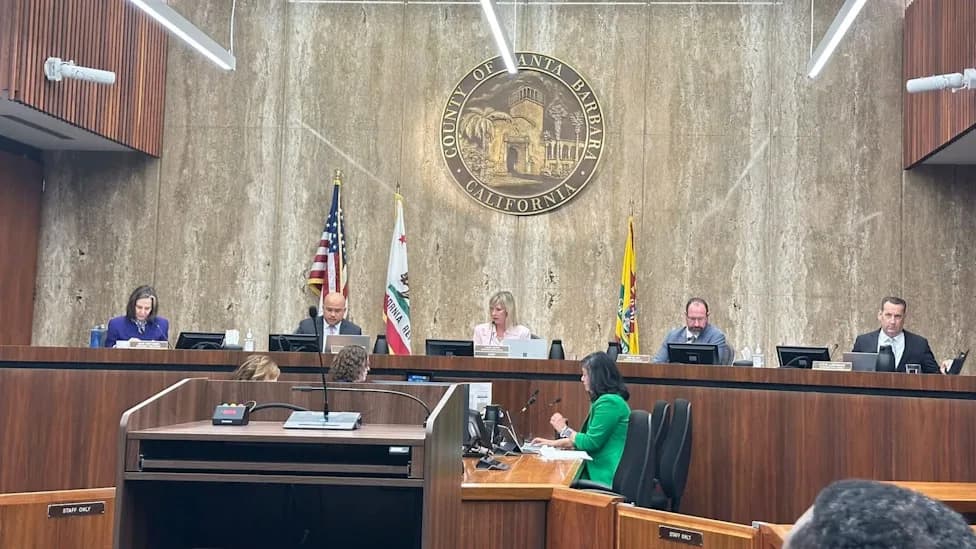
Photo Credit: Facebook
Santa Barbara County supervisors have formally rebuked language inserted into a U.S. House defense bill that would authorize the Pentagon to intervene on behalf of Sable Offshore and potentially use eminent domain to advance the company’s pipeline work near Las Flores Canyon.
At a recent county board meeting, the board adopted a resolution denouncing the provision — which, according to the Santa Barbara Independent, would give Defense Secretary Pete Hegseth authority to condemn property the Houston-based company says it needs to keep the project moving, even if county or state agencies object.
A Republican House member from Houston added the clause; it passed the House by a single vote and now faces a Senate decision on whether to keep the language in the final bill. Representative Salud Carbajal appeared before supervisors to voice his support for the county resolution.
"Congress should not use the National Defense Authorization Act [to] create a special federal pathway around California law for one pipeline — one private interest project," Carbajal said.
Local action and legal context
Supervisors Laura Capps, Roy Lee, Bob Nelson and Steve Lavagnino voted to oppose the House provision. Supervisor Joan Hartmann abstained because her home’s proximity to the pipeline created a conflict of interest.
The county’s resolution arrives amid an ongoing regulatory dispute with Sable. In 2025, county officials denied a permit sought by the company. County staff were also told Sable is seeking permission to excavate 12 pipeline segments identified as "anomalies" during federally mandated testing.
Federal testing flagged those segments for possible corrosion; if any section has lost 40% or more of the steel pipe wall, repairs would be required. County spokeswoman Kelsey Buttita said the county has not yet received details on how severe the corrosion readings are.
Operational and jurisdictional questions
Sable has told county officials that excavation and repairs can be performed "live," meaning pumping could continue while crews work. The company initially scheduled work for Sept. 8–15, with a later phase extending through Sept. 26.
County counsel continues to assess whether Sable requires county permission to dig and how much local jurisdiction applies to the proposed repairs. The dispute now shifts to Washington, where senators will weigh whether to retain the House language in the final defense authorization bill.
Why it matters
The resolution underscores concerns that using a defense bill to grant a private company special access or federal eminent-domain power would set a precedent for bypassing state and local oversight. The battle also ties into broader national debates over pipeline approvals, environmental safeguards and the balance of federal versus local authority.
Related national fights
- Former President Trump urged revival of the Keystone XL pipeline, reigniting a long-running national debate over pipeline projects.
- Federal judges in Tennessee blocked a major gas pipeline after warnings about potential irreparable environmental harm.
- North Carolina state records highlighted environmental and public-health risks associated with pipeline expansion.
- California has expanded local control over oil drilling, strengthening cities' and counties' authority in disputes with industry.
- In the Gulf of Mexico, regulators have at times allowed drillers to proceed without certain endangered-species protections during offshore operations.
The Senate will decide whether to strip or retain the House language as the National Defense Authorization Act moves forward.
Help us improve.