Turkiye's President Recep Tayyip Erdogan has urged the UN Security Council to abolish the veto power of its five permanent members and to end permanent seats, arguing the system is outdated and blocks collective action. Formally removing the veto would require a UN Charter amendment under Article 108 — including ratification by all P5 states — making such change politically difficult. Voluntary initiatives, like the France-Mexico pledge backed by 128 states, seek to limit vetoes in atrocity situations but remain non-binding and lack support from the biggest veto users.
Turkiye Urges Abolition Of UN Security Council Veto — Could The P5 Relinquish Their Power?
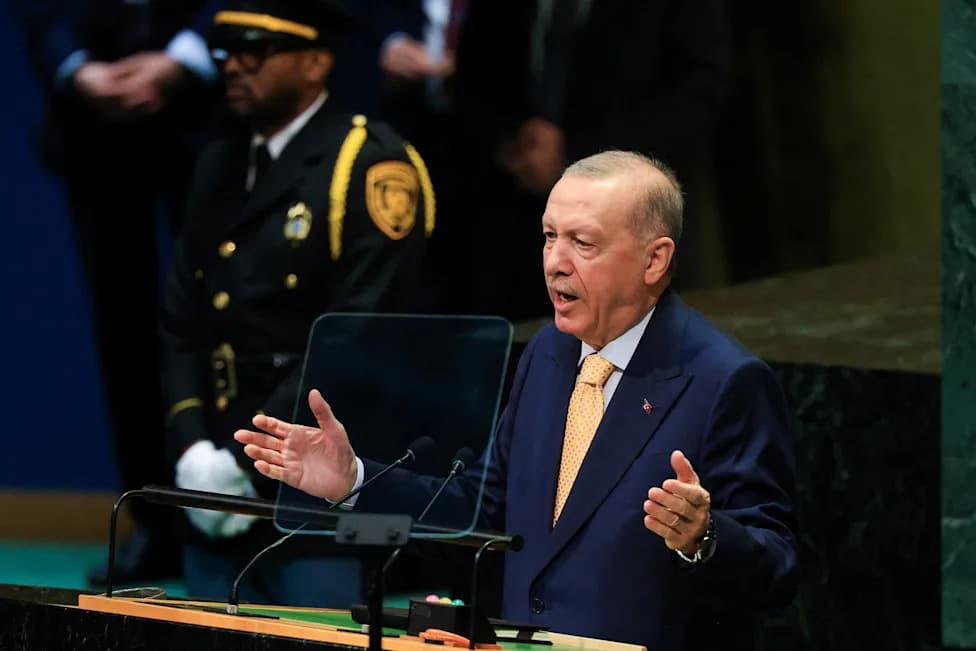
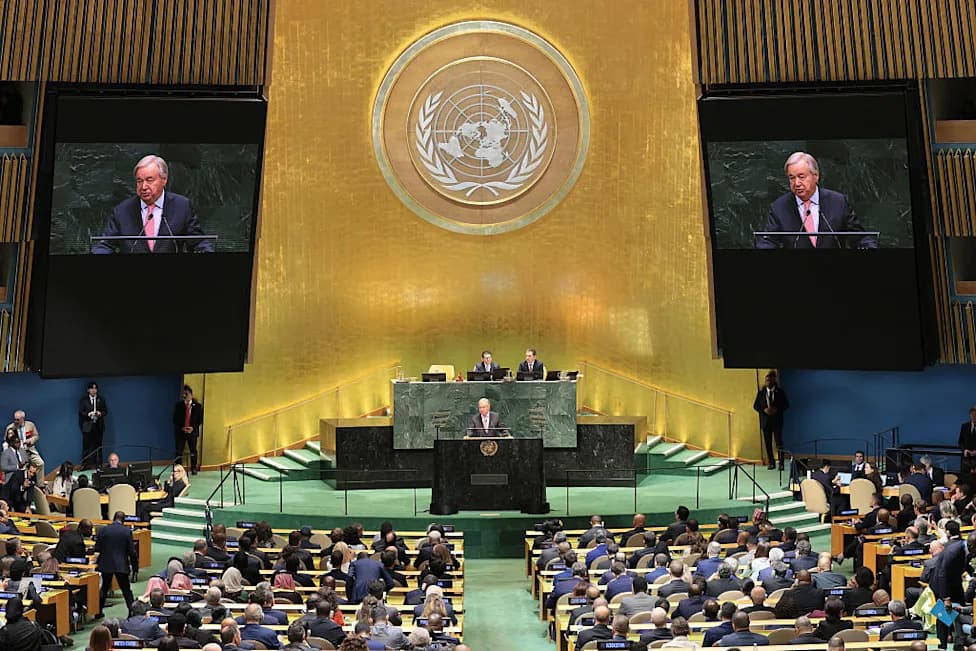
Turkiye's President Recep Tayyip Erdogan addressed the 81st United Nations General Assembly on Tuesday [Brendan McDermid/Reuters]
Turkiye's President Recep Tayyip Erdogan has renewed a high-profile call for the five permanent members of the United Nations Security Council (the P5) to give up their veto rights, arguing that the current system is unfair and undermines global stability.
Why Erdogan Is Calling For Change
Speaking to journalists in New York and in a September 22 opinion piece for Bloomberg, Erdogan said: "Let the veto mechanism be abolished… Let us move from a UN model that protects only five members to a mechanism that encompasses all members." He argues the Security Council's structure, devised eight decades ago, no longer reflects today's geopolitical realities and that a single country should not be able to block the will of the broader international community.
What The Veto Does
The veto is a special privilege that allows any of the five permanent members — the United States, the United Kingdom, France, Russia and China — to block substantive draft resolutions. In practice, a single P5 veto can defeat a resolution even if the other 14 council members vote in favor.
What Erdogan Proposes
Erdogan has called for a sweeping overhaul: ending permanent membership on the Security Council, eliminating veto powers, and strengthening the role of the UN General Assembly so it elects all council members to fixed terms. He says this would force candidates to "regain the confidence of the majority of member states through elections," rather than rely on lifetime privileges.
Legal And Political Hurdles
Formally abolishing the veto would require amending the UN Charter. Under Article 108, a charter amendment needs approval by two-thirds of the General Assembly and ratification by two-thirds of UN members — including all five permanent members. In short, the P5 would effectively have to consent to give up their own vetoes.
Because veto power protects core national interests and influence, any formal attempt to strip it from the P5 is likely to meet strong resistance. Russia has already said permanent members should retain the veto, though it supports expanding the council's membership. The United States and China have likewise defended their veto privileges in the past.
Smaller Steps: The France-Mexico Initiative
More modest efforts have tried to chip away at veto use. In 2015 France and Mexico proposed a voluntary pledge by P5 members to refrain from using the veto in cases of mass atrocities, such as genocide and crimes against humanity. That plan depends on voluntary compliance rather than legal change.
The initiative has gained momentum: Paris says 128 UN member states now back it — one short of 129, the two-thirds mark of the UN's 193 members. Because the pledge is non-binding and lacks buy-in from the most frequent veto users (notably Russia, the United States and China), analysts call its impact largely aspirational, though supporters hope it will create political pressure in crises.
Expansion: Possible But Complicated
Expanding the Security Council — for example by adding permanent seats for underrepresented regions like Africa — is often considered more politically realistic than abolishing the veto. Yet enlargement would also require a UN Charter amendment and therefore the consent of the P5. Deciding which countries would gain permanent status and whether they would receive veto power has long been an impasse.
Who Uses The Veto Most?
Historically, the Soviet Union and later Russia have cast by far the most vetoes — nearly half of the total recorded (about 163 of 331). The United States follows with roughly 95 vetoes. France and the UK have used the veto much less frequently in recent decades.
Bottom Line
Erdogan's proposal highlights legitimate debates about representativeness and fairness at the UN, especially when the Security Council is deadlocked on major crises such as Gaza and Ukraine. However, the legal requirements and entrenched political incentives mean abolishing the P5 veto is unlikely without the willing consent of those who currently hold it. Incremental or voluntary measures, and carefully negotiated enlargement, remain the more plausible — if imperfect — paths to change.
Help us improve.