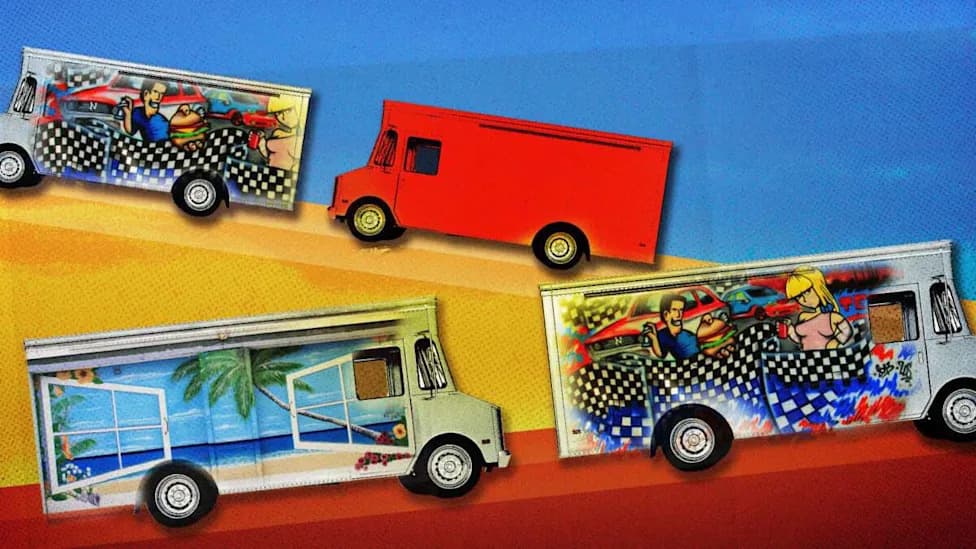
Chicago's rules for mobile food vendors are fragmented, confusing and often prohibit on-site preparation for carts, forcing vendors to use shared kitchens and sell only prepackaged items. The rules produce odd and punitive outcomes—such as making a hot dog-in-a-bun technically illegal—and disproportionately affect small operators, many of them immigrants. Additional measures, like the 2012 200-foot rule, helped precipitate a near-50% drop in food trucks and leave only about 3% of the Loop legally available for trucks.
In Chicago, Even Putting a Hot Dog in a Bun Can Break the Rules — How Mobile-Food Regulations Hurt Small Vendors
Ekostsov/Jorgeprz/Norlito Gumapac/Dreamstime/Fatima Ruiz
Like many large, progressive cities, Chicago draws criticism for heavy-handed regulations and slow-moving government. The city's permitting system and tax burdens rank it among the toughest places to start a small business, and the smallest operators often bear the greatest load.
Rules That Make Little Sense
Mobile food carts and trucks face especially steep challenges. Chicago magazine recently documented how food cart operators are legally barred from preparing food at their carts. Vendors must perform any food preparation in a shared kitchen—requiring a shared-kitchen license that costs $330 for two years—and may sell only prepackaged, sealed items.
The result can be absurd: a vendor who places a hot dog into a bun before handing it to a customer can technically be in violation of the rules. The magazine profiles Geaby Figeuroa, an immigrant from Mexico who runs a street cart. When she shaves ice and tops it with syrup at her cart—essentially making a snow cone—she is, by the municipal-code reading, breaking the law. The code provides no clear, practical way to prepare some items fully in advance.
Confusing Permit Categories
Chicago distinguishes between several types of mobile-vending permits, and the differences are easy to miss:
- Mobile Food Dispenser: Allows a motorized vehicle to operate but does not allow on-site food preparation; food must be prepared and wrapped elsewhere.
- Mobile Food Preparer: Permits motorized vending and on-site food preparation.
- Mobile Prepared Food Vendor: Allows only non-motorized handcarts and only preprepared, wrapped foods.
- Mobile Frozen Dessert Vendor: Essentially for ice-cream trucks; may be motorized but requires frozen desserts to be packaged off-site.
By contrast, cities such as New York use a simpler, catch-all "mobile food vending" license (with separate permits for the actual vehicle), which many small vendors find easier to navigate.
Rules Disproportionately Affect Immigrant Entrepreneurs
Complex rules and opaque codes are particularly burdensome for small-business owners. An estimated 80% of Chicago's food-cart operators are immigrants who may face additional language and resource barriers when trying to comply with licensing and inspection requirements.
Restrictions, Inspections and Economic Effects
Chicago's restrictions go beyond the prepackaging mandate. The city's 2012 "200-foot rule" bars food trucks from operating within 200 feet of brick-and-mortar restaurants. A legal challenge to that rule failed, and in the years after it was enacted the city experienced a near-50% decline in food trucks.
The Chamber of Commerce's 2018 Food Truck Nation report found that only 3% of Chicago's central business district (the Loop) is legally available for food trucks. Fines for violating the 200-foot restriction are reported to be ten times higher than fines for parking in front of a fire hydrant.
Chicago officials point to limited funding as a factor in the city's regulatory challenges, contrasting Chicago's resources with New York City's larger inspector corps. Still, reports indicate the average food truck in Chicago faces about 15 inspections per year—possibly counting festival inspections—compared with a typical annual inspection regime in some peer cities. Critics argue that the city could reallocate existing spending to modernize enforcement and simplify regulations rather than leaving small vendors to shoulder disproportionate compliance costs.
Bottom line: Layers of conflicting permits, protectionist rules and frequent inspections create a hostile environment for mobile-food entrepreneurs—many of them immigrants—who are trying to earn a living in Chicago.
Sources: Chicago Magazine, Chamber of Commerce "Food Truck Nation", municipal code and reporting on Chicago's mobile-food regulations.
Help us improve.