The Sagrada Família has reached a major milestone: the Tower of Jesus Christ now tops out at 172.5 m, making Gaudí's basilica the world's tallest church. Engineers used 826 prefabricated panels (2,100+ stone pieces) bonded with Loctite EA 9497 epoxy—about 30 kg per panel and ~24 tonnes total—cured for 24 hours and assembled with millimetre precision. The modular method sped construction nearly tenfold, addressed coastal, thermal and vibration challenges, and helped deliver the tower in time for Gaudí's centenary; public access is expected from 2027.
How Stone, Steel and 21st-Century Adhesive Brought the Sagrada Família's Central Tower to 172.5 m
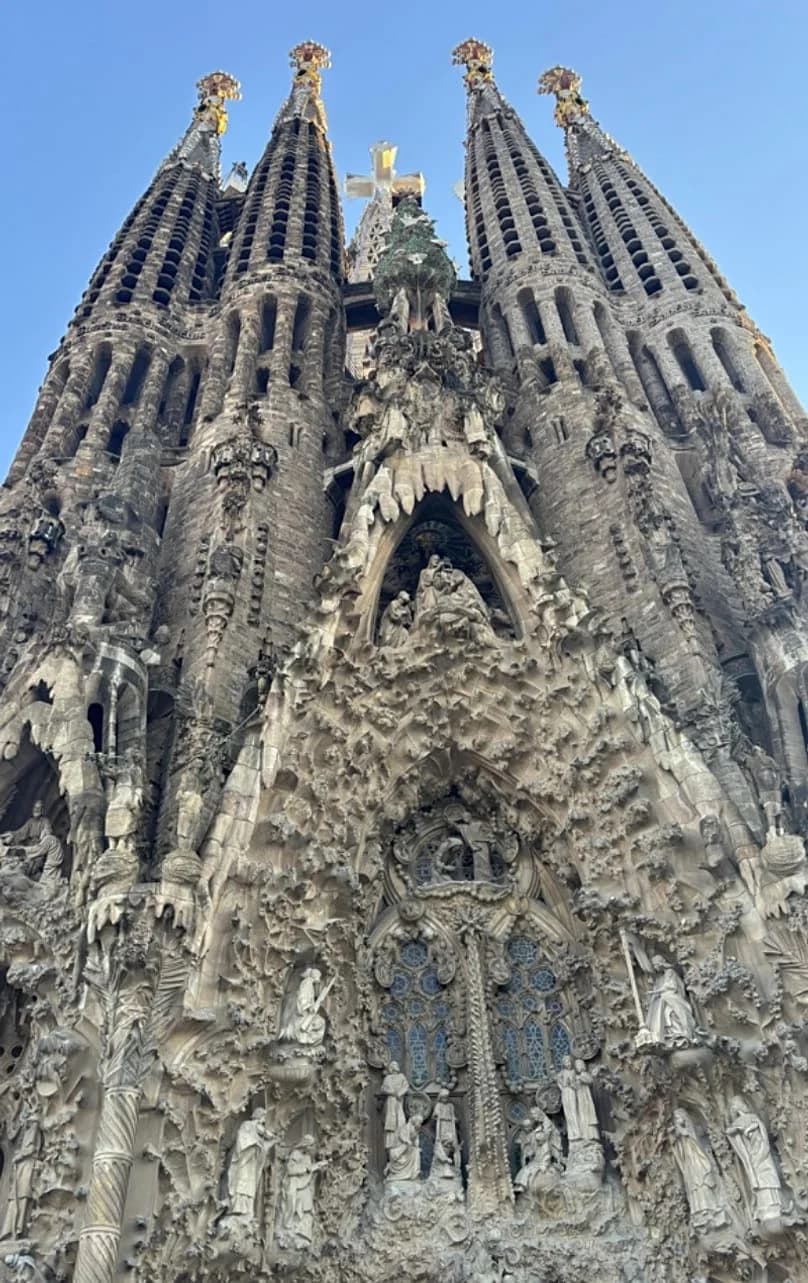
Façade of the Sagrada Familia. - María Muñoz Morillo
Some buildings seem immune to time—and then there is the Sagrada Família. In the centre of Barcelona, Antoni Gaudí's monumental basilica has been under construction for more than 140 years. Famously unconcerned by the timetable, Gaudí once quipped, "My client is not in a hurry," referring to God.
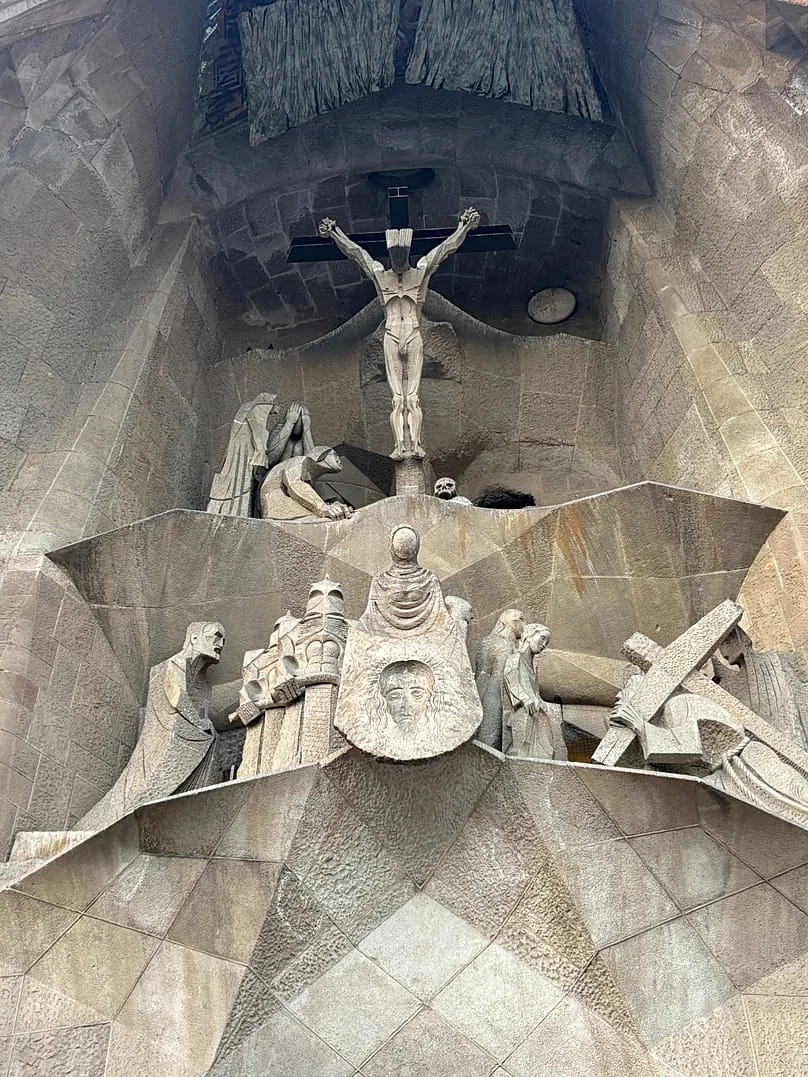
Rear façade of the Sagrada Familia showing a crucified Christ. Bottom left, an image of Gaudí and a soldier who inspired 'Star Wars'. - María Muñoz Morillo
Two Milestones and a Skyline Transformed
This year the Sagrada Família began to emerge from scaffolding that had long masked its silhouette, marking two notable milestones: the centenary of Gaudí's death (1926) and the completion of the Tower of Jesus Christ. At 172.5 metres, the central tower now makes the basilica the tallest church in the world, surpassing Germany's Ulm Minster.
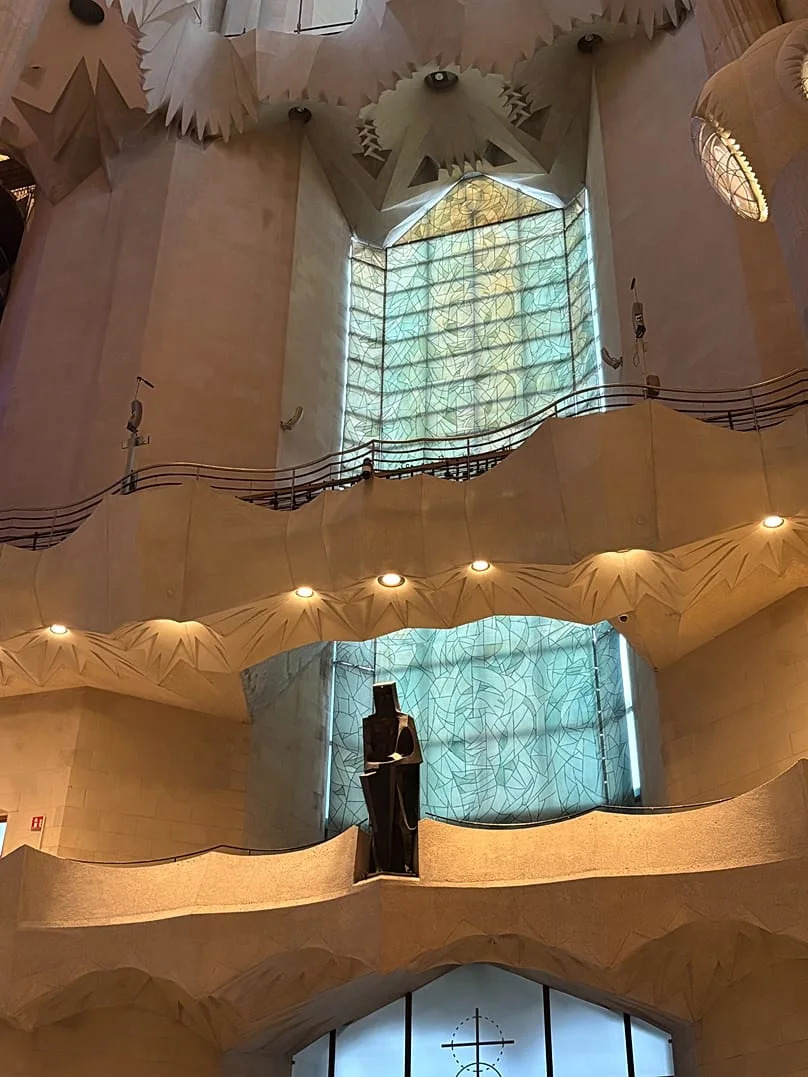
Saint George inside the Sagrada Familia; the white waves around him depict the dragon of the legend. - María Muñoz Morillo.
Gaudí's Vision: A Stone Catechism
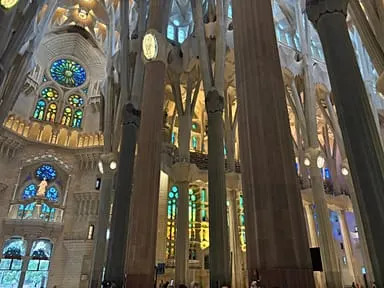
Gaudí did not design a conventional church but a "stone catechism"—a structure dense with symbolism and organic forms. The plan includes 12 towers for the apostles, a floor plan that evokes the body of Christ, and façades that narrate episodes of Jesus's life, from the Nativity to the Passion. The Passion Façade even includes a likeness of Gaudí among its sculpted figures, and a crucified Christ whose head takes the geometric form of an open book—an emblem consonant with Gaudí's idea of the building as a readable work of faith.
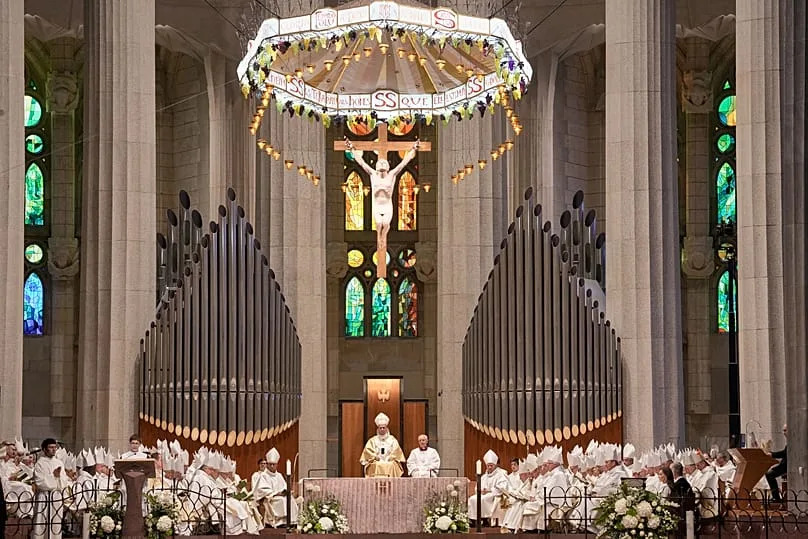
Pope Leo XIV celebrates Mass at the Sagrada Familia in Barcelona, Spain, on Wednesday 10 June 2026. - AP/Bernat Armangue
"Helicoidal forms are infinite, rising endlessly towards the sky, like the eternity and spiritual life of the souls that contemplate God..."
— Antoni Gaudí
Modern Engineering Meets 19th-Century Geometry
Completing the six central towers required resolving complex hyperbolic geometries and enormous structural loads. The solution combined Gaudí's original models with contemporary engineering: digital modelling, prefabrication and advanced materials science allowed teams to translate intricate geometry into buildable components.
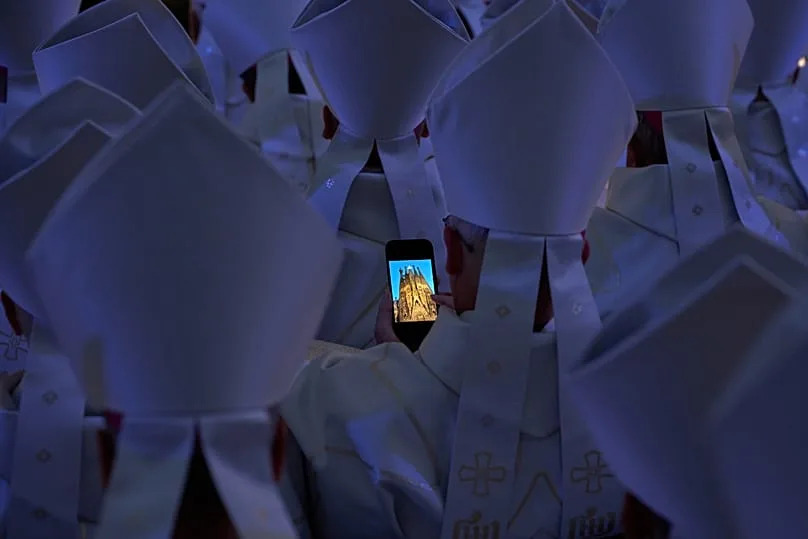
The clergy gather around the Basilica of the Sagrada Familia, designed by Antoni Gaudí, as Pope Leo XIV blesses the Central Tower of Jesus Christ on 10 June 2026. - AP Photo/Emilio Morenatti
The Adhesive, The Panels, The Precision
Rather than hoisting individual stones hundreds of metres into the air, engineers divided the towers into 826 modular panels incorporating more than 2,100 stone pieces. These panels were pre-assembled at the quarry and bonded into composite units using a two-component structural epoxy adhesive (Loctite EA 9497), produced locally in Montornès del Vallès. Each panel uses roughly 30 kg of epoxy; about 24 tonnes of resin were used across the project.
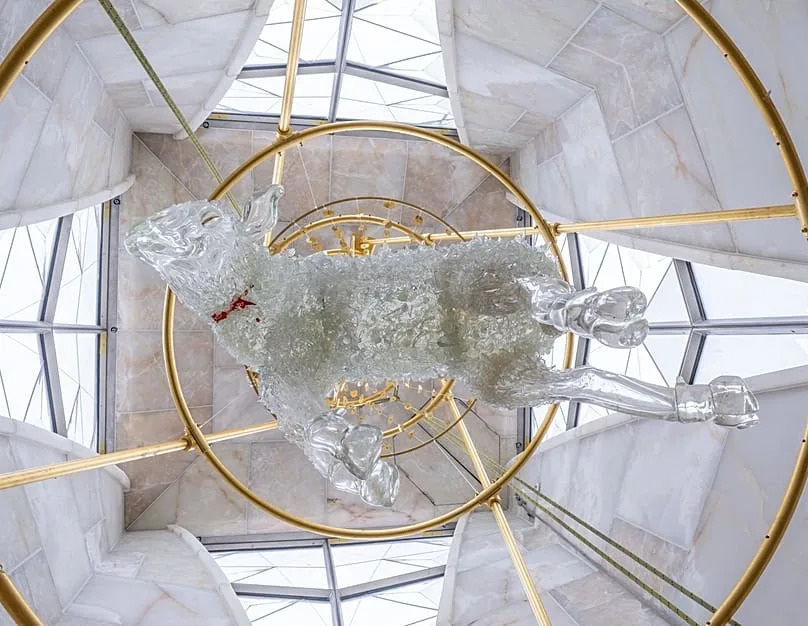
Image of the glass lamb inside the Tower of Jesus in the Sagrada Familia. - Sagrada Familia
The panels cure for 24 hours under controlled temperature conditions so that the adhesive fills microscopic gaps and creates a durable bond between stone and steel. Completed panels were transported to the basilica, lifted into place, and assembled level by level with millimetre precision—like fitting a monumental, three-dimensional puzzle.
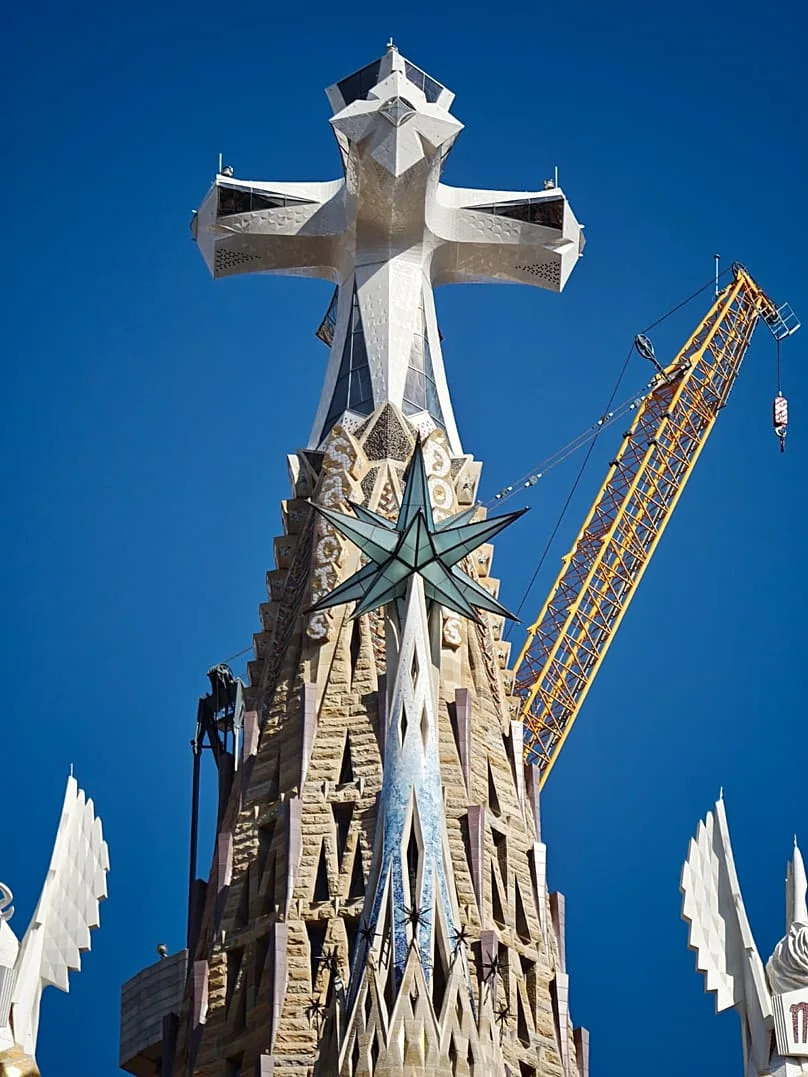
Detail of the Tower of Jesus in the Sagrada Familia. - Jesús Maturana
Why This Method Matters
Project leaders say the modular approach accelerated construction roughly tenfold: work that took around eight years under this system would have required 50–60 years with traditional techniques. The bonded composite structure is engineered to tolerate small movements without cracking and to support enormous loads, including the monumental 17-metre cross that crowns the Tower of Jesus.
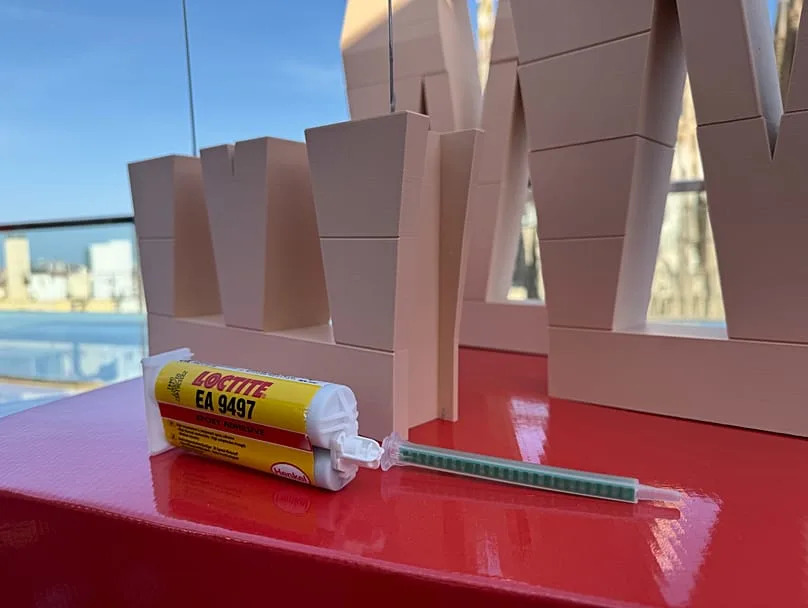
Image of the adhesive used in the construction of the Tower of Jesus in the Sagrada Familia. - Jesús Maturana.
Designed for a Demanding Environment
Engineering choices also reflect the basilica's urban, coastal context. The site is about 2.5 km from the Mediterranean, exposing materials to salt-laden air; typical relative humidity of 65–75%; thermal cycles from roughly 5°C in winter to over 30°C in summer; and urban vibrations from two metro lines that run beneath the building. The epoxy formulation and composite assembly account for these stresses to ensure long-term durability.
María Muñoz Morillo
Art, Ritual and Public Access
The Tower of Jesus houses a glass lamb by Italian artist Andrea Mastrovito that filters warm Mediterranean light into the interior. The central tower was blessed by the Pope during a visit on 10 June 2026. From 2027 the tower is expected to open to the public, offering a walkable viewing platform at the highest point of Barcelona.
Gaudí's Legacy
Gaudí devoted 43 years to the project and is buried in the basilica's crypt. He left models and instructions for successors, trusting future generations to finish his vision. More than a century after construction began, stone, glass, steel and modern engineering are bringing a project once deemed nearly impossible ever closer to completion—while preserving the symbolism and sculptural language that make the Sagrada Família unique.
Help us improve.