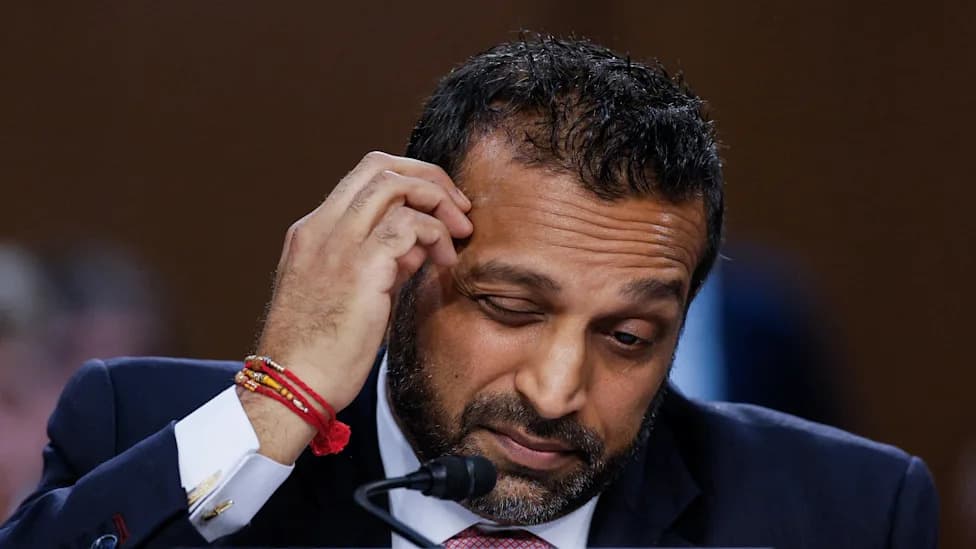
U.S. Citizenship and Immigration Services (USCIS) Director Joseph Edlow told Newsmax that the agency, working with the Department of Justice, is intensifying efforts to identify and pursue naturalized citizens who obtained their status through fraud.
"I'm exceedingly proud of what we're doing in the denaturalization space," Edlow said on "Rob Schmitt Tonight."
Edlow said USCIS is re-examining older naturalization files and cooperating with federal prosecutors to bring denaturalization cases before judges. "If you've committed fraud in this process — and I don't care where you are; you could be a naturalized U.S. citizen — but if you committed fraud in getting that naturalization, you are not safe. And we will find you and we will bring charges against you," he said.
Legal Standard and Recent Cases
Federal law allows revocation of citizenship when naturalization was illegally procured or was obtained by concealing a material fact or by willful misrepresentation. Last week, federal prosecutors in North Carolina charged 42-year-old Sha Bahadur Ghaley, a naturalized citizen from Bhutan, with naturalization fraud.
Authorities allege that Ghaley committed sexual offenses against a child between 2010 and 2014 but denied on his 2017 naturalization application that he had committed crimes for which he had not been arrested. Ghaley became a U.S. citizen in 2018 and later pleaded guilty in 2024 in state court to three counts of taking indecent liberties with children, prosecutors say.
The U.S. Attorney's Office for the Western District of North Carolina also has filed civil denaturalization actions against three other individuals accused of obtaining citizenship through immigration fraud.
Asylum Processing Changes
Edlow defended recent administrative changes that narrow eligibility for certain asylum processing pathways while emphasizing that people who legitimately fear return to their home countries remain eligible for protection. In July, USCIS implemented a rule allowing some affirmative asylum applications to be referred directly to immigration court without an agency interview.
The administration estimates that up to 444,724 pending affirmative asylum applications — roughly 31% of the backlog — could be affected, primarily because they were filed more than one year after applicants entered the United States. Federal law includes exceptions to the one-year filing deadline for changed or extraordinary circumstances.
The Washington Post reported that immigration judges ordered the removal of more than 440,000 asylum seekers during the first 19 months of President Donald Trump's second term, a figure that exceeds removals in the prior eight years combined.
What This Means
USCIS' renewed focus on older naturalization cases signals a sustained enforcement push. Individuals who concealed material facts on immigration or naturalization forms may face denaturalization and criminal or civil charges, while changes to asylum processing could affect a sizable share of pending applications.