At the UN, Pakistan's prime minister Shehbaz Sharif condemned recent Houthi strikes on Saudi Arabia and warned that any attack on Mecca or Medina would cross a "red line." He highlighted the Mecca Joint Defence Agreement with Saudi Arabia and Türkiye and noted ongoing military consultations to boost intelligence sharing and coordination. Sharif also emphasised Pakistan's mediation efforts via the Islamabad MoU between Washington and Tehran, warned about threats to key maritime chokepoints, criticised Israeli actions in the region, and raised concerns about India over Indus water rights and militants operating from Afghan territory.
Pakistan PM Warns Attack On Mecca Or Medina Would Cross A 'Red Line', Shehbaz Sharif Tells UN
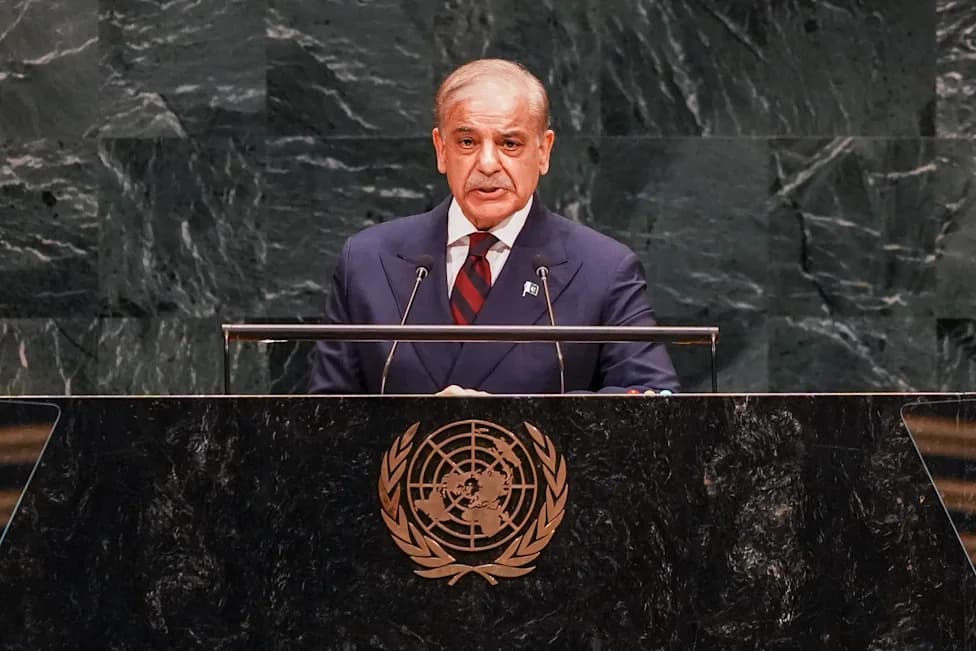
Pakistani Prime Minister Shehbaz Sharif speaks during the United Nations General Assembly on Friday [Ryan Murphy/Getty Images/AFP]
Pakistan's prime minister, Shehbaz Sharif, strongly condemned recent Houthi strikes on Saudi Arabia and warned at the United Nations General Assembly that any attack threatening the sanctity of Islam's holy cities of Mecca or Medina would be a "red line that must never be crossed."
Condemnation Of Houthi Attacks
Addressing the UN in New York, Sharif described the Houthi strikes as "deplorable" and said an assault that Riyadh says targeted Mecca had "outraged Muslims across the globe." The Iran-aligned Houthi movement has denied targeting the holy sites, calling the allegations a "heinous lie."
Mecca Joint Defence Agreement And Regional Coordination
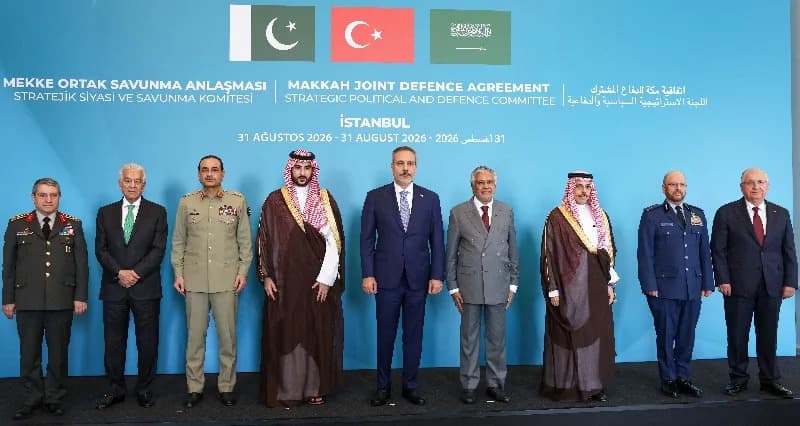
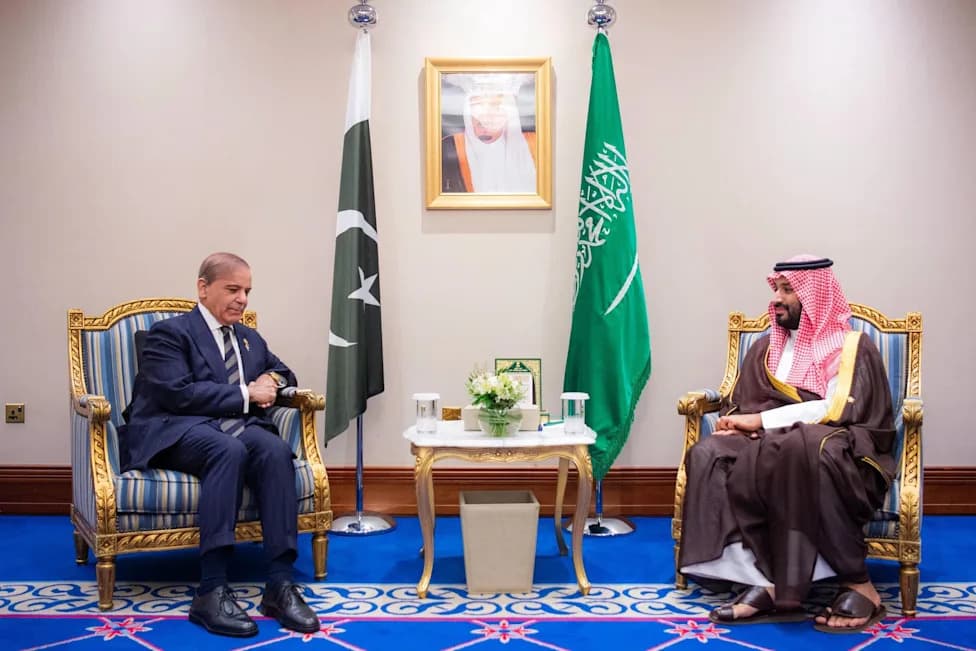
Last month Pakistan, Saudi Arabia and Türkiye signed a trilateral defence pact formally known as the Mecca Joint Defence Agreement. The pact declares that an attack on any signatory will be treated as an attack on all, though both Islamabad and Ankara have so far stopped short of direct involvement in Riyadh's confrontation with the Houthis.
The military chiefs of Pakistan, Saudi Arabia and Türkiye met in Riyadh and discussed enhancing intelligence sharing and military coordination. Pakistan's military said the chiefs reviewed threats facing Saudi Arabia, reaffirmed a commitment to collective defence and pledged to turn Mecca Agreement commitments into practical cooperation.
It remains unclear what form, if any, material support Ankara and Islamabad might provide to Riyadh. In a written interview published by Newsweek, Turkish President Recep Tayyip Erdogan said support could include "intelligence, logistics or ammunition," with broader military assistance possible depending on the scale of the threat.
Mediation, Waterways And Wider Regional Concerns
Sharif also referenced what he described as the US-Israeli military campaign against Iran launched in late February and highlighted Pakistan's role as a co-mediator. Islamabad helped broker the Islamabad Memorandum of Understanding between Washington and Tehran, an accord intended to help end the conflict; Sharif said that agreement has since unravelled even as regional states continue to press for a conclusive end to the war.
He warned that the Strait of Hormuz — which Iran has effectively blocked at times — and the Bab al-Mandeb waterway, which the Houthis now largely control, are "arteries of the global economy" that must remain open and secure.
Other Regional Issues Raised
Sharif used his UN platform to criticise Israel, denouncing what he described as a "genocidal agenda" in Palestine and condemning "Israeli aggression against Lebanon and Syria." His remarks echoed comments made earlier in the day by Lebanon's prime minister, Nawaf Salam.
Turning to Pakistan's neighbourhood, Sharif accused India of "weaponising" the Indus river system, which the two countries have jointly managed for more than six decades. He warned that "any attempt to stop, impede or divert Pakistan's share of the waters will be treated as an act of war."
He also reiterated Pakistan's call for a "just and fair solution" to the Kashmir dispute and alleged attempts to change Kashmir's legal status through demographic engineering.
Security Threats From Militants
Another urgent concern for Islamabad is the Tehrik-e-Taliban Pakistan (TTP). Sharif said TTP elements operate from "sanctuaries inside Afghanistan, with the aim of destabilising Pakistan," and insisted that attacks launched from Afghan soil "must come to a grinding halt." Pakistan attributed several recent cross-border clashes to militants and reported that a number of Afghan Taliban fighters were killed in the latest exchanges.
Sharif: "Yet amid the roar of missiles, drones and guns, the voice for diplomacy must echo even louder and stronger."
The speech framed Pakistan as both a regional security partner and a proponent of diplomacy amid escalating tensions across the Middle East and South Asia.
Help us improve.