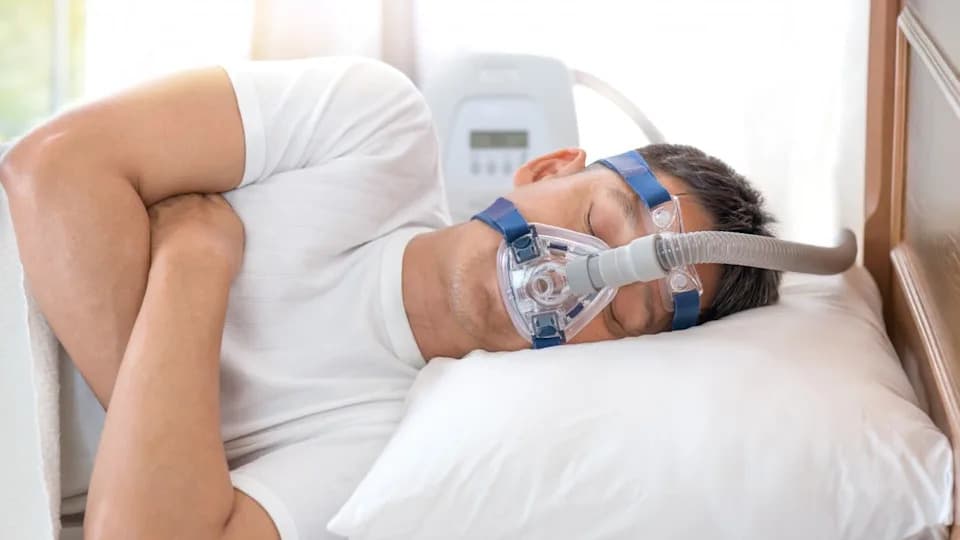
Medicare Part B treats a continuous positive airway pressure (CPAP) device as a 13‑month rental: after the annual Part B deductible of $283, Medicare pays 80% of the approved monthly rental and the beneficiary pays the remaining 20%. Only after 13 uninterrupted months of covered rental does the machine become the patient’s property.
Why the First 90 Days Matter
The initial 90 days are a trial period. Continued rental payments beyond that window depend on meeting two separate requirements during the first three months: objective usage and a clinician’s documented benefit. Fail either requirement and Medicare will stop rental payments before month four, even though ownership would otherwise require a full 13 months of continuous rental.
Objective Usage Requirement
The usage test is specific: within any consecutive 30‑day period during the first 90 days, the patient must use the CPAP for at least four hours per night on at least 70% of nights. In practice, that means roughly 21 qualifying nights within a chosen 30‑day stretch. The device’s internal data logger provides the compliance report — subjective statements cannot override that record. A poor start does not automatically doom the trial if a compliant 30‑day window is achieved before day 90.
Face‑to‑Face Clinical Re‑Evaluation
Medicare also requires a face‑to‑face visit with the treating clinician, generally scheduled between day 31 and day 91, at which the clinician documents that the patient is benefiting from therapy. Even if usage targets are met, missing this visit or failing to include the specific documentation Medicare expects can end coverage. Coverage may resume after a later visit, but Medicare typically will not retroactively pay for the gap — the clinician’s note must close the loop during the trial window.
Common Outcome: When The Trial Fails
When Medicare determines the trial failed, it denies continued rental payments and associated supplies (masks, tubing, filters) as not "reasonable and necessary." Because the 13‑month ownership clock has not completed, the supplier may require the device’s return unless the beneficiary pays privately or arranges another agreement. This is a contractual and billing consequence, not a federal seizure — but it can leave patients without a device they still need.
Restarting Coverage Is Harder
A true trial failure usually requires a new in‑person clinical evaluation explaining why therapy failed and a repeat sleep study in a facility‑based setting. That makes troubleshooting and fixing mask leaks, pressure settings, or claustrophobia during the original trial far cheaper and faster than requalifying from scratch.
Practical Checklist to Protect Coverage
- Request the compliance report early: Pull objective usage data around week 4–5, not at week 11, so there is time to correct problems and still achieve a compliant 30‑day window before day 90.
- Address comfort issues immediately: If leaks, pressure or claustrophobia prevent four‑hour nights, contact your clinician or supplier in the first week they arise. A different mask, pressure adjustment, or added humidification often resolves the issue.
- Schedule the face‑to‑face visit well inside the window: Book the re‑evaluation around days 60–80 and confirm in writing that the supplier has received both the compliance report and the clinician’s benefit documentation before day 91.
- Keep written confirmation: Ask the supplier and clinician to confirm by email or portal message that they transmitted the required documents to each other and to Medicare.
- Know the consequences: If the trial fails, the supplier can require return or direct billing; restarting coverage usually requires a new in‑person evaluation and facility sleep study.
Illustrative Case
Consider a 68‑year‑old who leaves a sleep lab with an obstructive sleep apnea diagnosis and a CPAP prescription. The supplier delivers the machine and Medicare initially approves payment. If the mask leaks and the patient removes it after about three hours most nights, the supplier’s usage report may show noncompliance. Ten weeks in, the supplier can notify the beneficiary that Medicare will stop rental payments. Because the 13‑month clock has not completed, the supplier may demand the device’s return unless the patient pays out of pocket or negotiates another arrangement.
The key takeaway: the 13‑month rental model can deliver ownership, but the first 90 days determine whether payments continue. Monitoring objective usage early, promptly fixing equipment or comfort problems, and securing timely clinical documentation greatly reduce the chance that Medicare will halt payments and force an expensive restart or the return of a needed device.
If you have questions or corrections, contact [email protected].