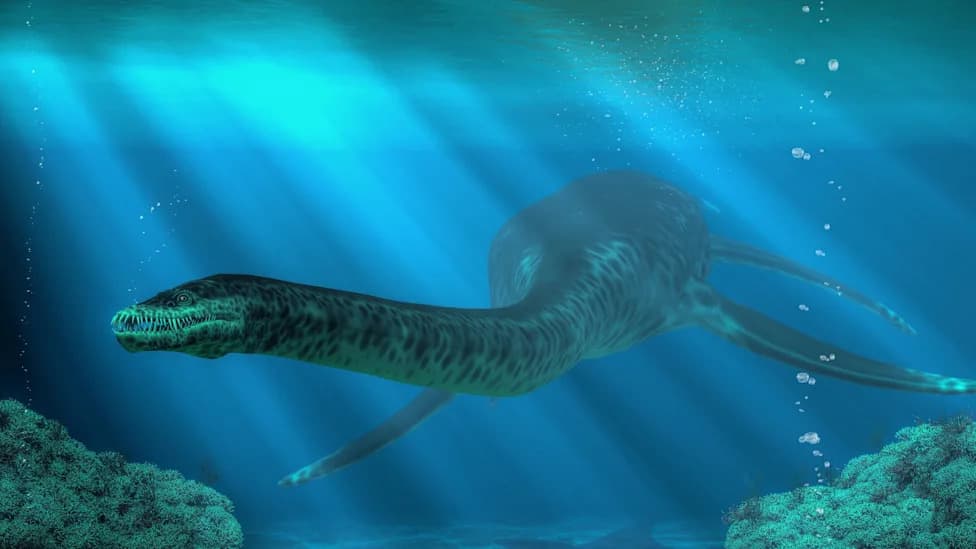
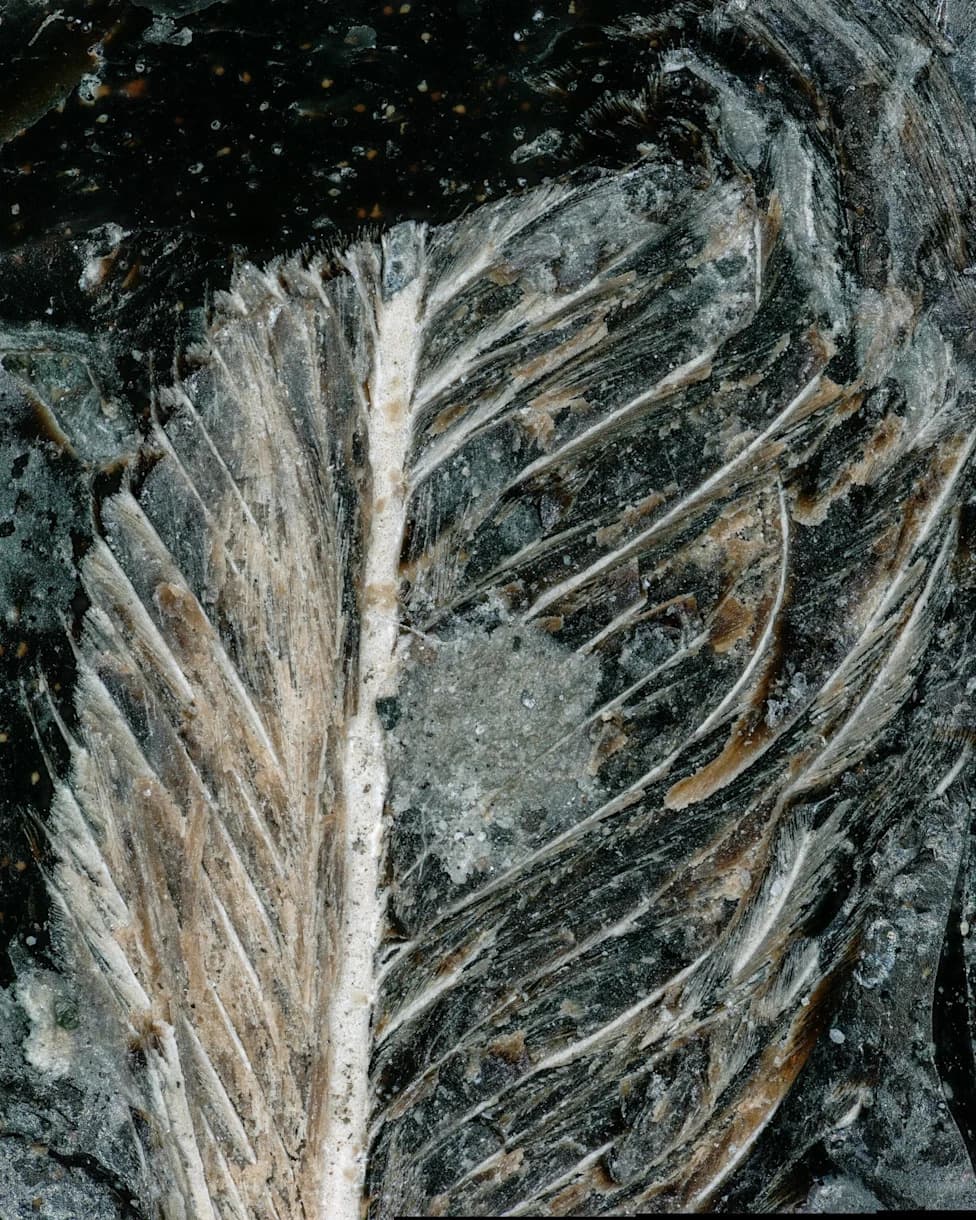
Scientists have identified concentrated clumps of shells and plant fragments in 160-million-year-old delta sediments that they interpret as fossilized regurgitate from plesiosaurs. The clumps—ranging from walnut- to mango-size—contain open-ocean shellfish that could not have lived in fluctuating delta salinity, implying the animals fed offshore then moved toward shore to expel hard remains. The pellet size and prey mix point to cryptoclidid plesiosaurs (4–8 m), and the behavior may have been common along ancient coastlines.
160-Million-Year-Old 'Vomit Pellets' Suggest Plesiosaurs Swam Ashore to Regurgitate Shells
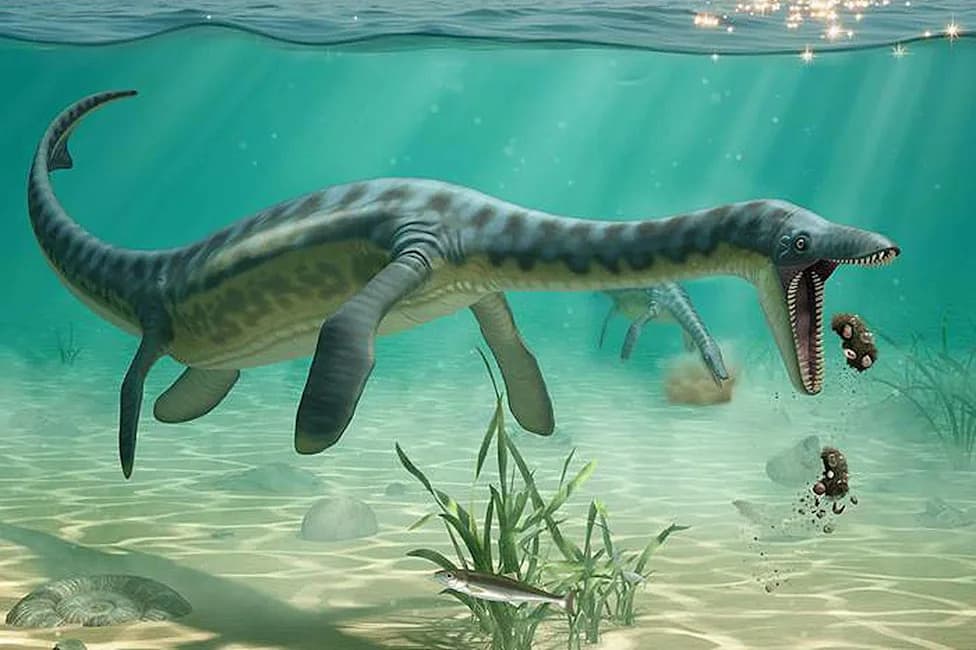
Artist's impression of plesiosaurs feeding on the sea floorCredit: Lente Artemieff
New research identifies concentrated clumps of shells and plant fragments in ancient river-delta sediments that scientists interpret as fossilized regurgitate from plesiosaurs—long-necked marine reptiles often imagined as real-life 'sea monsters.' The findings offer a glimpse into how these animals processed hard-shelled prey and where they may have gone afterward.
Evidence From Delta Sediments
Paleontologist Dirk Knaust reports the pellet-like clumps were recovered from drill-core samples of delta sand dated to roughly 160 million years and deposited in what was once a shallow river delta about 50 kilometers off the coast of Norway. The concentrated nature and composition of the clumps—some as small as a walnut and others as large as a mango—led researchers to interpret them as compacted stomach contents that had been expelled.
Why Regurgitation Is the Best Explanation
The shellfish contained in the clumps are species that require the steady salinity of open marine waters, not the fluctuating salinity typical of a delta. That ecological mismatch suggests the shells were eaten offshore and transported to the delta as expelled material rather than representing local, living shellfish populations.
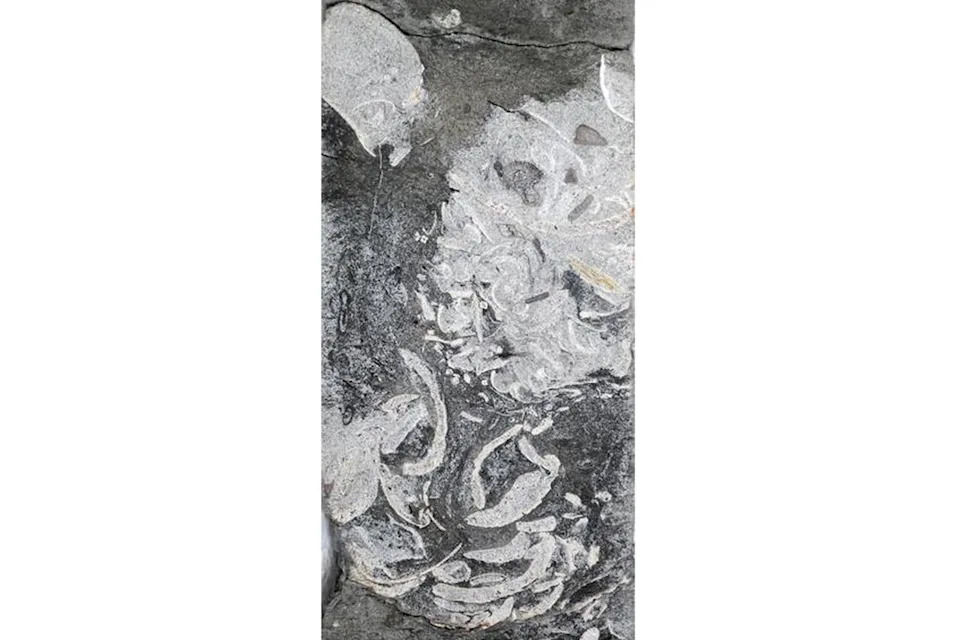
Drill core image of 160-million-year-old delta sand containing a clump of shells and plant remains, interpreted as plesiosaur vomit.Credit: Dirk Knaust
After examining more than 20 clumps and comparing pellet size and prey composition with known diets of marine predators, Knaust and colleagues ruled out fish, sharks and crocodilians. The evidence best fits cryptoclidid plesiosaurs—medium-sized plesiosaurs about four to eight meters long that lived from the Middle Jurassic into the Early Cretaceous.
'Plesiosaurs may have come close to shore to relax or sleep after hunting, and that's likely when they vomited,' Knaust said. 'Unlike seals or crocodiles that haul out on land, the reptiles probably remained submerged due to their weight and shape.'
Behavioral and Paleoecological Significance
This study suggests plesiosaurs may have routinely fed in deeper, salt-stable waters and then swum toward shallows or deltaic zones to expel indigestible shell fragments—behavior analogous to modern birds that regurgitate pellets and to pinnipeds or crocodilians that sometimes spit out shells. If widespread, such behavior could leave similar fossil pellets in shallow depositional environments around ancient coastlines.
Publication Note: The results were reported by Dirk Knaust in Geological Magazine and summarized by Cambridge University Press. The interpretation is based on sedimentological context, pellet composition and comparisons with known predator diets; as with all paleontological inferences, alternative explanations are considered but were judged less likely by the authors.
Help us improve.