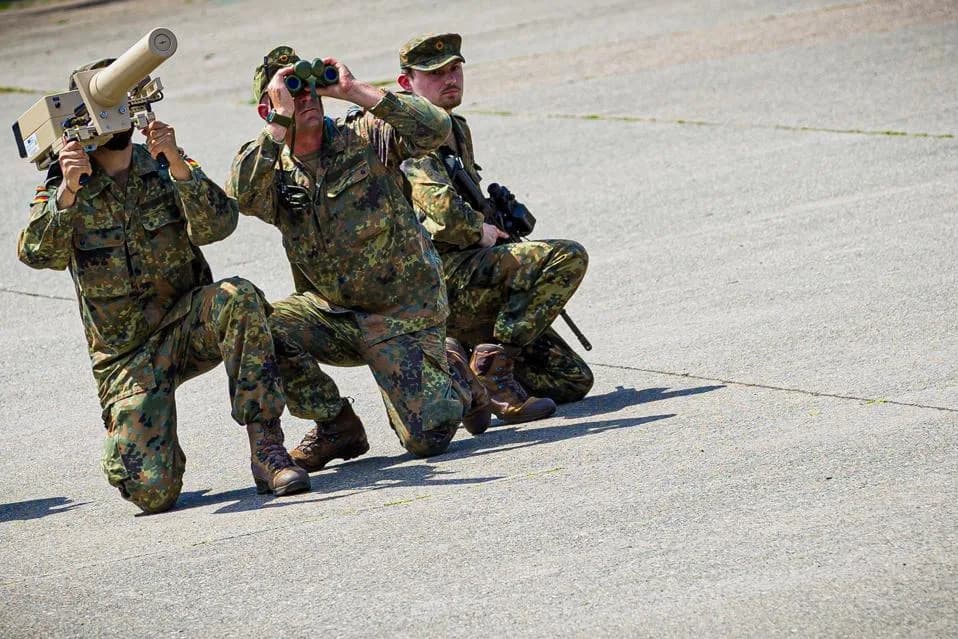
Thales says it is in advanced talks with several NATO countries to deploy HexaForce, an AI-driven command-and-control overlay trialled at NATO’s CWIX exercise. The system uses an open, NATO-aligned architecture and a distributed mesh design to integrate with legacy systems and scale mission planning to about 1,000 targeting missions per day. HexaForce combines selectable LLMs and agentic AI modules while making clear that human operators retain final authority over lethal actions.
Thales in Advanced Talks With NATO Over AI Command System HexaForce
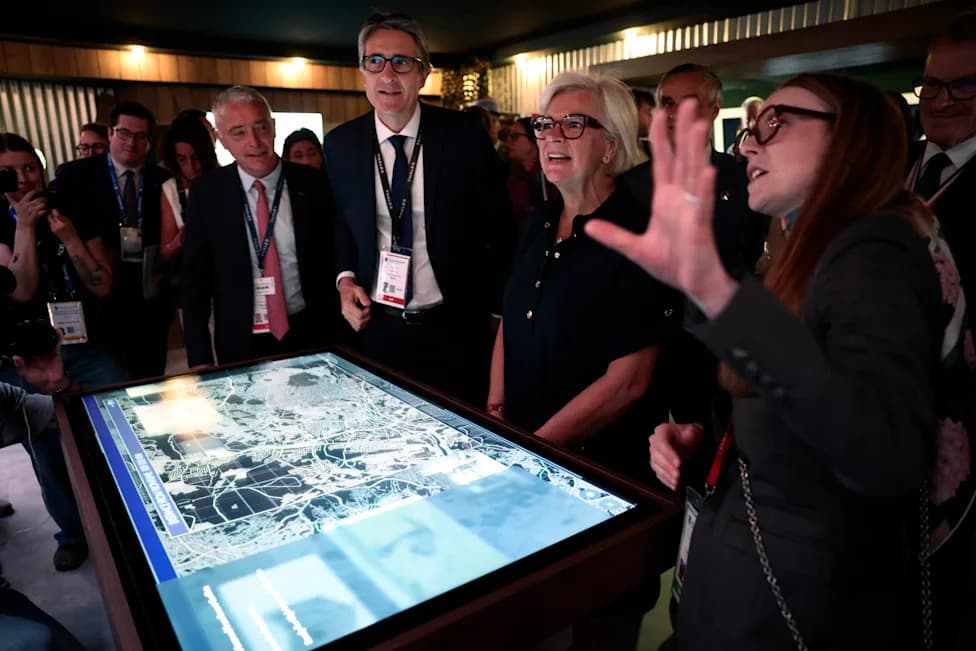
French Defense Minister Catherine Vautrin (C) stands next to Thales CEO Patrice Caine at the Thales stand at the Eurosatory trade fair outside of Paris on June 15, 2026. (Guillaume Baptiste / AFP via Getty Images)
French defence-technology firm Thales says it is in "quite advanced" discussions with several NATO countries about deploying HexaForce, its new artificial intelligence-powered command-and-control (C2) overlay, Patrick Moreau, Thales vice president for multi-domain operations, told Defense News.
What HexaForce Is Designed To Do
Unveiled after trials at NATO’s Coalition Warrior Interoperability Exercise (CWIX) in Poland in June, HexaForce is presented as a multi-domain C2 layer that can integrate with legacy and national systems from strategic headquarters down to battalion level. The system is designed to let users choose their preferred AI models and avoid vendor lock-in while adding AI-assisted capabilities to existing platforms.
Key Capabilities
- High-Volume Mission Planning: Thales set a target with users for HexaForce to plan up to 1,000 targeting missions per day — roughly a tenfold increase over current throughput.
- Open, NATO-Aligned Architecture: Built around NATO standards and frameworks such as Data-Centric Security and Federation Mission Networking, HexaForce can plug into existing mission-planning and tactical systems.
- Distributed, Mesh-Enabled Design: The system runs across multiple data hubs and command posts to reduce dependence on centralised computing.
- AI Components: HexaForce includes a large language model (LLM) interface and agentic AI modules for tasks like targeting preparation, while allowing nations to select or host their own models.
Testing, Interoperability And Safety
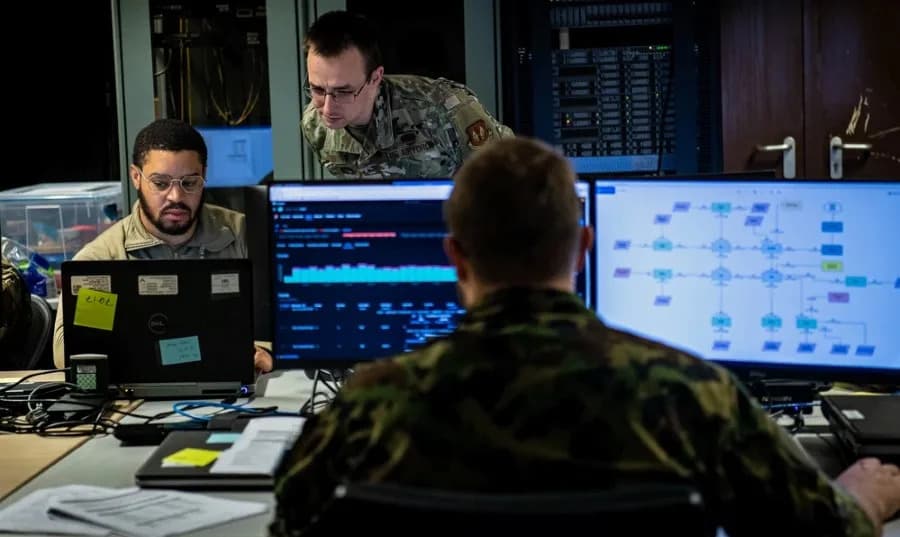
At CWIX, end users tested HexaForce’s interoperability with legacy and national systems. The platform is intended to enhance situational awareness by aggregating military sensors alongside commercial feeds, such as ship-tracking data, and cyber-threat information.
“I don't want to go too much into detail, but we are quite advanced in some discussions with some NATO countries so far,” Moreau said in a Sept. 24 interview.
Moreau emphasised that HexaForce proposes courses of action — including firing options — but that human operators retain ultimate authority. “Of course it remains up to the operator to choose to push the button, and to choose the best option proposed by HexaForce. There is no automated action,” he said.
Context And Outlook
NATO and EU efforts to adopt and field AI-enabled C2 reflect a broader push to process growing volumes of operational data and scale planning from brigade formations to corps-sized operations. NATO already uses C2 capabilities supplied by U.S.-based Palantir, while the EU seeks greater sovereign control over critical technologies.
Although developed with input from the French Army, Thales states that HexaForce is intended as a NATO-capable solution rather than a France-only product. Thales says the first version moved from design to availability for the French Army in nine months. France is separately developing a sovereign C2 called Arcadia; Moreau said HexaForce could be "a cornerstone" of national systems but that such decisions rest with authorities, not the company.
Help us improve.