Supreme Court Justice Ketanji Brown Jackson criticized the Court's growing readiness to grant emergency relief, warning that the emergency docket should not become a shortcut for privileged litigants. Speaking Sept. 24 at the University of the District of Columbia Law School, she echoed Justice Sonia Sotomayor's concerns and cited recent cases—such as a decision allowing the administration to block $783 million in research grants—as examples. Jackson urged that the Court intervene early only when petitioners demonstrate imminent, real-world harm and when the balance of harms justifies immediate action.
Justice Jackson: Supreme Court Should Be More Restrained In Emergency Interventions
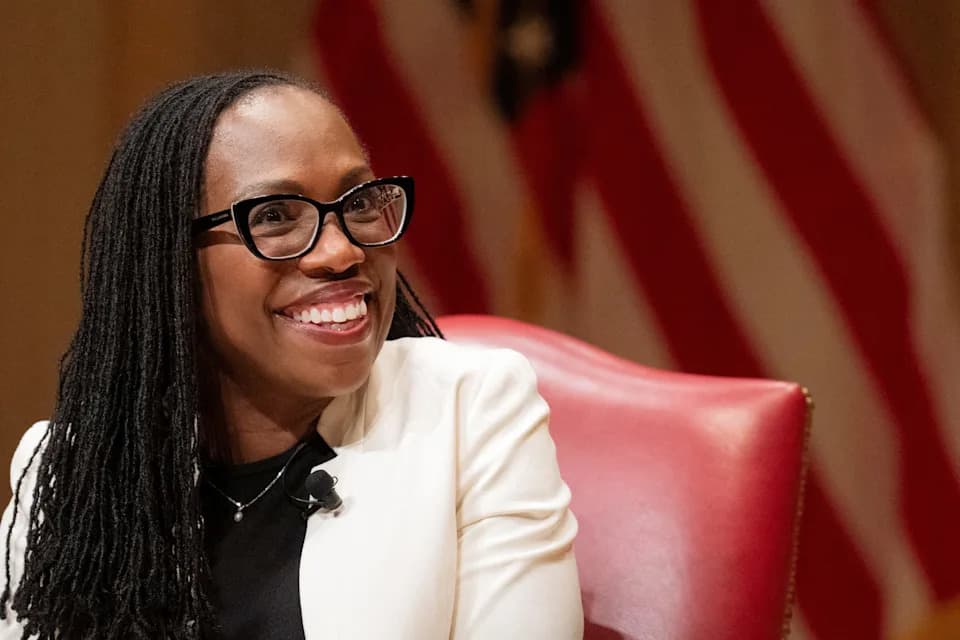
Supreme Court Justice Ketanji Brown Jackson speaks to the 2025 Supreme Court Fellows Program, Thursday, Feb. 13, 2025, at the Library of Congress in Washington, D.C., U.S. Jacquelyn Martin/Pool via REUTERS
WASHINGTON — Supreme Court Justice Ketanji Brown Jackson renewed a sharp critique of how the Court handles emergency appeals, telling an audience on Sept. 24 that requests for immediate intervention must not become a "special avenue that certain privileged litigants can use selectively."
Jackson Warns Against Preferential Access
Speaking at the University of the District of Columbia Law School, Jackson cautioned that the emergency docket should not convert into a shortcut available to a few frequent filers. "As one of my colleagues recently suggested in an opinion," she said, "some frequent emergency docket filers have the court on speed dial."
References and Context
Although she did not name the Trump administration in her remarks, Jackson was referring to concerns raised in Justice Sonia Sotomayor's dissent last year after the conservative majority sided with the administration in a dispute over efforts to deport eight migrants to South Sudan. Jackson, one of the Court's three liberal justices, has repeatedly warned that the Court appears to show preferential treatment to the government and to undercut lower-court rulings through emergency interventions.
"This is Calvinball jurisprudence with a twist," Jackson wrote last year in criticizing the Court's decision to allow the administration to block $783 million in health research grants. "Calvinball has only one rule: There are no fixed rules. We seem to have two: that one, and this Administration always wins."
When the Court Steps In—and When It Shouldn’t
Jackson noted that the decisions under scrutiny were emergency requests that sought short-term permission to carry out controversial policies while litigation continued. She contrasted those interim interventions with the Court's rulings on major policies that reached it for final review, where the justices sometimes rejected the administration's emergency claims—such as efforts to impose tariffs or to rewrite citizenship rules.
Historically, Jackson said, the Court intervened sparingly in the early stages of litigation. "The justices waited humbly until the facts were established and the lower courts had fully and fairly assessed the law," she said. "It was only in exigent circumstances, actual emergencies, that the justices felt the need to intervene in pending cases."
A Return To Tradition
Going forward, Jackson argued, anyone seeking the Court's early help should be required to show that imminent, real-world harm will occur without intervention. If that showing is made, the justices should decide based on which side would suffer the greater harm.
"We have an appellate review process with an equitable emergency exception that can sometimes warrant the Supreme Court's early intervention, but only when exigent circumstances require it," she said. "I feel strongly that we should be sticking to that history and tradition."
Jackson's comments add to ongoing debate about the role of the Supreme Court's emergency docket and whether it has become an instrument that advantages certain parties, particularly in politically charged cases.
Help us improve.