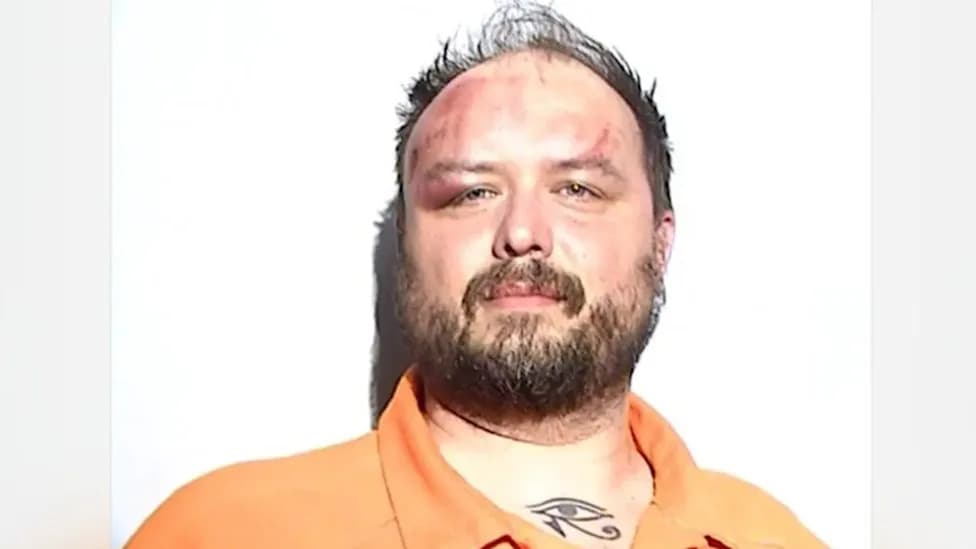
A former paramedic, Matthew Konen, has pleaded not guilty to two counts of first‑degree murder in the Jan. 20, 2021 deaths of his wife, Rachel Konen, and her father, David Rodgers. Prosecutors say Rachel was shot in the back and that Konen admitted beating Rodgers; they allege a financial motive tied to a pending divorce. The defense says Rodgers shot Rachel and then attacked Konen, who disarmed and subdued him. Forensic tests showed gunshot residue on Konen but not on Rodgers, a point the defense says could be explained by blood contamination.
Former Paramedic Denies Shooting Wife, Says Father‑in‑Law Was Attacker as Murder Trial Opens
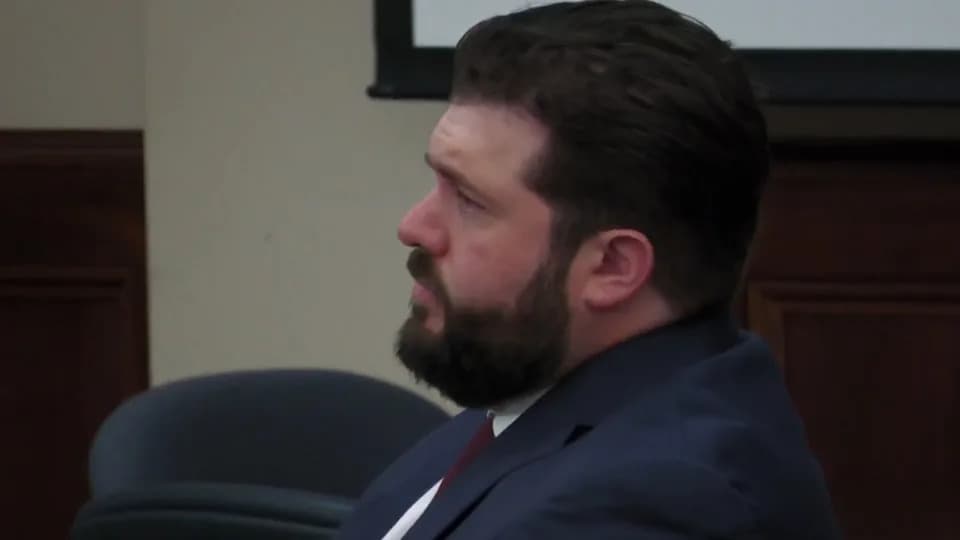
Matthew Konen appears in court on Sept. 23, 2026. (Court TV)
CLARKSVILLE, Tenn. — A former paramedic on trial for two counts of first‑degree murder has told jurors he did not shoot his wife or her father and instead asserts that one of the victims was the shooter, defense lawyers said during opening statements.
Defendant and charges: Matthew Konen, 36, has pleaded not guilty to the Jan. 20, 2021 deaths of his wife, 30‑year‑old Rachel Konen, and her father, David Rodgers. Prosecutors say Rachel was found shot once in the back in a hallway and Rodgers was found in the dining room with severe facial trauma, including a skull fracture.
Prosecution's Case
District Attorney General Robert Nash told jurors that Konen was the only adult witness at the scene and initially told police he believed Rodgers shot his daughter. Prosecutors say Konen admitted beating Rodgers and that audio from the 911 call captures Konen continuing to assault Rodgers while speaking with emergency dispatch. Prosecutors also argued a potential financial motive: after revealing an affair, Konen and Rachel were separating, and a divorce scheduled for February 2021 would have required Konen to pay nearly half his monthly income in child support and alimony for about 17 years.
Defense Version
Defense attorney Kyle Mothershead acknowledged Konen's affair but said the couple were navigating a new arrangement for their four children (ages 7, 5, 2 and 1). Mothershead painted Rodgers as a destabilizing presence who had experienced depression, prior suicidal thoughts and unusual online searches in the days before the killings. According to the defense, Rodgers arrived unannounced the night before the slaying, stayed awake all night making calls, and then unexpectedly produced a gun the next day.
"It happened suddenly. Mr. Konen did not see Rodgers pointing the gun. He saw the muzzle flash, he saw Rachel fall, and he saw Rodgers turn the gun toward him," Mothershead told the jury. "The gun clicked, it didn't fire. Konen tackled Rodgers, wrestled him, removed the magazine and the chamber round, and then struck him with the weapon to disarm him."
Mothershead said Konen called 911, checked on Rachel, returned to the dining room and — believing Rodgers remained a threat — kicked and struck Rodgers until he stopped resisting.
Forensics And Disputed Evidence
Forensic testing presented at trial showed gunshot residue on Konen's hands and inside his ears and nose. No residue was detected on Rodgers' hands. The defense argues that heavy blood contamination on Rodgers' hands could have masked residue in standard testing. Prosecutors counter that the combination of the 911 audio, physical injuries and the forensic results point to Konen as the shooter and attacker.
Potential sentence: If convicted, Konen faces a maximum sentence of life in prison with the possibility of parole.
Reporting note: The case is being heard in Clarksville; opening statements were delivered in courtroom proceedings covered by Court TV.
Help us improve.