Ohio lawmakers are advancing bipartisan proposals to extend or eliminate statutes of limitations that currently bar many childhood sexual‑abuse survivors from seeking civil or criminal remedies. Under existing law, civil suits must be filed by age 30 and criminal charges by 43 (with a narrow DNA‑based extension). The Safer Communities Legislative Workgroup recommended reforms ranging from higher forensic‑exam reimbursements and crime‑lab investment to standardized police training and alignment with federal gun restrictions. Sponsors plan to introduce bills soon as advocates call for systemic change.
Ohio Moves To Remove Deadlines That Bar Childhood Sex‑Abuse Survivors From Seeking Justice
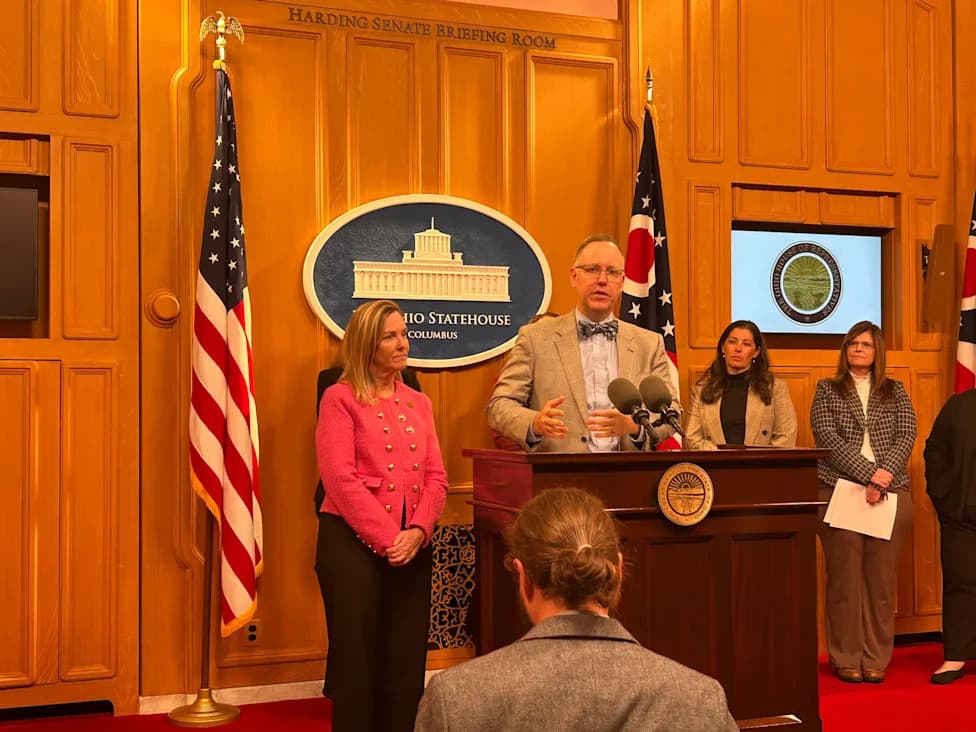
Ohio Sen. Bill Blessing, R-Colerain Township, center, Rep. Rachel Baker, D-Cincinnati, commit to ending the statute of limitations on child sexual abuse.
Ohio is one of just six states that still imposes strict time limits on survivors of childhood sexual abuse who want to pursue criminal charges or civil lawsuits. Lawmakers and advocates are now pushing bipartisan reforms to extend—or eliminate—those deadlines and to strengthen services and criminal‑justice responses for survivors.
Under current Ohio law, adults who were sexually abused as children must file a civil lawsuit by their 30th birthday or lose the ability to seek damages. Criminal charges generally must be filed by a survivor's 43rd birthday, although that window can extend by five years when a DNA match is discovered. Advocates say those limits are out of step with the long‑term effects of trauma and the realities of delayed reporting.
"That trauma is going to be with them for the rest of their life. The idea that there would be a small statute of limitations on that is simply absurd. It needs changed,"said Sen. Bill Blessing (R‑Colerain Township).
On Sept. 23, the bipartisan Safer Communities Legislative Workgroup issued a slate of recommendations that included extending or eliminating the statute of limitations for childhood sexual abuse. Sen. Blessing and Rep. Rachel Baker (D‑Cincinnati) plan to introduce legislation to pursue many of the group's proposals.
Scope Of The Problem
The report highlights the broader toll of domestic and sexual violence in Ohio: more than 188,000 Ohioans experience intimate‑partner violence each year. The Ohio Domestic Violence Network reports 157 domestic‑violence‑related deaths in 2025, up from 114 the year before. The report also estimates nearly $1.2 billion in annual costs from medical care, lost productivity, loss of life and other abuse‑related impacts.
"I realized that we had to address this, not in a piecemeal way with lots of little separate throwaway things on the wall and seeing what sticks, but through a really systematic look at the laws in Ohio and what we should be doing,"Rep. Baker said.
Key Recommendations
- Extend or eliminate statutes of limitations for childhood sexual‑abuse claims so survivors have meaningful access to civil and criminal remedies.
- Raise reimbursement rates for forensic sexual‑assault exams. Each exam can cost about $2,500, while hospitals are typically reimbursed roughly $600.
- Change civil statute of limitations for adult survivors from one year to at least five years (Senate Bill 421 is pending in the Ohio House).
- Fund law‑enforcement training on standardized lethality assessments to better identify which cases pose the highest risk of fatal violence.
- Invest in crime‑lab capacity—staffing and equipment—to clear rape‑kit and evidence backlogs; Gov. Mike DeWine is assembling a working group to improve statewide reporting of rape‑kit data.
- Require training for colleges and universities on Ohio's 2023 law penalizing strangulation.
- Align state law with federal policy that bars certain domestic‑violence offenders or those under protection orders from possessing firearms.
- Increase penalties for sexual‑abuse material produced with artificial intelligence, both criminally and civilly.
Blessing and Baker intend to formally introduce legislation in the coming weeks and to continue the effort next year as new state leadership takes office. Survivors and advocates say the stakes are high.
"Building a safer community, becoming the village that stops abuse is the work of every principled adult in our state,"said Rebecca Surendorff, co‑founder of Ohioans for Child Protection.
Reporter Laura A. Bischoff contributed to this article. State government reporter Jessie Balmert can be reached at [email protected] or via X: @jbalmert.
This article originally appeared in the Cincinnati Enquirer.
Help us improve.