Chicago Voyagers offers free monthly outdoor expeditions for mainly 7th- and 8th-grade students, using activities like canoeing, hiking and camping to teach social and practical skills. Educators report the trips build autonomy, communication, resilience and peer acceptance. The nonprofit supplies gear and trained guides and prioritizes inclusion for marginalized youth. Organizers also say outdoor time helps counteract negative effects of social media and strengthens bonds with trusted adults from students' communities.
How Chicago Voyagers’ Free Outdoor 'Expeditions' Build Confidence, Communication and Belonging
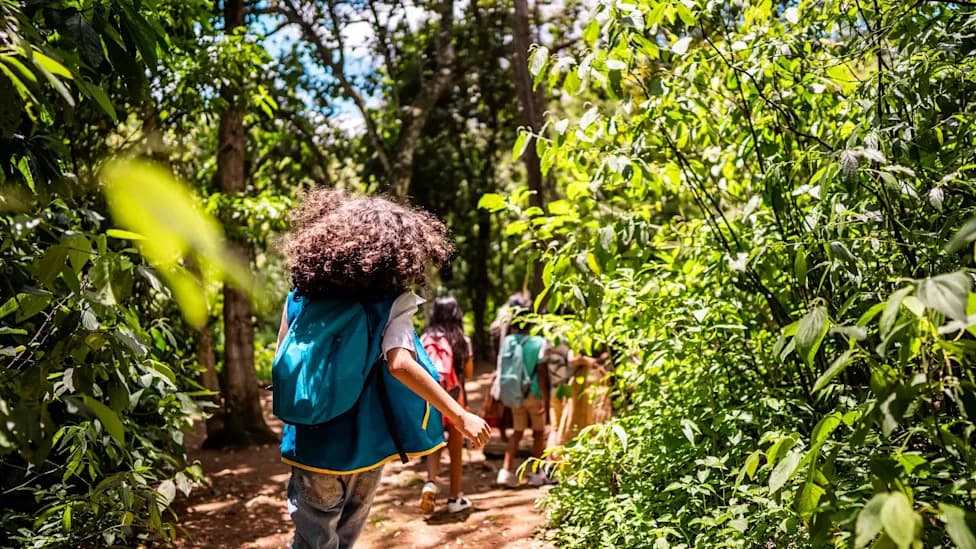
A group of adolescents is pictured hiking a trail through a forest.
Chicago Voyagers runs free, guided outdoor expeditions for mostly 7th- and 8th-grade students across the Chicago area, using activities such as hiking, orienteering, cross‑country skiing, canoeing, camping and rock climbing to teach practical skills and foster stronger social connections.
Hands-On Growth Outside the Classroom
School social worker Ellen Mazza, who brings groups of eight or nine students from Neal Math and Science Academy on monthly outings, says the trips help students develop autonomy, self-advocacy, clearer communication and acceptance of peers. Practical tasks—like coordinating in a canoe or navigating with a compass—require students to speak, listen and work together.
"If they need help with something or don't understand something, they help each other," Mazza said. "It takes time, but they start to learn how to communicate better. We can bring that into the classroom."
Mental Health, Resilience and a Break from Screens
Alex Goodfellow, executive director of Chicago Voyagers, points to growing research showing benefits of time in nature for mental and physical health. She says outdoor experiences give youth mood-boosting, resilience-building moments that don’t rely on social-media validation.
Access, Inclusion and Community Connections
The program intentionally includes students with and without disabilities, Spanish speakers, Black students and both girls and boys. Chicago Voyagers provides clothing, equipment and trained guides so cost and gear are not barriers to participation. Goodfellow emphasizes inclusion for marginalized and lower-income youth who may have limited safe access to outdoor recreation.
Because many adult guides and chaperones are people who work in the students’ schools or neighborhoods, outings also create opportunities for stronger, more relaxed relationships between youth and trusted adults. Educators can see students outside the constraints of a classroom and observe different strengths—humor, leadership and teamwork.
Organizers say the combination of skill-building, inclusive access and community connection helps students imagine broader possibilities for themselves—whether that’s feeling comfortable on the shore of Lake Michigan for the first time or learning to navigate a trail with a partner.
Help us improve.