A Gallup poll of 37 countries shows that most adults worldwide view artificial intelligence more positively than negatively. In 34 countries positive sentiment outweighs negative sentiment; in 25 countries a majority say AI will improve daily life, and in 18 countries a majority expect a positive national impact. Optimism is highest in China (93% of those familiar with AI), while U.S. adults are less positive (36%); in wealthier Western nations greater AI use tends to reduce anxiety.
Global Poll Finds Widespread Optimism About AI — Western Countries More Anxious
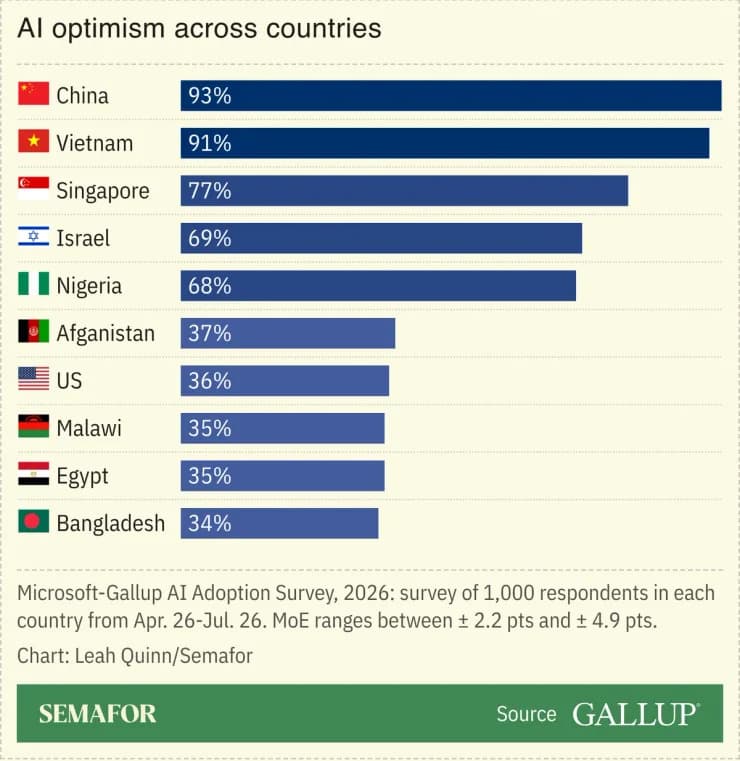
Chart showing AI optimism
A new Gallup survey of 37 countries finds that adults around the world are generally more positive than negative about artificial intelligence, even as public debate in the United States focuses on AI risks and protests over data centers.
In 34 of the 37 countries polled, more adults expressed positive feelings about AI than negative ones. Among adults who are aware of AI, majorities in 25 countries say the technology will improve their daily lives, while majorities in 18 countries believe it will benefit their countries overall.
Optimism is strongest in places like China, where 93% of adults familiar with AI say it will help people. By contrast, only 36% of U.S. adults familiar with AI say it will help, illustrating a sharp difference in outlook between the United States and some other nations.
Western Anxiety, But Familiarity Lessens Concern
Gallup’s findings show that wealthier Western countries tend to report higher levels of anxiety about AI. However, within those countries, greater personal use and familiarity with AI is associated with reduced worry, suggesting exposure can moderate fears.
These results highlight a complex global picture: broad international optimism about AI’s potential benefits coexists with concentrated concerns in some advanced economies. Continued public discussion and experience with the technology are likely to shape how perceptions evolve.
—Morgan Chalfant
Help us improve.