Nauru's president David Adeang announced at the U.N. General Assembly that the island nation will revert to its indigenous spelling and pronunciation, 'Naoero,' replacing the international code NRU with NRO. The change, signaled in February and formalized in August, also renames citizens as dei-Naoero. Adeang framed the move as a restoration of heritage, connecting it to global examples of post-colonial renaming, and urged the world to respect the nation's identity while raising concerns about sea-level rise and economic challenges.
Nauru Reclaims Indigenous Name 'Naoero' — President Tells U.N.: "Say Our Name"
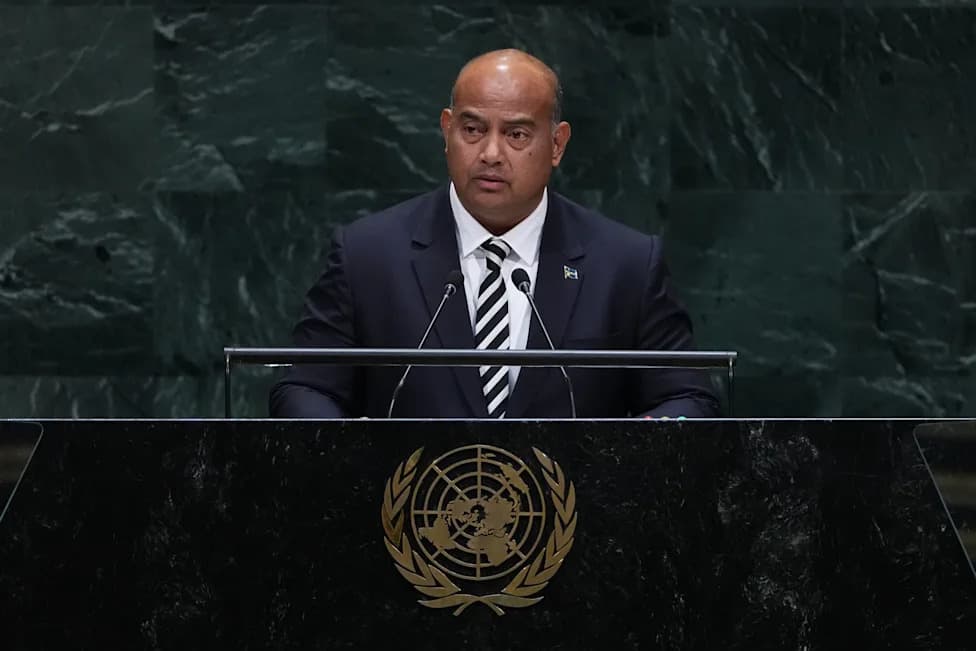
President of Naoero, David Ranibok Adeang addresses the 81st session of the United Nations General Assembly at U.N. headquarters Tuesday, Sept. 22, 2026. (AP Photo/Frank Franklin II)(AP Photo/Frank Franklin II)
Standing before the United Nations General Assembly in New York, President David Adeang delivered a deliberate and emotional appeal: the South Pacific island long known internationally as Nauru will formally reclaim its indigenous name, Naoero.
Adeang said the move is not merely cosmetic but a restoration of heritage and identity. "For many years, the world has known our country as Nauru. Nauru is how our name sounded to those who found it hard to say, and the world kept it," he told world leaders. "But it is not the name our people used among themselves."
"We do not make this choice to erase our past. We make it because we honor it," Adeang said. He closed his address with a succinct plea to the assembly: "Say our name."
The change affects formal usage as well as pronunciation. The government signaled its intent in February and formally announced the renaming in August. The country's three-letter international code will change from NRU to NRO, and citizens will be known as dei-Naoero rather than Nauruan. Where outsiders commonly pronounced the name as "Now-roo," the preferred pronunciation is now "Now-ero."
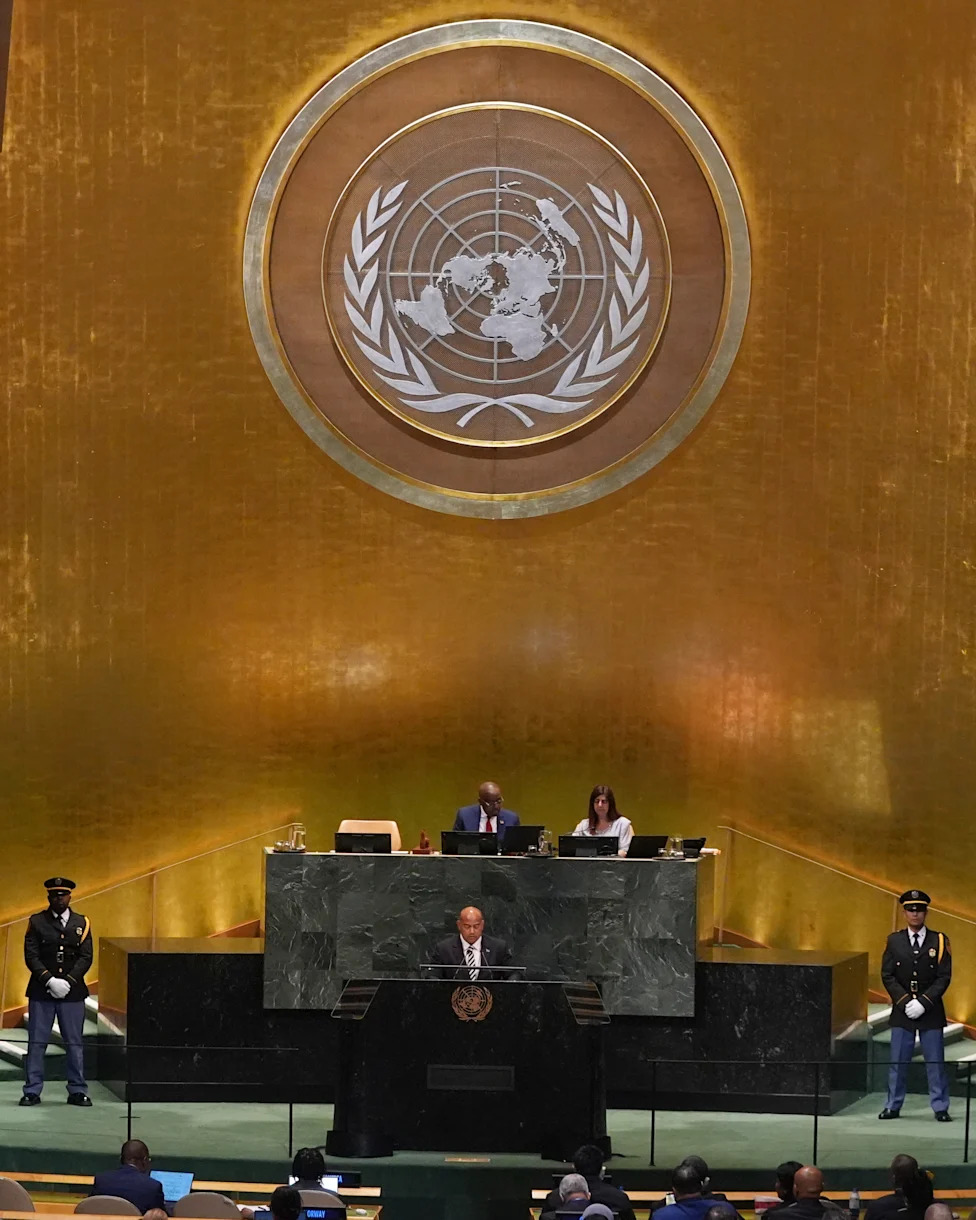
President of Naoero, David Ranibok Adeang addresses the 81st session of the United Nations General Assembly at U.N. headquarters Tuesday, Sept. 22, 2026. (AP Photo/Frank Franklin II)(AP Photo/Frank Franklin II)
Why the Change Matters
At about eight square miles and home to roughly 12,000 people, Naoero (formerly Nauru) gained independence in 1968 after periods under German, British, New Zealand and Australian administration. The renaming is part of a broader pattern of nations reasserting indigenous or postcolonial names — acts that leaders have said restore dignity, historical memory and cultural identity.
Examples cited in Adeang's remarks and evident in recent history include Eswatini's 2018 renaming from Swaziland, Dahomey becoming Benin, Rhodesia turning into Zimbabwe and Siam changing to Thailand. Other historical examples are Persia to Iran, Burma to Myanmar, Upper Volta to Burkina Faso, Gold Coast to Ghana and Ceylon to Sri Lanka. Turkey has also asked for the English use of Turkiye to reflect its preferred name and pronunciation.
Broader Concerns Raised
Beyond the name itself, Adeang used his U.N. platform to highlight urgent challenges facing the island: accelerating sea-level rise, economic pressures, and the desire for equitable treatment and respect on the international stage. Reclaiming the name Naoero, he argued, is part of a wider effort to ensure the nation's voice and memory are honored when those issues are discussed globally.
As nations, organizations and media adapt to the new spelling and pronunciation, Adeang's closing appeal — "Say our name" — underscores both a symbolic and practical change in how the country wishes to be recognized and addressed by the world.
Help us improve.