Prince George’s County, Maryland, is often held up as a national example of Black suburban prosperity — majority-Black, relatively high median income, and strong educational pockets. Yet PGCPS faces trade-offs: rising test scores and graduation rates coexist with limited seats in specialty programs, high demand, and lingering inequities tied to historical wealth gaps. Families and experts say sustaining quality public education will require expanded opportunities and continued local investment rather than flight to private options.
Prince George’s County: Black Middle-Class Success — Are Its Public Schools Keeping Up?
Adobe Stock
Is there an ideal place in America for Black families to raise and educate their children? That question resurfaced after Nikole Hannah-Jones published a personal essay on Sept. 20 about schooling choices for Black children. In those conversations, Prince George’s County, Maryland — long celebrated as a center of Black suburban prosperity — often appears as a possible middle path. But parents and scholars who live and work there say the reality is more complex.
Background: A Majority-Black Suburb With Visible Wealth
Prince George’s County is home to roughly 970,000 residents, about 61% Black according to the latest U.S. Census data. The county’s median household income is approximately $101,798, and more than a third of adults over 25 hold at least a bachelor’s degree. Those figures have made the county a national example of Black middle- and upper-class suburban life.

Adobe Stock
Schools and Outcomes: Progress, But Uneven
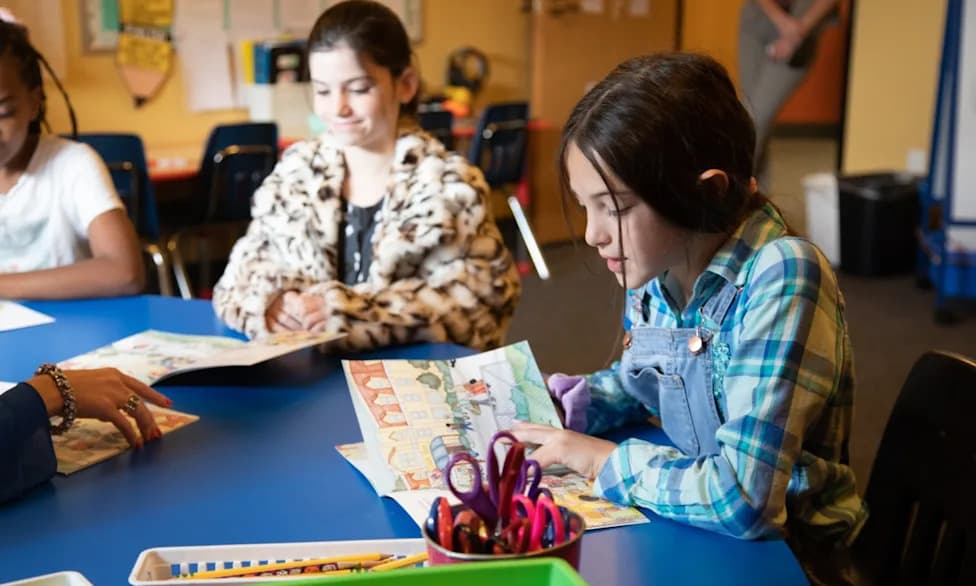
Prince George’s County Public Schools (PGCPS) is the state’s second-largest district, enrolling 132,854 students in 2024–25. The student body is roughly 51% Black and 40% Latino, and 60.4% qualify for free or reduced-price meals. These demographics underscore both the district’s diversity and persistent economic need.
There are clear signs of improvement: on the 2025 state assessments, Black students in PGCPS outperformed Black students statewide by 4.3 percentage points in English language arts and by 1.9 points in math. More than three-quarters of PGCPS schools earned at least three out of five stars on the latest Maryland School Report Card. The graduation rate for Black students rose from 84.65% in 2024 to 86.63% in 2025.

Adobe Stock
Specialty Programs: Opportunity and Scarcity
PGCPS offers selective and specialty programs — performing arts, language immersion, STEM, career-technical education, and health-sciences pathways, including the Academy of Health Sciences at Prince George’s Community College. These programs can deliver strong academic and career advantages; for families who gain admission, the system can feel like it has "cracked the code." But demand far exceeds supply: seats are limited, and many families who want those opportunities cannot access them.
Choices, Trade-Offs, and the “Black Tax”
Scholars caution that visible household income does not erase deeper racial inequities in wealth and access. Angela Simms, an assistant professor at Barnard College, notes that historical processes leave Black households with less generational wealth than white households with similar incomes — a distinction that affects families’ schooling choices.

Adobe Stock
"For Black parents, it's often the case that they can't get that package deal," Simms said. "They're often trading off access to material resources, or at least the potential for material resources, with social acceptance for their children."
Omari Keeles, a Towson University sociologist, framed the trade-offs — financial and emotional — as a form of the "Black tax": the extra decisions, stress and expense Black families often shoulder when seeking the best education and cultural fit for their children.
Voices From the County
Lakita Wilson, a writer and education professor who grew up in Prince George’s and later enrolled her own children in PGCPS, offers a lived perspective. She described strong magnet and specialty programs that challenged her as a student and later provided her children with arts and health-science opportunities. At the same time, she has seen families leave the public system for private schools when problems arise — depriving neighborhood schools of engaged parents and resources — and she has seen parents organize and improve schools when they stay.
"Our schools have value, and they have potential even when there are shortcomings," Wilson said. "When you see an issue in your school, instead of taking flight, you lean in and figure out how to fix it."
What Would Help
Experts and parents point to two overlapping needs: increased capacity in high-performing and specialty programs, and sustained local investment by families who remain engaged rather than leaving at the first sign of trouble. Middle-class Black families can often afford more choices — moving, tutoring, or private school — but those options do not solve systemwide inequities and may weaken community schools if many families exit.
Conclusion
Prince George’s County demonstrates both the promise and the limits of Black suburban prosperity. Its schools show measurable gains and offer noteworthy specialty options, but scarcity of seats, economic pressures, and historical wealth gaps mean that many families still face trade-offs. Sustaining strong public schools in places like Prince George’s requires both policy solutions to expand access and grassroots commitment from families to invest in their local institutions.
Help us improve.