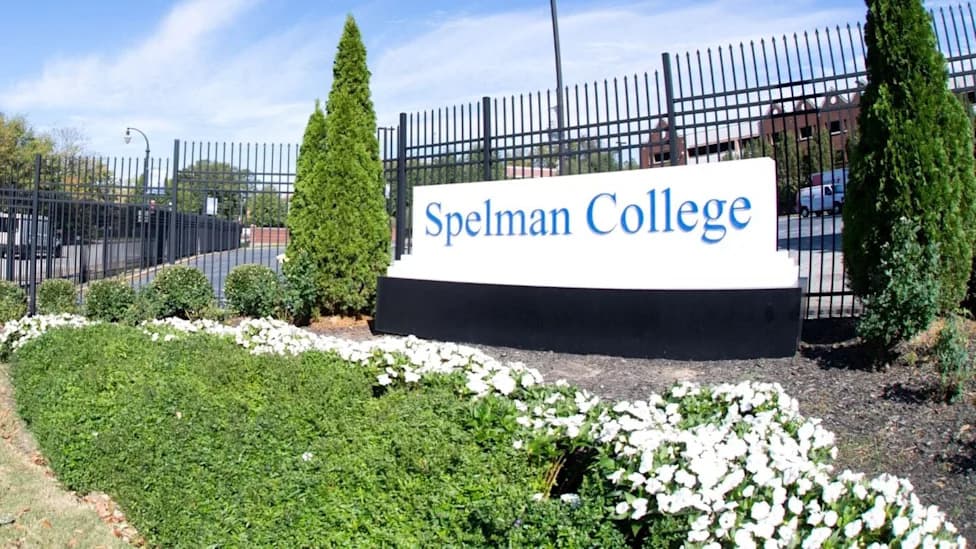
Black male undergraduate enrollment has fallen sharply nationwide, with HBCUs experiencing an even steeper decline. Benedict College is an exception, now enrolling more than 54% men after adopting data-driven recruitment, stronger financial aid and mandatory first-year men’s programming. Programs such as InsideTrack coaching, Benedict’s B.E.S.T. Men and Howard’s Men of the Mecca focus on financial support, mental health, mentoring and belonging to improve retention and graduation.
How HBCUs Are Rebuilding Support Systems to Keep Black Men in College
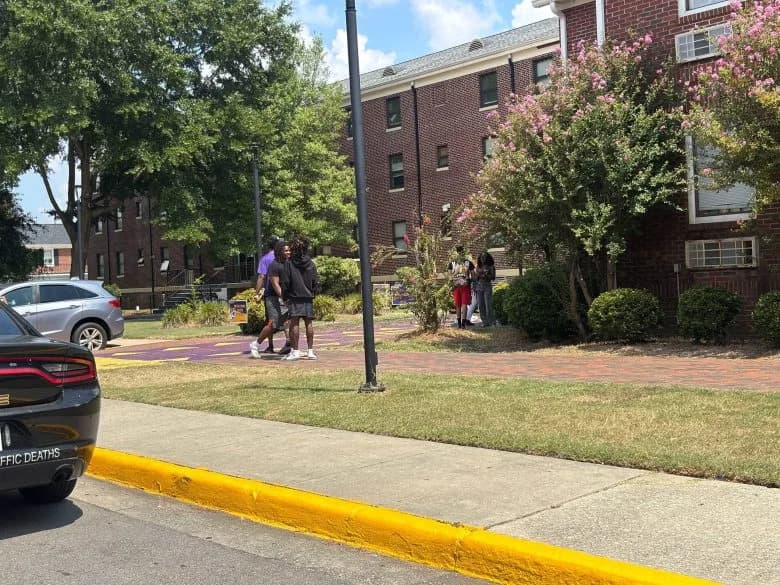
Benedict College has maintained a Black male enrollment rate above the national average for nearly a decade. (Alecia Taylor/Capital B)
COLUMBIA, S.C. — As higher education enrollment of Black men falls nationwide, several historically Black colleges and universities (HBCUs) are redesigning recruitment, advising and campus life to help more Black male students persist and graduate.
One Student’s Struggle and a Larger Trend
Christopher Davis arrived at Howard University in fall 2021 determined to be the first Black man in his family to graduate college. By fall 2023 he had unenrolled twice amid financial pressures, mental health crises and the challenges of adjusting to city and campus life. His experience reflects a broader decline: Black male undergraduate enrollment fell about 22% across U.S. colleges from 2010 to 2022 and roughly 25% at HBCUs, according to the American Institute for Boys and Men.
“The first time [unenrolling] was really just me not knowing a lot about myself... Being at Howard, there is a competitiveness... ‘I have to be this, I have to achieve this,’ or else it's nothing.” — Christopher Davis
Why Black Men Are Leaving—and What HBCUs Are Doing
College leaders point to several overlapping causes for the decline: financial strain, family responsibilities, mental health challenges, and a persistent sense of not belonging. In response, some HBCUs are strengthening holistic supports — from targeted recruitment and financial aid to mentoring, coaching and programs that explicitly build community for men.
Benedict College: An Outlier
Benedict College in Columbia, South Carolina, is bucking the trend: men now comprise more than 54% of its student body, second among HBCUs only to the all-male Morehouse College. Administrators credit intentional data tracking, targeted outreach, improved aid packages, and a campus culture that emphasizes male mentorship and belonging.
Actions at Benedict include:
- Tracking prospective and enrolled students by gender and retention risk.
- Targeted nationwide recruitment and improved financial aid offers.
- Mandatory first-year participation in the B.E.S.T. Men program (Belonging, Excellence, Service, Thoughtfulness), supported by a $100,000 grant from Sigma Pi Phi.
- Open-door policies, male staff mentorship, and proactive outreach to parents and families.
Coaching and Campus Programs
Beyond campus programs, nonprofits such as InsideTrack add another layer of support: retention and re-enrollment coaches who work alongside academic advisors to help students navigate finances, registration holds and life challenges. InsideTrack’s multi-year pilot and scaling efforts show that coaching can reconnect students who have stopped out and reduce barriers to return.
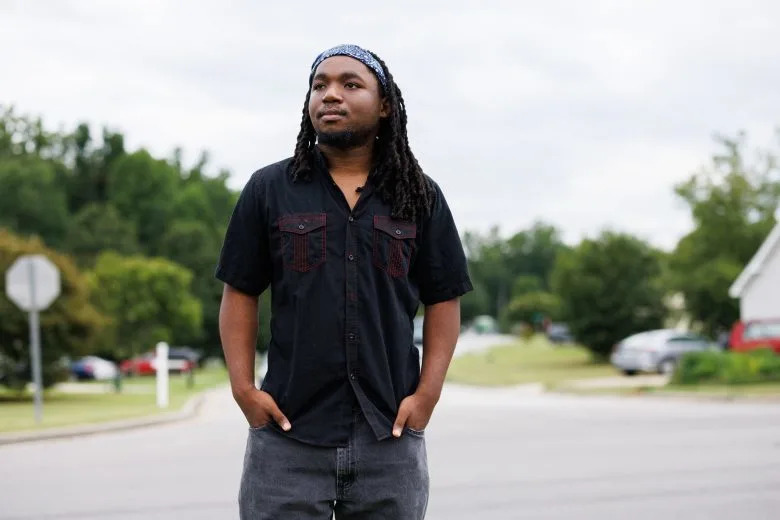
Now back in Wendell, North Carolina, Christopher Davis said he was not prepared to handle city life, college life, and his own mental health needs when he enrolled at Howard University in fall 2021. (Cornell Watson)
InsideTrack reported providing retention coaching to more than 11,000 enrolled students and re-enrollment coaching to over 23,000 stopped-out students between fall 2021 and spring 2026. Across HBCUs and predominantly Black institutions, more than 43,000 Black students received coaching; 33% were Black men and about half of those received one-on-one coaching. Financial barriers — frequently balances just under $5,000 — were cited by more than 20% of participants as a reason for stopping out.
Programs Highlighted
Examples of HBCU programs include:
- B.E.S.T. Men (Benedict): Required first-year program offering mentorship, academic support and social activities to build belonging.
- Men of the Mecca (Howard): Community-building program with rituals, peer networks and links to counseling and campus services. It continued to evolve during and after the pandemic.
- InsideTrack Coaching: Coaches who often share lived experience with students and provide one-on-one re-enrollment and retention support.
Voices From Campus and Community
Students and educators emphasize that tools alone are not enough — relationships matter. Men who had access to mentors, school outreach and community support reported greater confidence and persistence. Reggie Locke, now at Harris-Stowe State University, credits sustained encouragement from high school teachers and alumni visits to HBCU campuses for helping him succeed.
For students like Davis, earlier identification and one-on-one coaching might have made a difference. Diagnosed with bipolar depressive disorder shortly before attending Howard, Davis struggled with substance use that triggered hospitalizations and did not disclose his difficulties to campus staff. He later re-enrolled then stopped out again, and is now pursuing a business degree online with Bellevue University.
What Success Looks Like
Leaders at Benedict and other HBCUs measure success by equitable outcomes: narrowing retention and graduation gaps between men and women, reconnecting stopped-out students, and ensuring students have the financial and social supports to complete their degrees. Programs that combine data-driven outreach, coaching, improved aid and visible male mentorship are showing promise.
Takeaway: Rebuilding pathways for Black men in higher education requires coordinated efforts — financial relief, mental health supports, coaching and intentional community-building — to turn enrollment figures into sustained degree completion.
Help us improve.