The calendar span of many U.S. school years is increasing even though instructional time remains roughly the same. In Fairfax County the school year now covers 297 calendar days while students receive about 180 instructional days, driven by 26 discretionary weekdays off this year. Districts nationwide are adding more three- and four-day weeks, which complicates childcare, may weaken attendance habits and offers little evidence of added learning time. More predictable calendars could better support consistent attendance and instructional goals.
School Years Stretch Longer On The Calendar — But Instructional Time Stays The Same
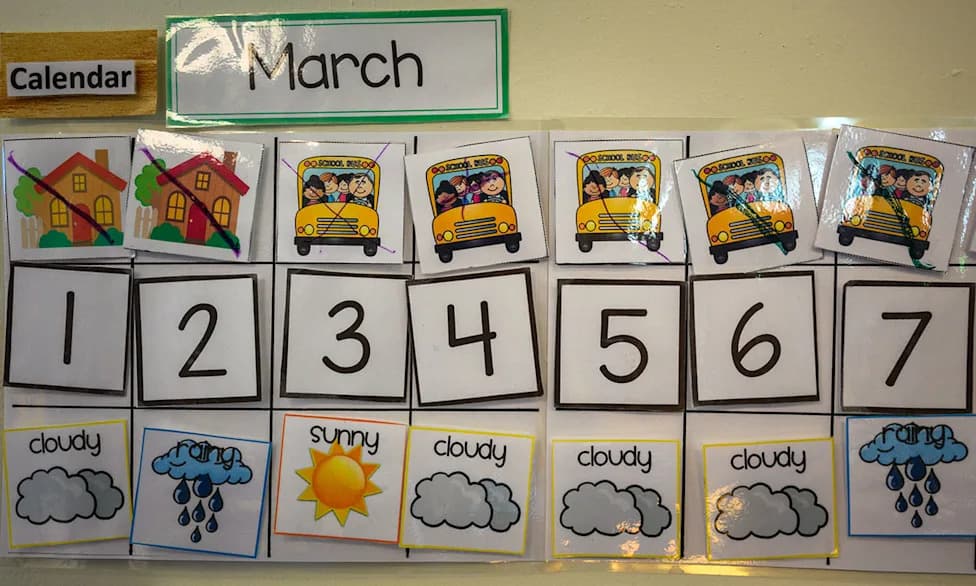
How long does one school year actually stretch on the calendar? In Fairfax County, Virginia, this academic year the span from the first to last day of school covers 297 days, while students still receive roughly 180 days of instruction. That gap is driven not by more classroom hours but by a growing number of weekdays when students are simply not scheduled to attend.
What’s Behind The Stretch?
Weekends account for much of the difference, but districts also schedule a wide collection of breaks: two weeks for winter break, one week for spring break and multiple days around Thanksgiving. On top of those, Fairfax this year includes several long weekends — a four-day Labor Day weekend, a four-day weekend for Election Day in November, and extended weekends after the ends of quarters in January and April. The calendar also accommodates religious observances, with Yom Kippur, Eid al-Fitr and Eid al-Adha observed.
Excluding federal holidays and summer, I counted 26 discretionary weekdays off in Fairfax this year. That figure does not include potential snow days, three early-release days that affect all students, or four additional early-release days that apply only to elementary grades.
Is This A Local Trend Or Nationwide?
There is a clear pattern: many districts are stretching roughly the same number of instructional days across a longer calendar and inserting more three- and four-day school weeks. In the Washington, D.C., region this year, planned discretionary days range from 21 in Montgomery County, Maryland, to 28 in Loudoun County, Virginia. Loudoun has risen from 18 planned days off in 2016–17 to 28 this year; Prince William County (Virginia) moved from 18 to 27 in the same span.
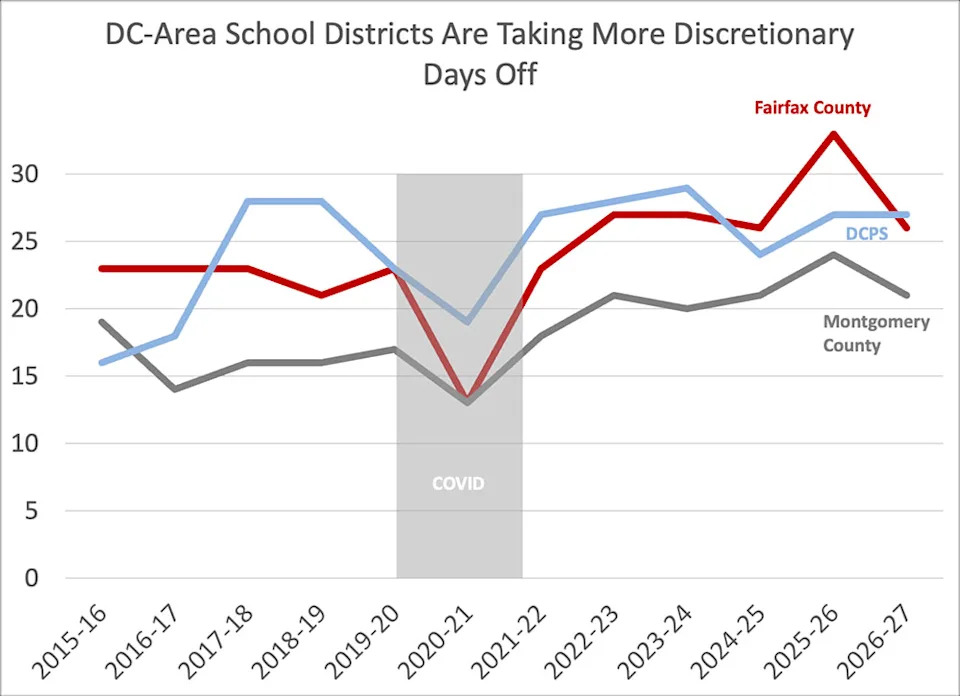
Looking nationally at the ten largest U.S. districts, Clark County (Nevada) had 22 discretionary days, New York City 25, Los Angeles Unified 26 and Chicago 27. Compared with pre-pandemic calendars, many districts have effectively stretched the year by a week or two without adding instructional days — producing more intermittent long weekends.
Why It Matters
Direct research on modestly fragmented calendars is limited. Studies of four-day school weeks provide a relevant, if imperfect, clue: students tend to learn somewhat less under four-day schedules, though much of that effect is linked to reductions in total instructional minutes. It is striking that many districts extended the calendar without adding instructional time.
From a family perspective, unpredictable Mondays and Fridays off — plus teacher workdays and isolated holidays — complicate childcare and work schedules. Summer is inconvenient but predictable; a scattering of random days off across the school year is harder for many families to manage, especially those who cannot work remotely or take many leave days.
There’s also an attendance concern. Research indicates lower attendance on Mondays, Fridays and days adjacent to holidays. By creating more of these “mini-holidays,” fragmented calendars may make consistent attendance harder to restore.
What Schools Can Do
District leaders who prioritize attendance and instructional time should consider how calendar design aligns with those goals. Even if the official number of school days stays the same, more predictable and regular scheduling can help students rebuild the habit of showing up for class. If schools want students to be in the habit of attending, schools should be in the habit of being open.
Note on Methods: To measure trends consistently, I reviewed historical calendars for large districts and counted any weekday between the first and last day of school when students were not scheduled to attend (excluding federal holidays). These "discretionary days off" include teacher workdays, religious observances and other legitimate closures.
Help us improve.