General Sir Nick Parker argues that veterans lawfully deployed to Northern Ireland deserve finality: once a case has been properly investigated, a person should not be returned to coercive legal process unless genuinely new and compelling evidence is independently assessed. He calls for a single statutory gateway—run alongside the Independent Commission for Reconciliation and Information Recovery—and warns that repeated reopenings risk turning legal process into punishment. The test for ministers is clear: protections must exist before proceedings begin, not just during them.
Veterans Need Finality: Why the State Must Protect Those It Sent to Northern Ireland
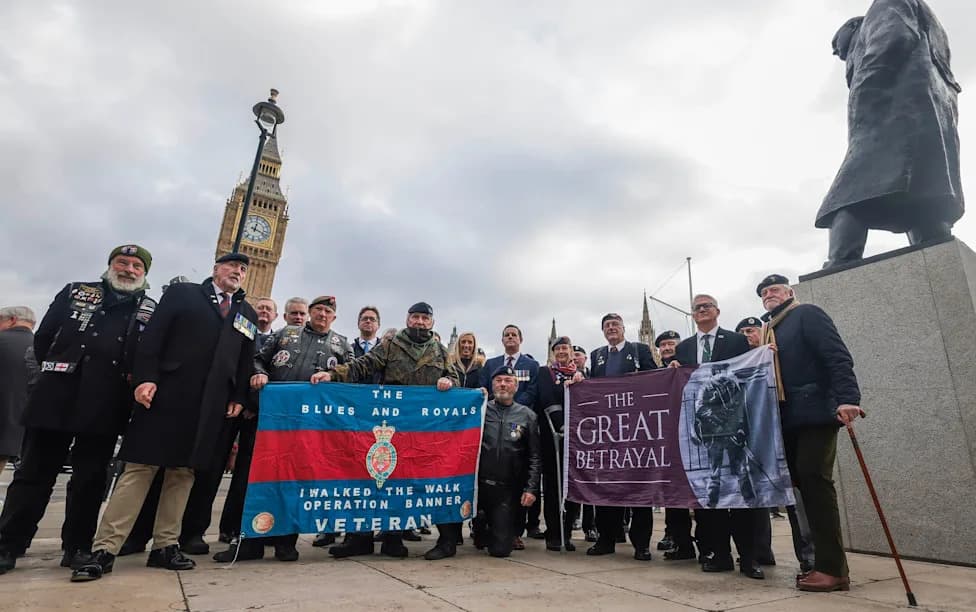
Veterans who served in Northern Ireland many years ago feel they have been betrayed by the state - Martyn Wheatley/i-Images
The British state deployed soldiers to Northern Ireland, issuing their orders, rules and authority. It cannot now disclaim responsibility for the consequences. Ministers say they are listening and have pledged stronger protections for veterans alongside further amendments to the Northern Ireland Troubles (Legacy and Reconciliation) Bill, which will return to the House of Commons at committee stage very soon.
I welcome a willingness to negotiate, but the debate needs precision. The central issue is not how comfortably an elderly veteran should be treated once drawn back into legal proceedings. The real question is whether, after a matter has already been properly investigated, the state should permit an elderly veteran to be dragged back into coercive legal process without genuinely new and compelling evidence. That distinction is fundamental.
A Clear Test For Government
I served in Northern Ireland as a young officer in the 1970s and returned several times, ultimately as General Officer Commanding. I accept the need for accountability: soldiers who broke the law should be held to account. If genuinely new and compelling evidence of serious wrongdoing emerges, it should be examined and, where appropriate, placed before a court.
But accountability cannot mean that every legal mechanism remains indefinitely available and every previously investigated case can be reopened simply because someone remains dissatisfied with the outcome. That is not accountability; it is an abdication by the state of its responsibilities.
Why Finality Matters
Too many contributions to the present debate begin from the assumption that every victim must have uninterrupted access to legal process for as long as questions persist. The intention is understandable. Yet government has broader duties. Some questions arising from a conflict that took place half a century ago may never be answered.
Most incidents have already been investigated, often multiple times. At some point government must govern. It must determine how the past will be scrutinised, what evidential threshold justifies reopening an individual case, and when everything that can reasonably be done has been done. If the state does not set those limits, the process itself becomes the punishment.
A Single Statutory Gateway
Men now in their seventies and eighties can find themselves facing revived legal proceedings about events that occurred 50 years ago, even when the essential evidence has already been examined. Providing anonymity, remote hearings or sympathetic treatment once proceedings restart does not address the core objection. Protection must be in place before the process begins, not only during it.
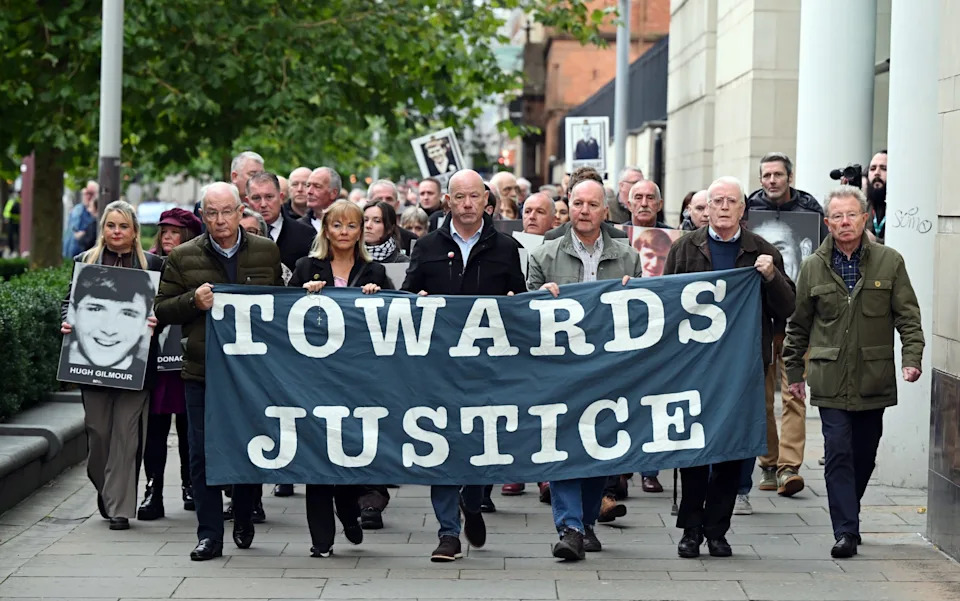
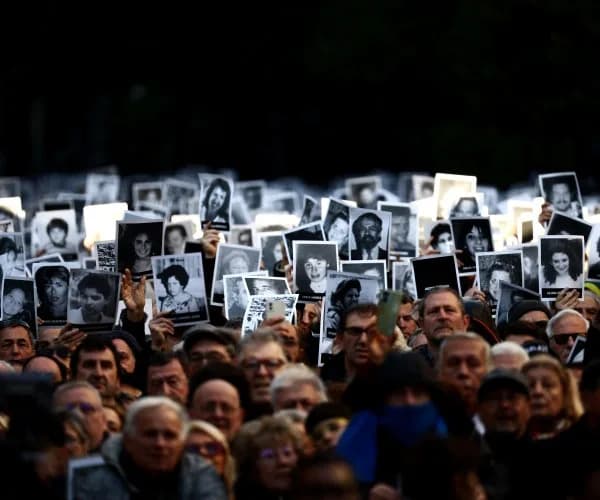
Families continue to seek answers over Bloody Sunday killings by soldiers in 1972 - Getty/Charles McQuillan
That should be the standard by which the Government's promised amendments to the Troubles Bill are judged. There should be a single, consistent statutory gateway: genuinely new and compelling evidence must be independently assessed by a judge in England and Wales before anyone who has already been properly investigated is again exposed to coercive legal processes.
All Troubles-related cases should pass through the Independent Commission for Reconciliation and Information Recovery. Families must remain free to pursue answers. But there must be no alternative route around the statutory gateway. It should apply to new cases and to existing, resumed or suspended proceedings alike. A safeguard that can be circumvented is no protection at all.
Distinguishing Veterans From Victims
There is another important distinction: veterans are not the same as victims. A soldier killed or wounded while lawfully performing his duty was serving his country with purpose, agency and honour. We should acknowledge that service and sacrifice with pride and lasting respect, not fold it into a general narrative of victimhood.
The case of Private Tony Harrison underlines the point. He was a 21-year-old soldier murdered by the IRA in Belfast in 1991. His family rightly expects the state to do everything that can reasonably still be done to identify those responsible. But if the government genuinely wants to provide answers, it must design a system capable of uncovering the truth rather than simply generating further rounds of legal process. Many who know what happened have powerful incentives to remain silent; another investigation that produces only more paperwork and more legal argument will not necessarily reveal the truth.
A Broader Imperative
This issue goes beyond Northern Ireland. At a time of heightened global threat we are again asking young men and women to serve in dangerous environments. They may have to make decisions within seconds that will be scrutinised for years afterwards. They must know that breaking the law will result in accountability. But they must also have the assurance that if they act lawfully, the state that sent them will stand behind them.
Ministers say they have soldiers' backs. The test is now straightforward: will the Government establish one single, consistent statutory approach requiring genuinely new and compelling evidence, independently assessed, before an individual who has already been properly investigated is returned to legal process? Failure to do so would be a betrayal of those who carried out the State's orders and protected our security. Nothing less will suffice.
General Sir Nick Parker served as Commander-in-Chief, Land Forces in the British Army from 2010 until 2012.
Help us improve.