World Animal Protection and Collective Fashion Justice released the report "Blood Feathers", documenting live plucking and other harmful practices on South African ostrich farms that supply the global fashion industry. Investigators filmed birds being cornered, blindfolded with bags and having feathers cut and pulled—sometimes above the bloodline—without pain relief. The report links feather supplies to luxury houses and fast-fashion retailers, disputes claims that feathers are only collected during natural moult, and cites government data showing over 150 tonnes of exports and roughly 150,000 birds slaughtered in 2024–25.
Investigation Reveals Live Plucking of Ostriches for Luxury Fashion in South Africa
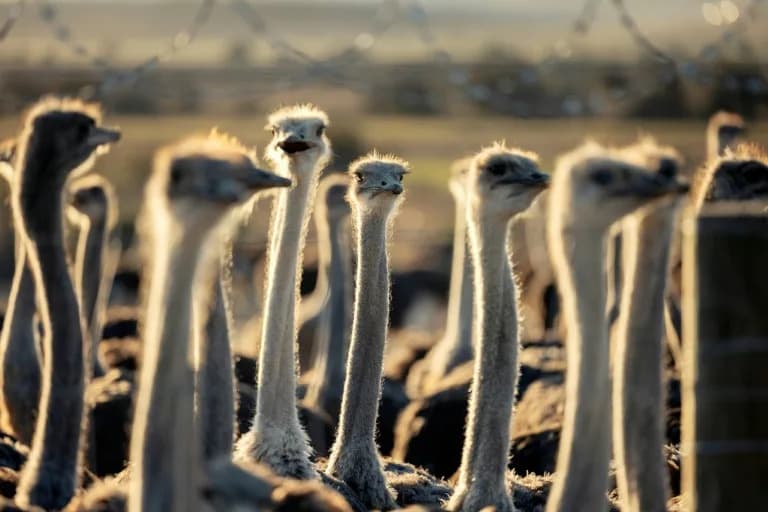
South Africa accounts for about 75 percent of the global ostrich market (GIANLUIGI GUERCIA)
A new investigation by World Animal Protection, in partnership with Collective Fashion Justice, documents the live plucking of ostriches on commercial farms and at feather-processing facilities across South Africa. The footage, compiled in a report titled "Blood Feathers", shows workers cornering birds, placing bags over their heads and removing feathers—often with mechanical pluckers or pliers—without any pain relief.
Investigators recorded workers cutting feathers above the bloodline (when feathers are still growing and supplied with blood) and then extracting them from the birds' skin. Blood is frequently visible in the shaft of such feathers, which is why the report uses the term "blood feathers." The charity said some birds undergo this procedure repeatedly, in some cases every six months.
Conditions and Injuries Documented
The investigation also documented injured birds, including ostriches that appeared unable to stand and others with wounds from pecking and damaged eyes and feathers. World Animal Protection described the methods used as extremely distressing and incompatible with animal welfare standards.
Supply Chain And Scale
South Africa supplies roughly 75% of the global ostrich market. According to the organisation’s analysis of South African government data, more than 150 tonnes of ostrich feathers were exported during the 2024–25 season, and approximately 150,000 ostriches were slaughtered for the feather, meat and skin trades in that period. The investigation links feather supplies from some farms and processing facilities to major fashion houses and retailers, including YSL, Louis Vuitton, Dior, Chanel and fast-fashion company Shein.
Responses And Alternatives
"Feathers are the new fur — it's the same cruelty just with a different animal," said Olivia Charlton, campaign manager at World Animal Protection. Emma Hakansson of Collective Fashion Justice called it "utterly inconsistent" for brands to reject fur while using ostrich feathers that come from a slaughtering industry she described as full of suffering.
Activists urged fashion houses to adopt modern fabric-manipulation techniques and bio-material alternatives that can replicate the lightness and movement of feathers without causing animal harm.
Historical Context
Ostrich feathers have a long history in South Africa. In the early 20th century, plumes were among the country’s top exports and helped drive an economic boom. The new report says contemporary demand continues to support a large commercial industry.
Report: "Blood Feathers" by World Animal Protection and Collective Fashion Justice.
Help us improve.