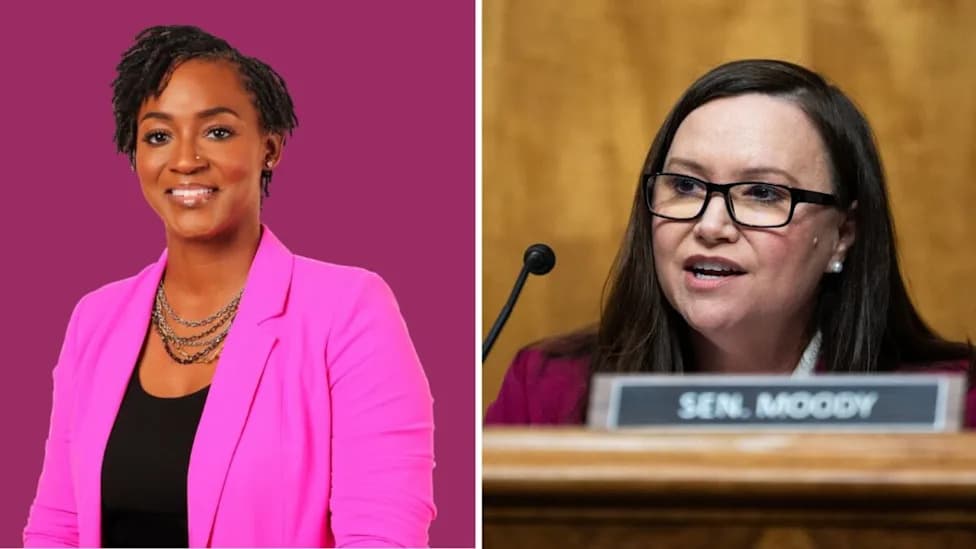
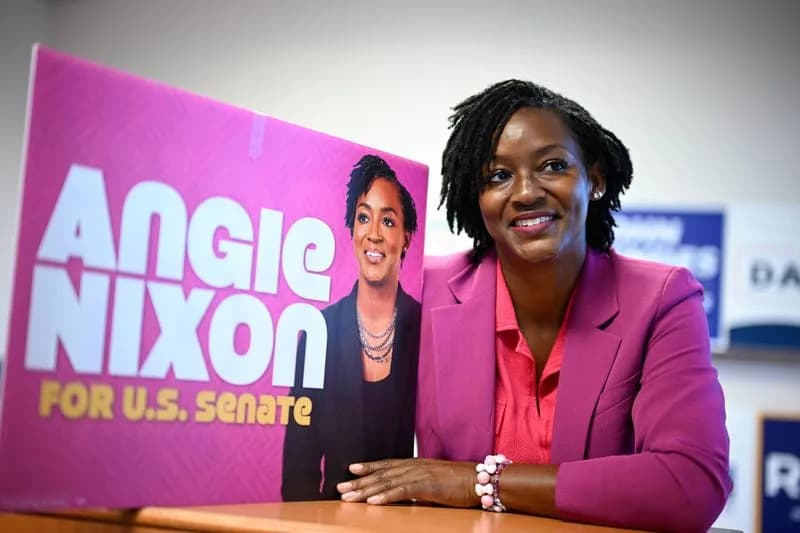
Angie Nixon, a Jacksonville native and progressive activist, won the Democratic primary for U.S. Senate and will face Republican Sen. Ashley Moody in November. Her campaign — which champions Medicare for All and voting-rights protections — is complicated by a misdemeanor trespassing trial stemming from a May protest at Gov. Ron DeSantis' office. Nixon says the demonstration opposed a redistricting plan that would dilute Black voting power and urges elected officials to "get louder" to defend democracy. She has endorsements from Reps. Maxwell Frost and Ilhan Omar.
Angie Nixon Wins Democratic Senate Primary — Faces Trial Over Voting-Rights Protest
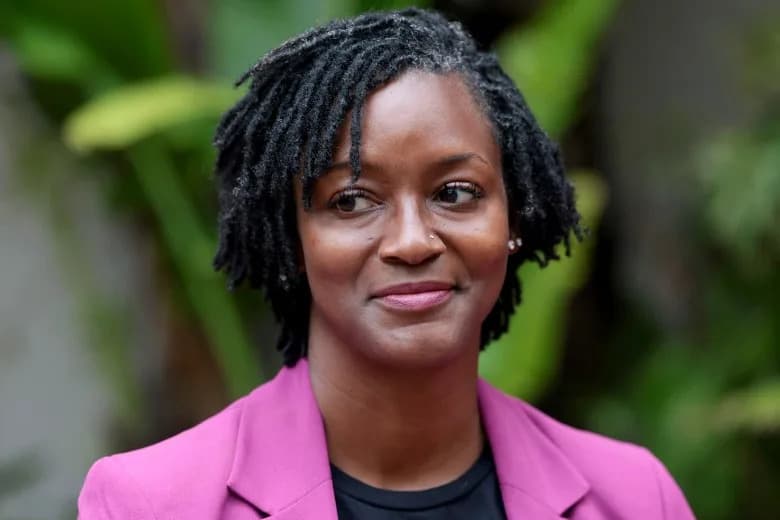
Florida state Rep. Angie Nixon speaks with the media as she campaigns last month in Miami. Nixon calls the state's redistricting effort "an all-out attack on our rights." (Joe Raedle/Getty Images)
Angie Nixon, a longtime advocate for Black and working-class communities in Florida, won the Democratic nomination for U.S. Senate and will challenge Republican Sen. Ashley Moody this November. Her unexpected primary victory over better-funded opponent Alex Vindman has thrust a progressive agenda — including Medicare for All — into the spotlight, even as Nixon prepares to face criminal charges stemming from a May protest at Gov. Ron DeSantis' office.
Campaign and Platform
Nixon, a Jacksonville native and member of the Democratic Socialist movement, ran on a platform centered on economic and racial justice, expanded health care, and defending voting rights. Her upset in the Democratic primary has prompted national attention and endorsements from progressive lawmakers such as Reps. Maxwell Frost (Fla.) and Ilhan Omar (Minn.).
Legal Battle Over a Voting-Rights Protest
Nixon is scheduled to stand trial the week of Sept. 21 on misdemeanor trespassing and related charges after a May demonstration outside Gov. Ron DeSantis' office. Protesters were seeking a meeting about a proposed congressional map that advocates say would dilute Black voting power in Florida. Nixon was arrested after refusing to leave the area outside the governor's office.
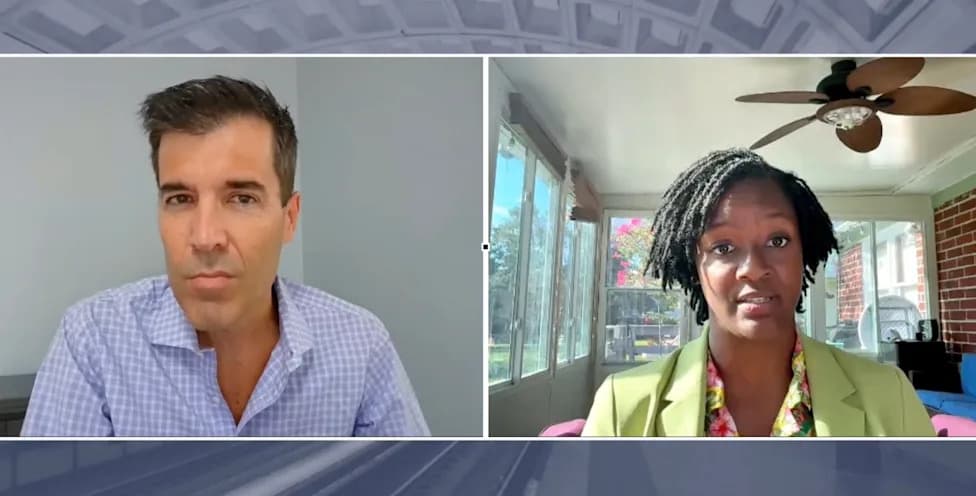
Nixon: "There's an all-out attack on our rights, and they're weaponizing agencies to target those who challenge them. I'm facing two years in jail because DeSantis refused to meet with me. They arrested me for trespassing even though I have access to the Capitol building."
Context and Concerns
Nixon frames her legal situation as part of a broader pattern of officials using power to silence dissent. She has pointed to heightened enforcement actions — including ICE activity following the end of Temporary Protected Status for Haitians — as evidence of increasing pressure on vulnerable communities. Nixon also describes receiving formal reprimands and threats against her safety, which prompted an FDLE response.
Drawing on family history and the civil-rights legacy of elders who endured violent suppression, Nixon says she feels compelled to speak out and mobilize voters. She has called on fellow elected officials to "get louder," urging mass civic engagement and public protest to defend democratic rights.
What’s Next
As Nixon faces both a high-stakes general election and a criminal trial, the outcome will affect debates over redistricting, voting access, and grassroots progressive momentum in Florida and beyond. Supporters see her as a continuation of the movement-elect wave; critics, including Gov. DeSantis, have dismissed the protest as "performative nonsense," and state lawyers contend the map complies with Florida law.
Note: This interview with Capital B was lightly edited for length and clarity.
Help us improve.