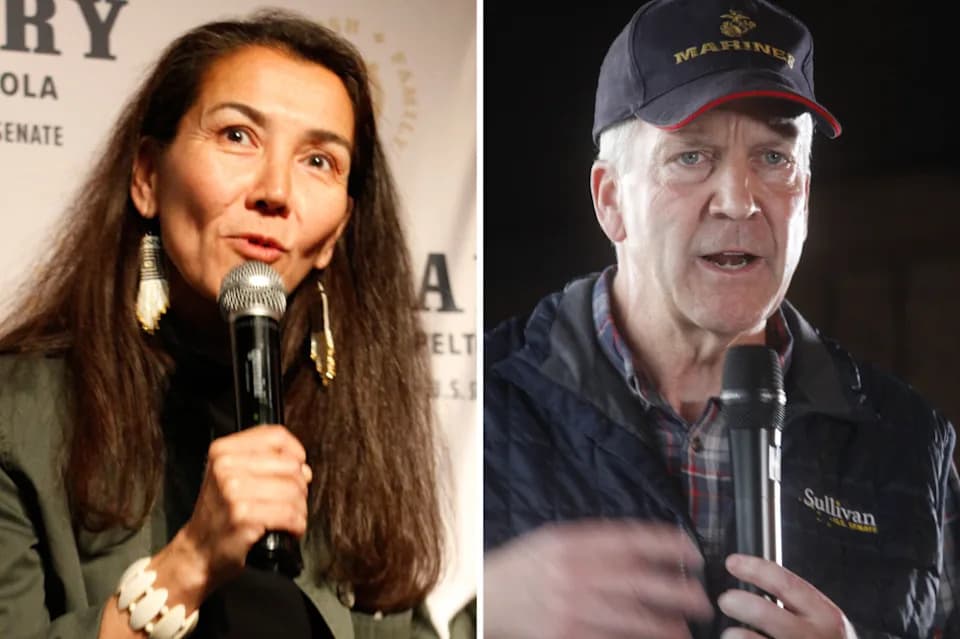
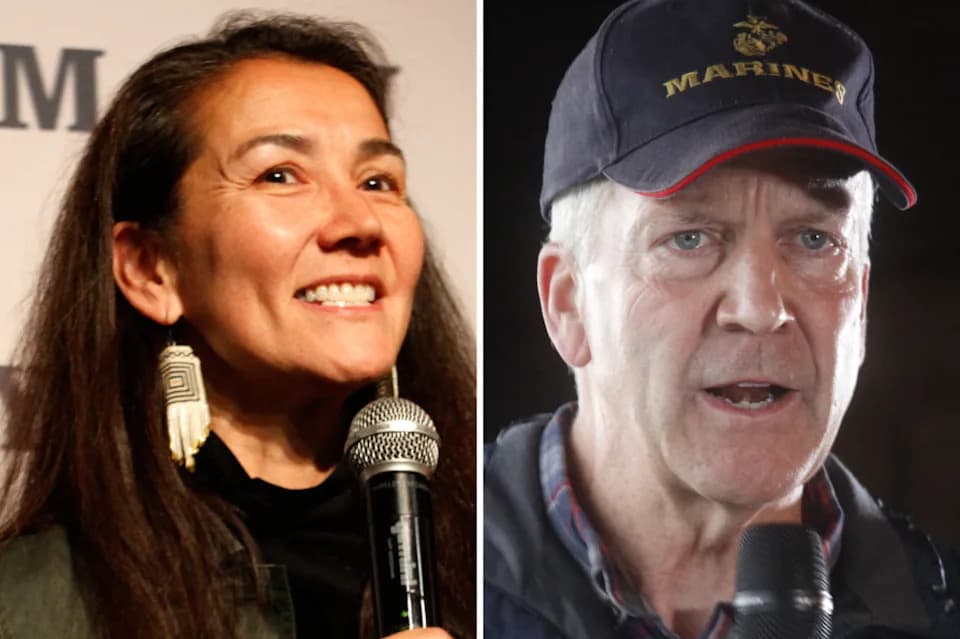
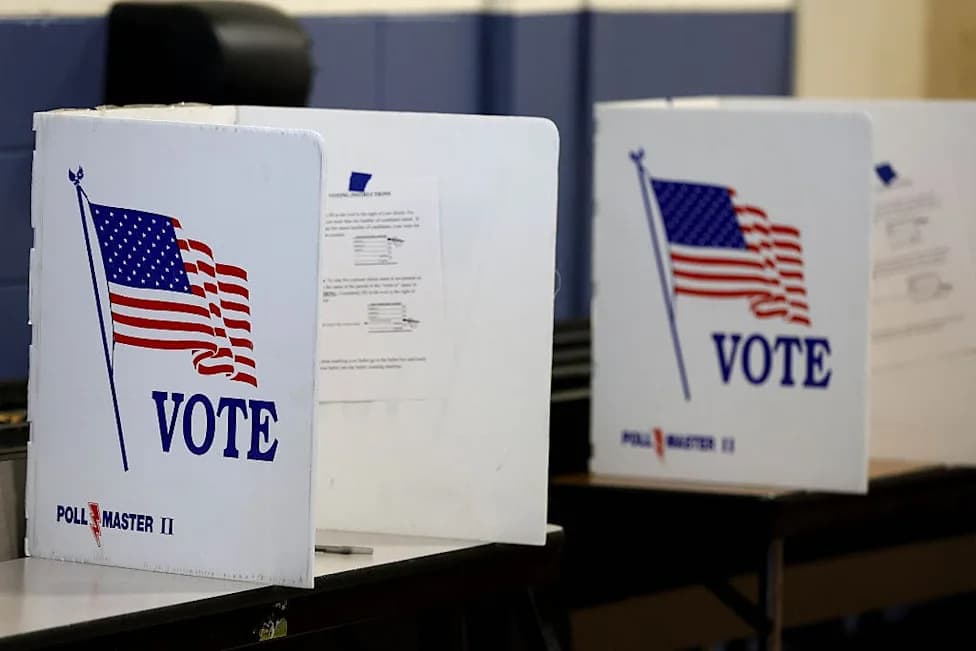
Alaska’s U.S. Senate race pits Republican Sen. Dan Sullivan against Democrat Mary Peltola, a Native Alaskan and former fishing-boat captain whose focus on fisheries and subsistence has resonated with many independent voters. Key issues include industrial trawling, bycatch (about 141 million pounds discarded annually), and the economic strain on remote communities. Alaska’s ranked-choice, top-four system and an unusual second candidate named Dan Sullivan add unpredictability, while independents’ preference for authenticity could determine a pivotal Senate seat.
Alaska’s Independents Could Decide a Pivotal Senate Race — And Fish Are Front And Center
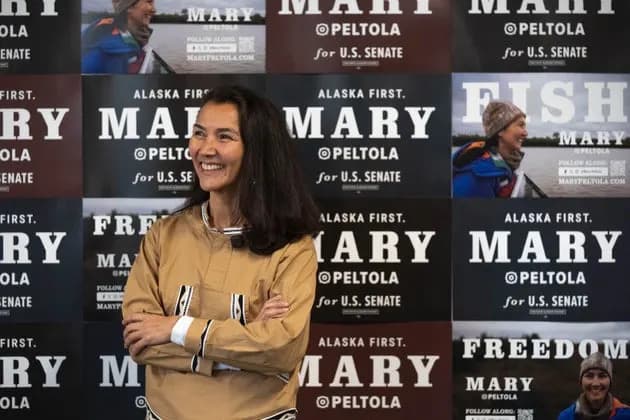
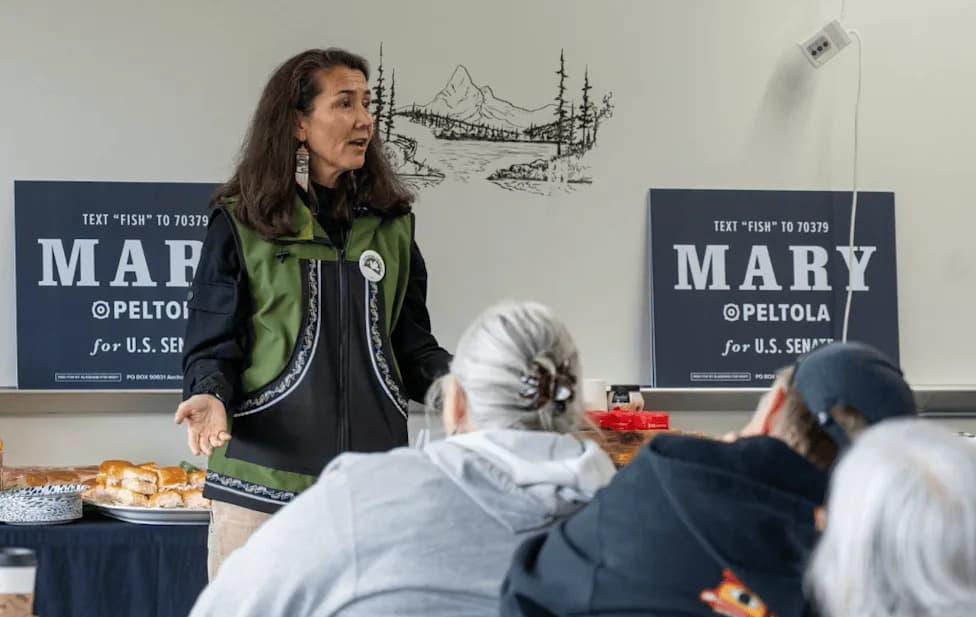
Senate candidate Mary Peltola listens as she's introduced by Joelle Hall, former head of the Alaska AFL-CIO, at a campaign event on Sept. 15, 2026, in Anchorage, Alaska.Loren Holmes for HuffPost
ANCHORAGE, Alaska — Voters here often say they vote for people they like and trust, and that instinct may determine the outcome of one of the nation’s closest U.S. Senate contests.
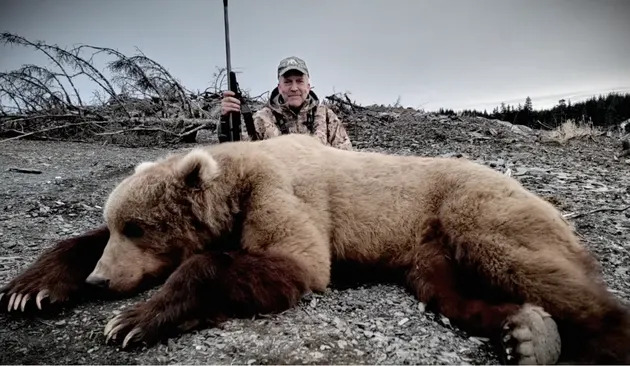
Sen. Dan Sullivan (R-Alaska) shot a bear. Dan Sullivan's campaign Facebook page
Republican Sen. Dan Sullivan, a two-term incumbent, faces Democrat Mary Peltola, a Native Alaskan and former member of the U.S. House. With control of the Senate potentially at stake this November, the race has become a high-stakes contest shaped less by national rhetoric than by local concerns — especially fisheries, subsistence rights and a desire for authenticity.
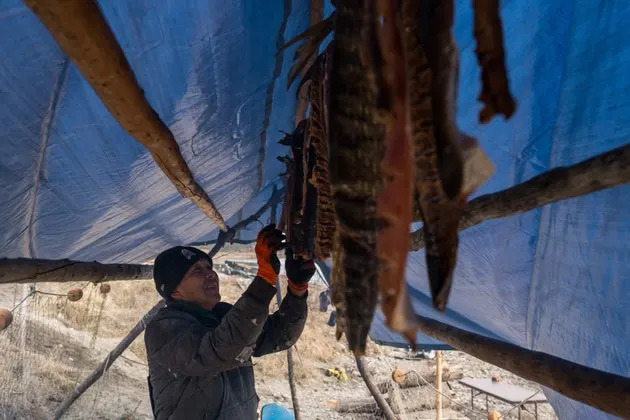
Iñupiaq elder Morgan Johnson dries fish outside his home in Ambler, Alaska in Sept. 2025. via Associated Press
Voters Look For Authenticity
“Do I like this person? Would I want this person to help me out?” asked Scott Wheaton, 77, a retired geologist and self-described “super voter,” summing up a sentiment heard repeatedly in interviews around Anchorage and at the Alaska State Fair in Palmer.
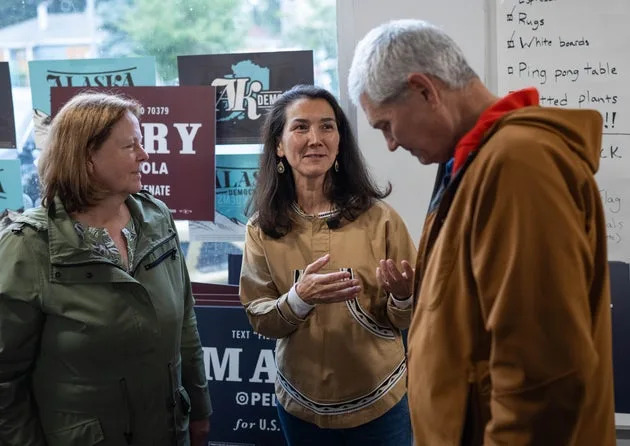
Senate candidate Mary Peltola speaks with supporters at a campaign event on Sept. 15, 2026, in Anchorage, Alaska. Loren Holmes for HuffPost
Independent voters — who made up roughly 58% of those who voted in the 2024 presidential election in Alaska — repeatedly said they prize candidates who seem genuine, approachable and focused on everyday issues rather than partisan spectacle. In many conversations, Mary Peltola’s campaign imagery, which emphasizes hands-on fishing and subsistence life, read as authentic. Dan Sullivan’s photos with big game and trophy fish were criticized by some voters as staged.
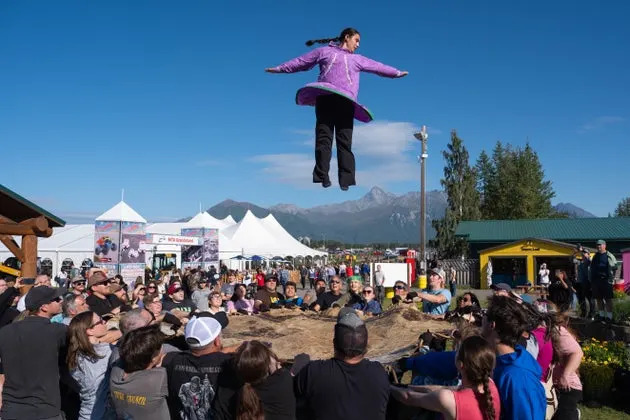
Daisy Vanblarcom, wearing a kuspuk, soars through the air during a blanket toss on Sept. 4, 2026 in Palmer, Alaska. The blanket toss is an Iñupiat tradition. As a state legislator in 1999, Mary Peltola started the tradition of state lawmakers wearing kuspuks on Fridays at the Capitol in Juneau. Loren Holmes for HuffPost
Fisheries, Trawling And Bycatch Dominate The Debate
Fisheries policy has emerged as a defining issue. Large-scale commercial trawling has contributed billions to Alaska’s economy but is also blamed for massive bycatch — estimated at about 141 million pounds of marine life discarded annually — and for declines in salmon runs that sustain many rural and Indigenous communities.

Lowell Button walks through the Alaska State Fair with a third-place ribbon that he won in the "homestead" category of the beard contest on Sept. 4, 2026, in Palmer, Alaska. Loren Holmes for HuffPost
Peltola, a former fishing-boat captain, has made fisheries central to her platform, framing the issue in personal terms and pledging stronger protections for subsistence fishing. Sullivan touts legislative accomplishments — saying he helped pass dozens of bills he argues benefited Alaska’s fisheries — and points to recent proposals aimed at reducing bycatch. Critics, however, note Sullivan’s ties to commercial fishing interests and campaign donations from industry sources.
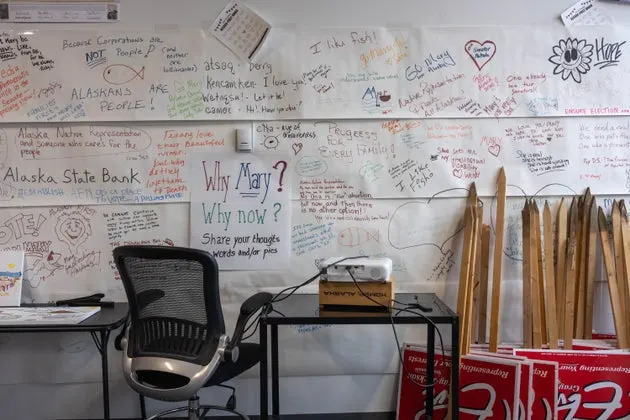
Handwritten banners supporting Mary Peltola's Senate campaign hang in her field office in Anchorage, Alaska. Loren Holmes for HuffPost
“The salmon runs that fed generations of Alaskans are shadows of what they were,” Peltola said in a campaign statement. “We need bold action to take on the rigged system in DC and save our fisheries.”
A Patchwork Of Local Voices
Over several days of reporting, nearly four dozen voters shared diverse perspectives: some backed Sullivan for his pro-development stance and perceived protection of oil, gas and jobs; others supported Peltola for her subsistence advocacy and Native Alaskan roots. Many independents who might swing the race said they were exhausted by partisan attacks and outside spending, and sought a candidate who felt like a neighbor rather than a national political emblem.
Young people often expressed voting fatigue or logistical barriers to participation, while older and mid-career voters said immediate economic concerns — from grocery prices in remote towns to employment tied to energy development — would guide their choices.
Electoral Quirks And Broader Stakes
Alaska’s top-four primary and ranked-choice general election system adds unpredictability. One unusual twist: a retired teacher from Petersburg named Dan Sullivan advanced in the primary, creating confusion and comic relief for some voters and strategic headaches for campaign teams.
Alaska Natives account for more than 13% of the state’s population, and many communities are accessible only by air or water. For those residents, access to subsistence fish is not symbolic — it’s economic and cultural survival. That reality has amplified fisheries policy above many other national talking points in this race.
What’s At Stake
Beyond local consequences, the contest has national implications: a Democratic flip could help shift control of the U.S. Senate. But local dynamics — authenticity, subsistence protection, and perceptions of who truly represents Alaskans’ way of life — may be the deciding factors.
“It’s not just about party,” said an Anchorage independent voter. “It’s about who feels like one of us.”
Help us improve.