A federal judge has referred Philadelphia District Attorney Larry Krasner and Conviction Integrity Unit chief Matthew Stiegler to the U.S. Department of Justice after concluding evidence in a post‑conviction murder case could suggest perjury, obstruction and conspiracy. Judge Paul Diamond disqualified both from the Dennis Johnson matter and detailed his findings in a 40‑page memorandum. Krasner says he intends to appeal and denies wrongdoing; the U.S. Attorney's Office will decide whether to investigate.
Federal Judge Refers Philadelphia DA Larry Krasner and Top Prosecutor to DOJ After 40‑Page Memorandum
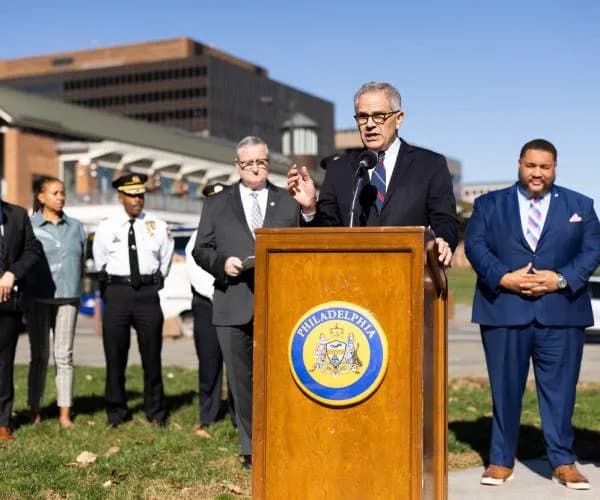
Philadelphia District Attorney Larry Krasner (Getty Images)
A federal judge on Tuesday referred Philadelphia District Attorney Larry Krasner and Matthew Stiegler, head of the DA's Conviction Integrity Unit, to the U.S. Department of Justice for possible investigation, saying evidence in a post‑conviction murder case could amount to perjury, obstruction of justice and conspiracy.
Judge's Findings and Referral
U.S. District Judge Paul Diamond, a George W. Bush appointee, wrote in a detailed 40‑page memorandum that the material uncovered in the Dennis Johnson matter was "tantamount to a prima facie showing of conduct that may constitute false statements, false declarations made under oath, perjury, obstruction of justice, and conspiracy." He said he had "reluctantly concluded" that the district attorney and one of his top assistants "may have violated the law" and referred the matter to the U.S. Attorney's Office for the Eastern District of Pennsylvania for investigation and any appropriate action.
Case Background
The dispute centers on a 2022 filing in which Krasner's office conceded that Dennis Johnson was entitled to federal habeas relief on the ground that his trial counsel had been ineffective. A magistrate judge recommended granting relief. Earlier this year, four supervisors in the DA's office reviewed the concession and concluded it contained "material misstatements," prompting the office to move in June to withdraw the concession.
Evidentiary Hearings and Credibility Findings
Judge Diamond held three evidentiary hearings and said he credited testimony from five prosecutors that was corroborated by contemporaneous documents. In contrast, he wrote that he "largely discredit[ed]" Stiegler, describing his testimony as "often contradictory, evasive, or outright dishonest." According to the memorandum, Stiegler suggested searching former ADA Jaclyn Mason's other cases for errors so she could be portrayed as a "rogue" prosecutor responsible for the concession; Krasner reportedly called that a "really good idea." Those supervisors declined to follow the proposal.
Diamond found Stiegler's actions suggested an effort to give the court "a false account to shield himself," and said material omissions and falsehoods in his testimony "may well amount to perjury." The judge described Krasner's conduct as "more troubling," finding that Krasner urged supervisors to present what Diamond characterized as a "false narrative to the Court" and repeatedly insisted someone stay involved in the matter to "protect the office." Testimony cited by the judge indicated Krasner warned there would be "consequences" if prosecutors disclosed the conflict, which two supervisors interpreted as a threat to their jobs.
Legal and Practical Consequences
Diamond disqualified Krasner and Stiegler from participating in the Dennis Johnson case but declined to disqualify the entire district attorney's office. The referral to the U.S. Attorney's Office is not a criminal charge; federal prosecutors will decide whether to open an investigation or pursue charges. A spokesperson for the U.S. Attorney's Office did not immediately comment.
Context and Reaction
Krasner, whose campaigns have drawn support from national donors including George Soros, said he "respectfully and vigorously disagrees" with the judge's conclusions and intends to appeal "as soon as the law allows," according to The Philadelphia Inquirer. Stiegler declined to comment to the newspaper.
The decision comes amid broader scrutiny of how Krasner's office handles post‑conviction reviews. In May, the Pennsylvania Supreme Court ruled that the state attorney general must be notified when the district attorney's office seeks to overturn certain convictions, citing repeated failures of candor by the office.
Source: Newsmax (© 2026). All rights reserved.
Help us improve.