The nearly 300-year-old oak at Eutaw Springs, South Carolina, survived the Revolutionary War but is now threatened by metal chains installed after a lightning strike decades ago that have begun to girdle the trunk. As part of the nation's 250th anniversary, state officials and arborists used supersonic air pulses to loosen compacted root soil, added a kelp nutrient mix, installed branch lightning rods tied to a grounded copper rod about 10 feet away, and will replace the old chains with flexible reinforcement cabling. These combined measures aim to restore the tree's health and help it endure for many more decades.
Supersonic Air and Lightning Rods: How Arborists Are Saving a 300-Year-Old Eutaw Springs Oak
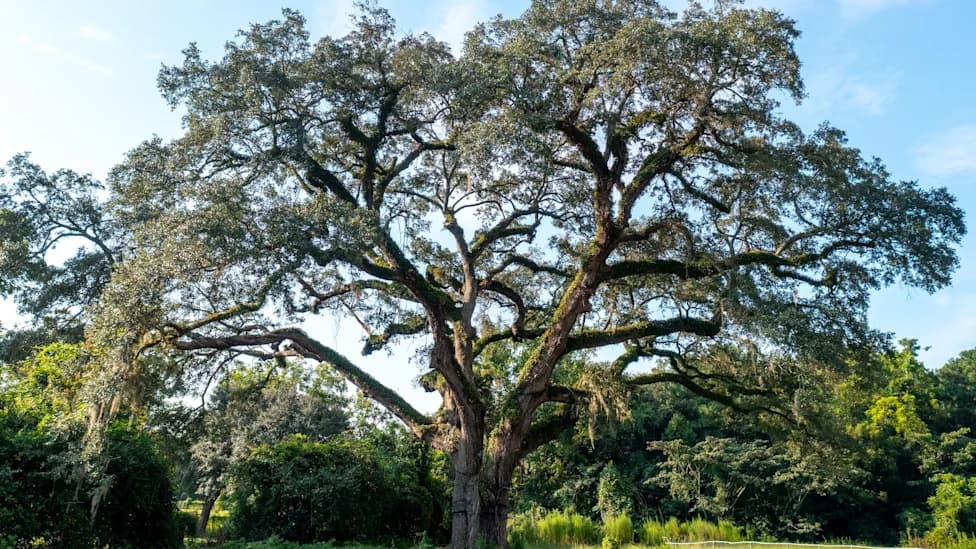
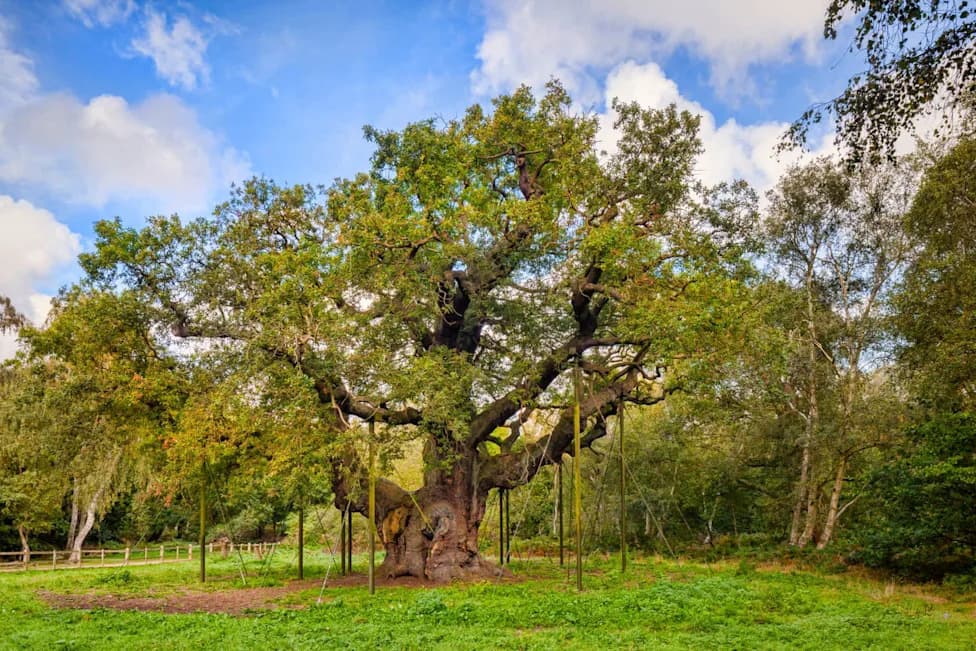
The live oak almost died when it was struck by lightning about 50 years ago.
A nearly 300-year-old white oak in Eutaw Springs, South Carolina — a living witness to the Revolutionary War — is getting a second chance after decades of well-intentioned but harmful repairs. Conservationists say metal chains and cables installed after a lightning strike about 50 years ago have begun to girdle the tree, cutting into its wood and restricting nutrient flow. A modern restoration is now underway to restore the tree's health and protect it from future damage.
Historic Roots, Modern Problems
The oak stood at the Battle of Eutaw Springs on September 8, 1781, when roughly 2,000 British and 2,500 American troops fought in what many historians consider the Revolution's last open-field engagement. The tree predates the battle and likely endured musket fire and cannon shot; "That tree probably took a few lead balls itself," arborist Aron Landsaw said.
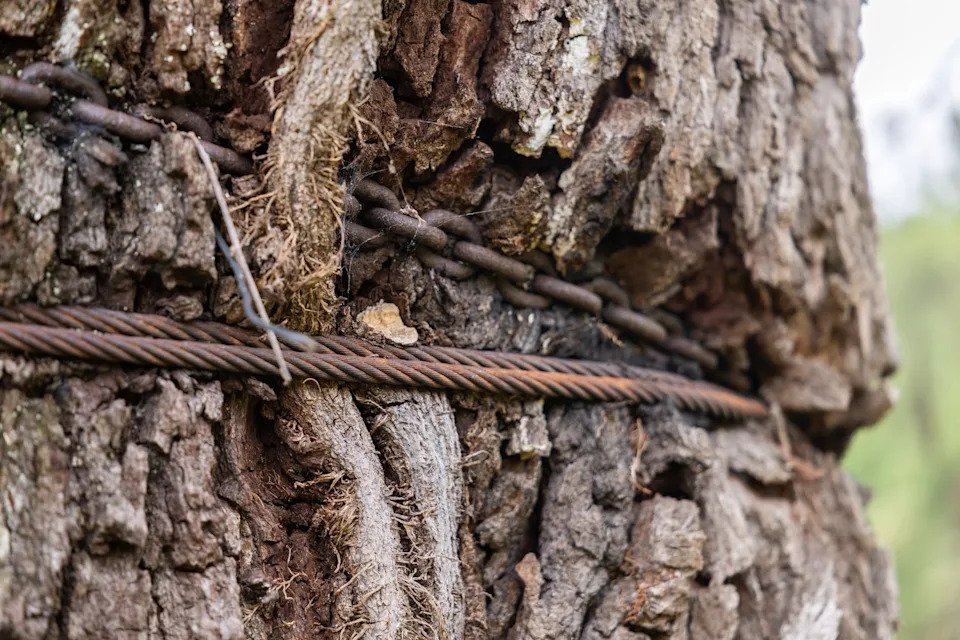
The original support chains had begun to suffocate the tree itself. Credit:SavATreeKRIS MEADE
Old Fixes Are Hurting the Tree
About five decades ago, lightning struck the oak and nearly split its trunk. To hold the tree together, workers wrapped its fractured limbs in steel chains and heavy cables. While those supports initially saved the tree from collapse, the oak's continued growth has caused the metal to become embedded in the bark and wood. In places the cabling is now completely encased, effectively choking vascular tissue and limiting the tree's ability to transport water and nutrients.
"The chains and cables are actually choking it out. It can't pull nutrients up from the soil," Landsaw explained.
High-Tech Intervention
For the nation's 250th anniversary, the State of South Carolina worked with the American Battlefield Trust and New York–based arborists to revive the oak using contemporary arboricultural methods. Teams used specialized equipment that produces powerful air pulses to loosen heavily compacted soil around the root zone without damaging roots. Once the soil was aerated, crews mixed in a nutrient-rich kelp treatment to improve root access to water and minerals and encourage new root growth.
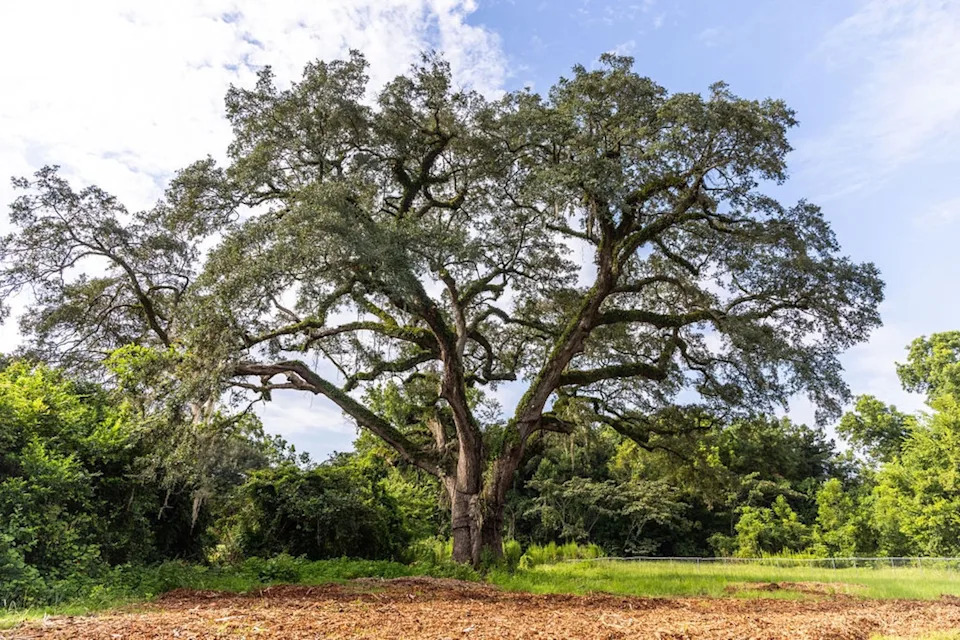
The new accessories will divert any future lightning strikes away from the tree. Credit:SavATreeKRIS MEADE
To prevent another catastrophic lightning strike, arborists installed small lightning rods into primary branches. These are connected by copper cables to a grounded copper rod placed roughly 10 feet from the trunk so any strike will be conducted safely into the ground. "If lightning does hit it, it'll run down the copper cables and dissipate into the ground," Landsaw said.
Careful Structural Support
The final phase of the restoration will attach a new system of flexible reinforcement cables to the upper branches and then remove the old steel chains. The replacement cabling will converge at a central anchor so the crown retains flexibility during wind events while preventing further splitting or damage.
No living tree is immortal, but with targeted soil rehabilitation, updated lightning protection, and modern bracing, conservationists hope the Eutaw Springs oak will stand for many more decades — perhaps another century — continuing to connect present-day visitors with a pivotal moment in American history.
Help us improve.