The national student-to-counselor ratio barely improved last year, moving from 376 to 372 students per counselor — far from the ASCA's 1:250 recommendation. A pilot with 10 guidance platforms, detailed in the report Prosocial Possibilities, shows AI can help build a many-to-one support model that surrounds students with teachers, family, alumni and mentors rather than replacing counselors. Key trends: help students see their existing networks, ensure outreach feels authentic, and coach students to turn contacts into real support. States and districts should require advising tools to strengthen and measure these human connections.
Many People, Not More Bots: How Schools Can Build Human Support Networks for Students
Last school year the national student-to-school-counselor ratio improved only marginally — from 376 students per counselor to 372. At that pace, it would take more than 30 years to reach the American School Counselor Association's recommended (and still challenging) 1:250 ratio.
With human support in short supply, nearly half of students now consult AI chatbots for college and career guidance, and some districts are using AI to handle routine questions so counselors can focus on higher-level work. Turning to technology is understandable, but substituting chatbots for overworked counselors risks masking a deeper problem: many schools rely on a one-to-many advising model that does not scale.
AI can play a more productive role by helping schools shift toward a many-to-one model in which each student is surrounded by a coordinated network of teachers, family members, alumni, mentors, employers, coaches and counselors. That approach is rooted in a well-established driver of student success: relationships. Research links strong relationships to better outcomes in high school, greater college access and persistence, and improved job prospects.
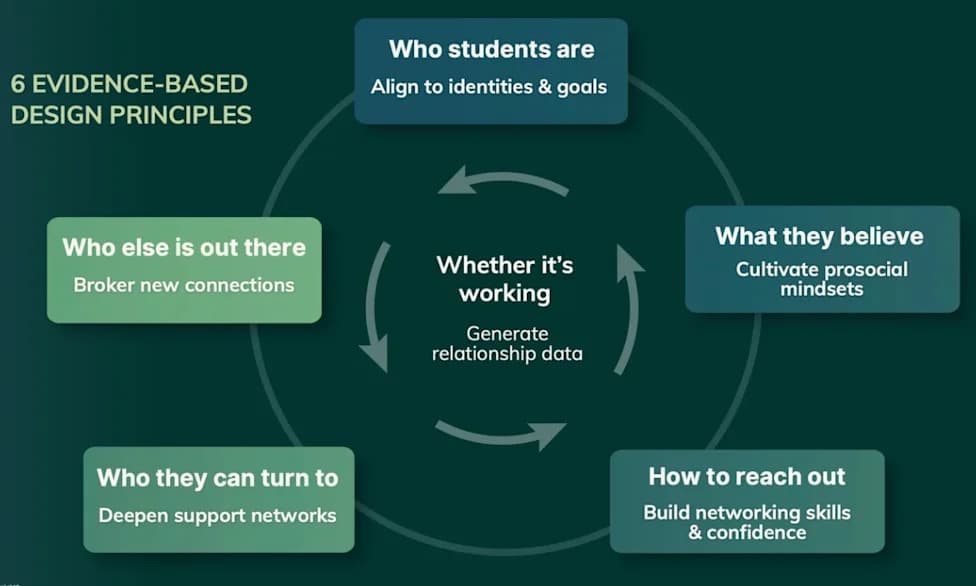
My colleague Anna Arsenault and I tested this idea in a pilot with 10 college- and career-guidance technology platforms. Rather than using AI to replace human guidance, we worked with design teams to build features that help students identify, reach and rely on the human connections already around them. Our report, Prosocial Possibilities, highlights three practical trends emerging from those pilots.
1. Help Students See the Networks They Already Have
Students often overlook the people who could support their goals. ESAI's network-mapping pilot asked students to list extracurriculars and the "people in their corner." Family and teacher connections together made up 40% of selections; counselors comprised only 10%, and peers 4%. iCouldBe's analysis of network maps found 54% of named connections were family, 30% were school-based, and only 1% came from work, internships, volunteering, alumni, neighbors or faith communities. These data do more than diagnose gaps — they give students and counselors actionable starting points to surface mentors who would otherwise remain invisible.
2. Make Outreach Feel Authentic
Even after students identify potential supporters, many hesitate to engage if outreach feels transactional. Platforms that prioritized authenticity saw better engagement. Reach Pathways, for example, recorded videos of students explaining, in their own words, how relationships helped them achieve goals. ESAI found that after students identified supporters, 53% wanted first to express gratitude before asking for assistance; only 14% immediately made an explicit request. Starting with genuine appreciation and peer modeling makes students likelier to activate their networks.
3. Turn Connections Into Real Support
Asking for help can be intimidating. Several platforms — including Climb Together, Roadtrip Nation and FutureFit AI — developed coaching chatbots not to dispense college or career advice but to build students' confidence in outreach: drafting emails, scripting conversations and rehearsing interactions with professionals. Students in the pilot reported modest increases in awareness of their networks and confidence to reach out. Other tools, like Overgrad's alumni directory, helped counselors make warm introductions that convert contacts into practical supports.
Taken together, these trends show that advising technology can be designed to foster meaningful human connections rather than short-cut them. But possibility is not inevitability. To date, no state-level request for proposals that govern edtech procurement explicitly lists "stronger student networks" as an outcome. Even when states and districts require postsecondary plans, they rarely ask whether students can name who will help implement those plans.
That must change. States and districts should require advising technologies to help students identify, strengthen and expand the human networks around them — and they should measure whether those networks actually grow. We could wait three decades for counselor ratios to reach 250:1, or we could build a different ratio: many people supporting every single student.
Help us improve.