As Gov. Ron DeSantis promotes Amendment 3 to limit local property-tax authority, a board including his appointees approved a $103,400 bonus and a 3% raise for Indian River State College president Tim Moore, lifting his base pay to $532,510 and total projected compensation near $700,000. The college has faced state scrutiny — a withdrawn data-center project and an auditor's claim it sought $12 million more than necessary — yet trustees still gave Moore a favorable review. The case highlights how limiting local tax revenue could force cuts to public services while leaving high executive pay and contractually protected benefits intact.
DeSantis’ Spending Hypocrisy Exposed by His Own Appointees — $103K Bonus for College President Draws Criticism
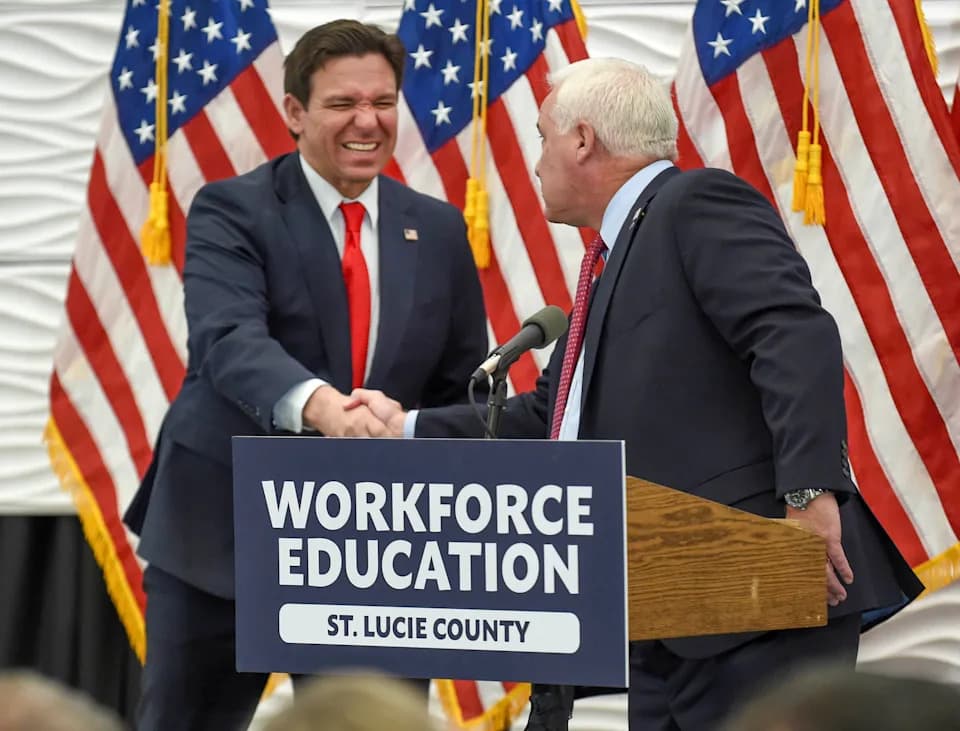
Florida Governor Ron DeSantis speaks to the audience during his visit to the Indian River State College Eastman Advanced Workforce Training Complex on Wednesday, Feb. 7, 2024, in Fort Pierce. DeSantis presented IRSC with a 4$ million grant during his visit.
As Gov. Ron DeSantis wraps up his final term, he has cast himself as a fierce opponent of wasteful government spending — even as a board of his appointees approved a large bonus for a public college president that has drawn scrutiny.
Amendment 3 and the Broader Context
DeSantis has intermittently backed Amendment 3, a November ballot measure that would sharply curb the ability of city and county governments to raise property-tax revenue. Supporters say local governments could absorb a projected loss of roughly $12 billion per year by tightening budgets — a claim that assumes local leaders will cut discretionary or administrative expenses rather than front-line services.
Generous Pay Package at Indian River State College
Last month, the Indian River State College board of trustees — a board that includes DeSantis appointees — approved a $103,400 performance bonus for college president Tim Moore, equal to 20% of his base pay. The board also granted a 3% base-salary increase, bringing Moore's base to $532,510. With a $40,000 housing stipend and a $20,000 car allowance, Moore's total compensation is projected to approach $700,000 in 2026–2027, roughly ten times the median Florida household income.
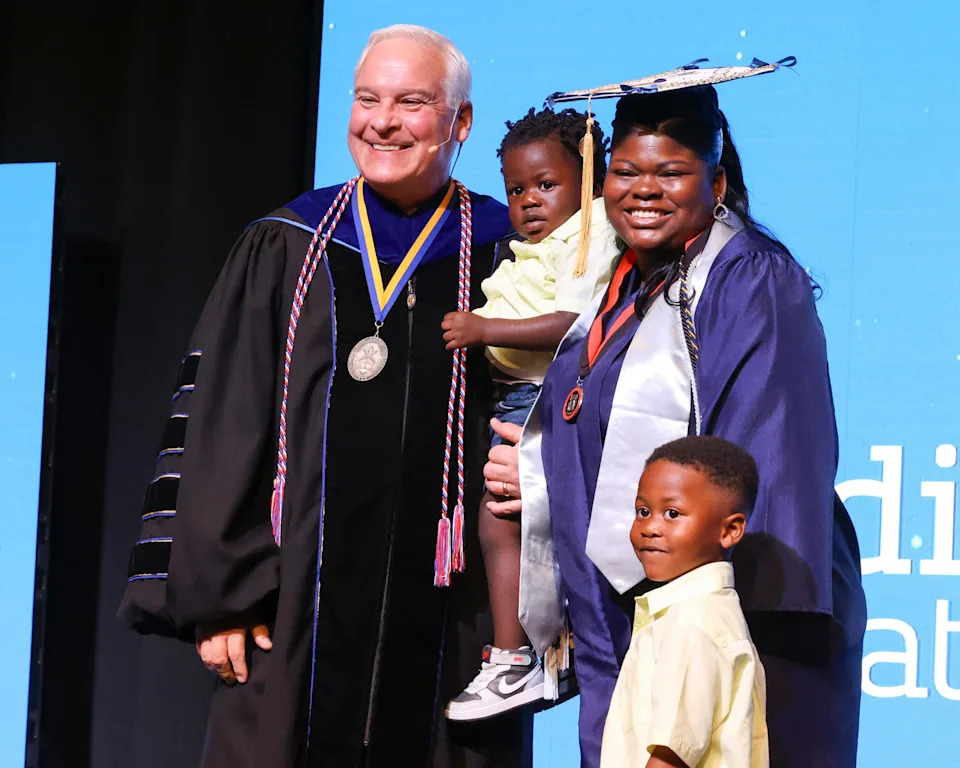
Indian River State College President Timothy Moore poses for a photo with graduate Kenneshia Murriel and her children, Kyrie, 2, and Irie, 4, as she walks across stage during the bachelor's degree graduation ceremony, May 6, 2026, at the Westside Center in Fort Pierce. A nursing pinning and commencement ceremony was the afternoon of May 6; Associate degrees and other degrees and certificates are conferred at ceremonies May 7 and May 8.
Moore's base salary is already the highest among presidents in Florida's public college system, despite Indian River serving a four-county region that is smaller than the state's major metro areas. Many larger colleges in the system, including those serving Miami, Orlando and Fort Lauderdale, enroll substantially more students.
State Scrutiny, Yet a Positive Review
The compensation decision is particularly striking given recent state scrutiny of the college. In April, the Florida Department of Commerce announced it would withdraw support for a proposed data center project in Okeechobee County, saying the college's proposals relied on "falsehoods and pretenses" about energy and water use. Earlier, the state Auditor General's office said the college requested roughly $12 million more in grant funding than it needed for a proposed nursing school.
Board member Anthony George said he received a call from the governor's appointments office in which he alleged he "was being asked to basically fire Dr. Moore."
Despite those controversies, trustees gave Moore a largely positive formal performance review. Some trustees voiced concerns in comments: Anthony George flagged turnover and disappointing hires among upper administration and questioned the college's ability to retain legal counsel; trustee Melissa Kindell cited "negative publicity on multiple levels" and referenced closed-door conversations that reflected poorly on Moore's integrity.
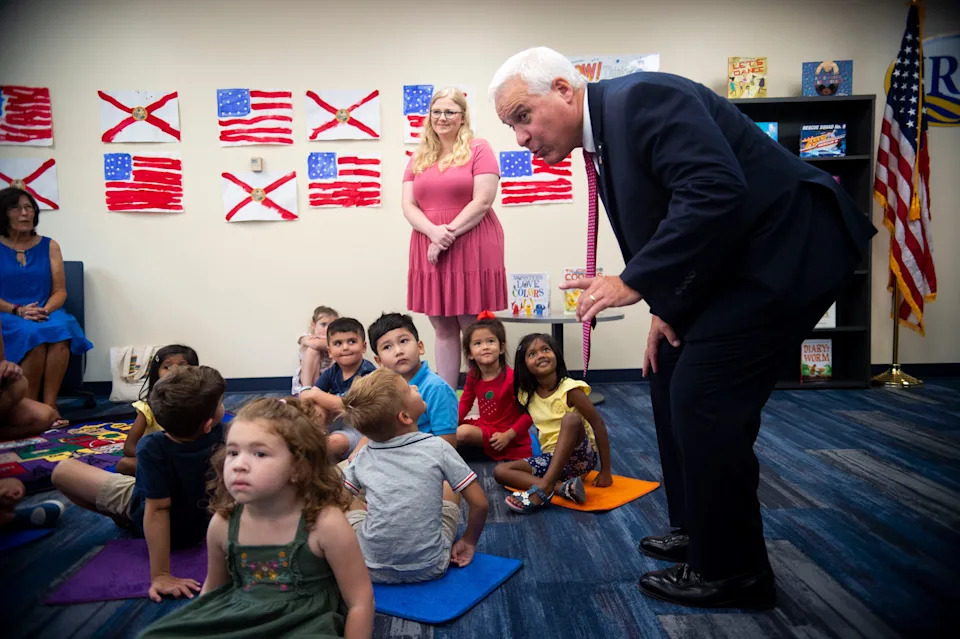
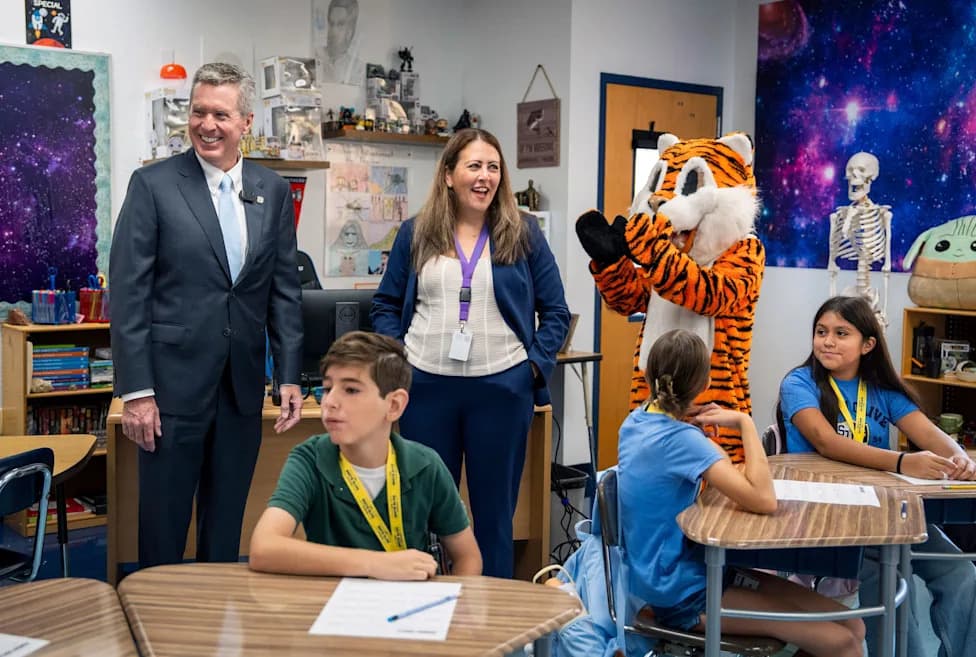
Indian River State College President Tim Moore chats with VPK students from IRSC's Child Development Center during a news conference with Gov. Ron DeSantis who ceremonially signed House Bill 3, called the New Worlds Reading Initiative, into law Thursday, July 22, 2021, the Indian River State College's Miley Library in Fort Pierce. The students later sang the "Florida Alphabet Song" for the governor and his guests.
Contract Terms and Revenue Incentives
Moore's contract routinely permits annual bonuses up to 20% of base pay and allows supplemental compensation tied to funds raised from new ventures. That revenue-based language helps explain the college's interest in private projects such as the proposed data center, a convention center/hotel/museum/restaurant complex, a bed-and-breakfast and a marina. The contract also provides a payoff tied to a $2 million life-insurance benefit if Moore resigns or is terminated.
Implications: What Amendment 3 Would and Wouldn't Do
If Amendment 3 passes with at least 60% support, it would limit local property-tax authority but would not impose direct spending caps on state agencies or the public college system. That means decisions about executive compensation at institutions like Indian River State College would remain under local or institutional control. The likely result: visible public services — road maintenance, parks, libraries, social services and possibly public-safety functions — could face cuts first, while well-compensated officials and revenue-driven projects remain insulated.
Bottom line: The Moore case illustrates how focusing only on limiting local tax revenue may not address the kinds of internal or contractual spending decisions that many taxpayers find objectionable.
Blake Fontenay is USA TODAY's commentary editor.
Help us improve.