Muslims have been part of the American story since the 16th century; scholars estimate up to 30% of enslaved Africans brought to the Americas were Muslim. Arabic literacy and Quranic learning from West Africa helped many preserve religious practice and cultural memory while enslaved. Figures such as Omar ibn Said, Ayuba Suleiman Diallo and Abdul Rahman Ibrahima ibn Sori illustrate how faith and literacy provided spiritual resilience and, in some cases, pathways toward freedom.
How Enslaved African Muslims Resisted Bondage Through Faith and Literacy
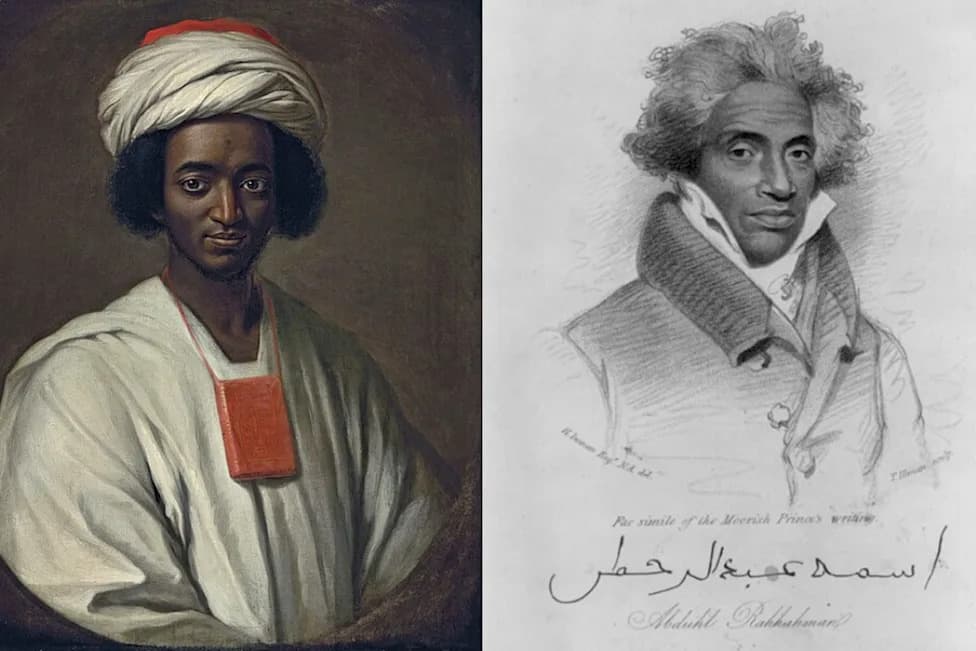
Portraits of two enslaved people: Ayuba Suleiman Diallo and Abdul Rahman Ibrahima ibn Sori.National Portrait Gallery and Library of Congress via Wikimedia
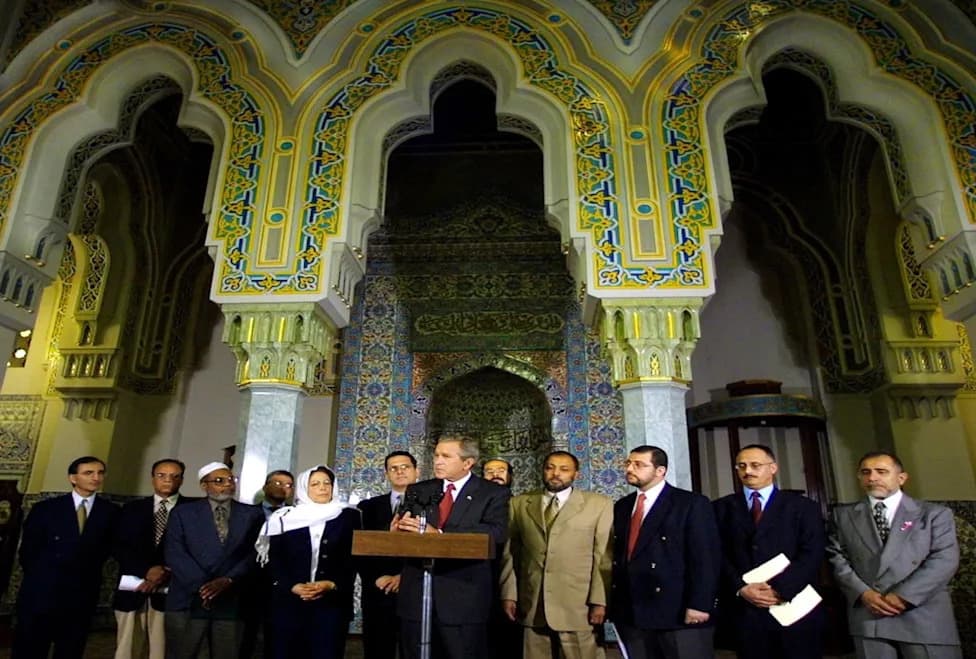
Contemporary Muslim communities in the United States often face stereotyping and suspicion, especially in the years after 9/11. Less widely known, however, is that Muslims have been part of the American story since the nation’s earliest eras. Scholars estimate that as many as 30% of Africans enslaved and brought to the Americas between the 16th and 19th centuries were Muslim.
The rise of Islam in West Africa from as early as the eighth century brought an expansion of literacy: Arabic literacy and Quranic learning were widespread in many communities. When enslaved people were transported across the Atlantic, this religious education and ability to read and write in Arabic sometimes survived and served as a source of spiritual resilience, cultural memory and—occasionally—a practical advantage.
Literacy, Records and Resistance
Historian Sylviane A. Diouf, in her study Servants of Allah, documents that among the hundreds of thousands of enslaved African Muslims were "clerics, teachers, students, rulers, and traders." Some preserved written records in Arabic that their owners could not read; others used reading, writing and religious practice as a means to maintain dignity and hope under brutal conditions. As scholars of Islam in America, we have studied many of these accounts, which illuminate daily life, ritual practice and the persistence of identity across the Atlantic.
Omar ibn Said: An Arabic Autobiography in Charleston
Omar ibn Said was born circa 1770 in the region of present-day Senegal and spent roughly 25 years studying Arabic, the Quran and Islamic theology. In 1807, at about age 37, he was captured and sold at a Charleston, South Carolina, slave market. In 1831 he produced a 15-page autobiography in Arabic that survives today; it recounts harsh treatment, an escape attempt and imprisonment. While jailed, he wrote Arabic on the walls of his cell.
He opened his manuscript with a passage from Surah al-Mulk: "Blessed is the One in Whose Hands rests all authority. And He is Most Capable of everything." Historian Ala Alryyes reads that opening as a theological assertion that ultimate ownership belongs to God alone.
John Owen, later governor of North Carolina, purchased ibn Said and transferred him to his brother. Literacy helped secure ibn Said’s release from jail, but not his freedom from enslavement; he died in bondage in 1864, a year before the formal end of slavery in the United States.
Ayuba Suleiman Diallo: Scholar, Prisoner, and Memoir Subject
Ayuba Suleiman Diallo (also known as Job Ben Solomon) was born in 1701 into a prosperous family in West Africa; his father was a respected Muslim scholar who helped him memorize the entire Quran. Captured and enslaved around age 30, Diallo continued to observe Islamic ritual practices, pausing work to perform the five daily prayers—sometimes mocked by onlookers.
In 1734 Thomas Bluett, a British judge and minister, published Some Memoirs of the Life of Job Ben Solomon, considered the first published biography of an African in English print. The account—helped by translation from Wolof speakers—contributed to Diallo’s eventual return to freedom and his resettlement in Senegal, where he died in 1773.
Abdul Rahman Ibrahima ibn Sori: A Prince in Chains
Abdul Rahman Ibrahima ibn Sori, a prince from the Futa Jallon region (modern Guinea), was captured and enslaved in 1788 at about 26 years old. Working as a field hand without access to a Quran, he traced Arabic letters in the sand to maintain a link to his faith and homeland.
In 1826 a newspaper publisher, Andrew Marschalk, helped send a letter ibn Sori composed—which contained Quranic verses he recalled from memory—to U.S. Senator Thomas Buck Reed. The correspondence eventually reached Sultan Abd al-Rahman ibn Hisham of Morocco, who petitioned President John Quincy Adams on ibn Sori’s behalf. Educator Thomas H. Gallaudet published a pamphlet to raise funds for ibn Sori and his wife Isabella. Although funds were raised and freedom secured, ibn Sori died of cholera soon after gaining his liberty; several of his children remained enslaved.
Women, Memory and Continuity
Fewer Muslim women’s stories survive in the historical record, but Diouf and others have pieced together evidence from sources such as runaway notices that list Muslim-sounding names (Fatu, Jenaba, Safiyata). These findings suggest enslaved women played a central role in preserving Islamic identity through naming, charitable acts, domestic instruction and the transmission of religious practice to the next generation.
Legacy and Modern Relevance
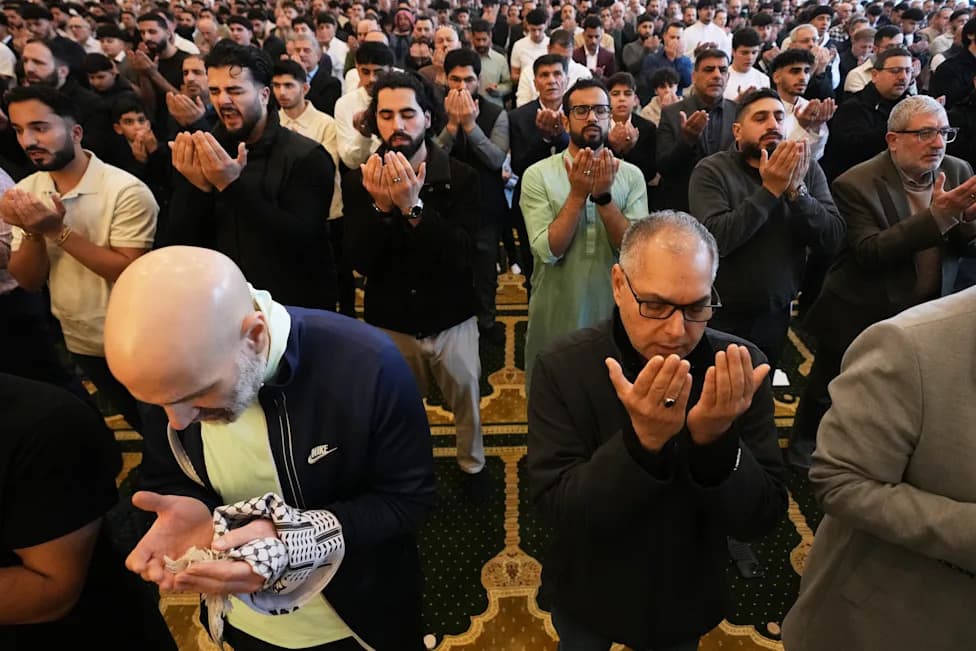
Today’s Muslim Americans come from many regions of the world. African Americans comprise the single largest demographic among U.S. Muslims—nearly 30%—and many trace cultural roots to the enslaved African Muslims described here. Recognizing this long history highlights how faith, literacy and cultural resilience helped sustain people through bondage and contributed to the nation’s complex fabric.
This article is adapted from reporting originally published by The Conversation. Authors: Nareman Amin and Leila Tarakji, Michigan State University. The authors disclose no conflicts of interest related to this piece.
Help us improve.